AI Website Builder Open Source: Weighing Pros & Cons

Building a website used to mean one of two things. You either hired a developer for thousands of dollars, or you struggled through complex code yourself.
Then came the managed platforms. We are now seeing a new contender enter the ring. The AI website builder open source landscape is shifting how entrepreneurs approach their digital presence.
Everyone loves the idea of free software. The concept of open source suggests unlimited freedom, zero cost, and total control over your data.
It sounds like the perfect setup for small businesses and freelancers who are watching every penny.
But is it really free?
That is the question we need to answer.
While managed platforms like Kleap handle the heavy lifting, the allure of an AI website builder open source option remains strong for the tech-savvy. You might be looking for information about custom website builder without subscription fees or are interested in exploring the underlying mechanics.
It is a valid path, but it is paved with both gold and landmines.

What Exactly is an AI Website Builder Open Source?
Before weighing the good and the bad, we need to define what we are discussing.
An AI website builder open source isn't just a piece of software you download.
It is a philosophy.
Choosing an open source solution means choosing access to the source code. You are opting into a diverse ecosystem where the community drives innovation rather than a central corporation. This is different from a proprietary builder where the "brain" of the AI is hidden behind a paywall.
In this scenario, the AI generates a layout, copy, and design for you. The actual engine powering it is all yours to tweak and change.
For a developer, that's pure paradise. For a busy bakery owner, though, it could easily become a nightmare dressed up as a dream.
Let's be real, the market is flooded.
Some give you an AI website builder with code access that lets you get into the weeds of neural network tweaking. Others are really just open-source CMS platforms with AI plugins bolted on top. Understanding this distinction is vital before you commit your time and server space.
Try it — build your site while you read
Describe what you want and get a live, publishable site in seconds. Free to start, no code.
Join 200,000+ makers building real websites with Kleap.
The Major Advantages of Going Open Source
There is a reason the open source movement powers a massive chunk of the internet. When it works, it functions beautifully. Let’s dig into why a small business might lean toward an AI website builder open source solution.
1. Cost Effectiveness and Budget Control
Let's be honest about money. It is likely the first reason you Googled this topic. Run the numbers on a typical SaaS subscription. Over five years, the costs add up.
With open source, the core software is generally free. You download it and install it. You don't pay a monthly "rent" to keep your site alive.
According to research from B12, this cost structure enables startups and small businesses to modify or self-host tools. This makes them incredibly budget-friendly initially.
You avoid the ongoing licensing fees that closed platforms charge. If you have a spare server or a cheap hosting plan, your operating costs drop significantly.
For a bootstrapped entrepreneur, redirecting that cash flow into marketing or product development can be a game-changer.
However, "free" refers to the license, not the total cost of ownership.
We will touch on that later, but upfront, the price tag looks very attractive.
2. Unrivaled Customizability and Code Access
If you are a control freak, and I mean that in the best way possible, open source is your playground.
You have full access to the code. This is the defining feature of an AI website builder open source project.
Closed platforms have guardrails. They prevent you from breaking things, but they also prevent you from building things that the platform architects didn't envision. With open source, those guardrails are gone.
You can act as an AI website builder with code architect.
You can rewrite how the AI interprets prompts. You can change the underlying database structure. You can integrate a proprietary inventory system that no standard plugin supports.
I found on WPBeginner that this kind of access is essential for meeting very specific needs or for creating a brand that truly stands out.
3. No Vendor Lock-In
This plays on a fear that keeps many business owners up at night.
What if your website platform shuts down?
What if they triple their prices overnight?
What if they change their terms of service and decide your business is no longer welcome?
With proprietary software, you are essentially renting the land. With open source, you own the land.
An AI website builder open source solution ensures that you own your website and your data completely.
TechCrunch highlights that avoiding the risks of platform shutdowns or sudden policy changes is a massive unexpected benefit of this model. If the original developer of the open source project walks away, the code still exists on your server.
You can migrate it. You can fork it. You can hire someone else to maintain it.
You are the captain of the ship, for better or worse.
4. Community Support and Innovation
There is something magical about the open source community. Thousands of developers around the world contribute to codebases simply because they want to improve the tool.
When a bug is found in popular open source software, it is typically patched within hours. New features aren't decided by a corporate boardroom; they are built by users who need them.
This fast-paced innovation can be a massive advantage.
You could literally wake up one morning and discover a developer halfway across the world just built the exact AI plugin you were desperate for. It’s a collaborative spirit that, frankly, managed platforms have a tough time keeping up with.
5. Transparency in Security
Let's get one thing straight: "security through obscurity" is a total myth. Just because you can't see the code doesn't mean it's safe.
Open source operates on the opposite principle.
Because the code is public, thousands of eyes are on it. Security researchers, ethical hackers, and curious developers are constantly auditing the code. When thousands of eyes are on the code, vulnerabilities get spotted and patched much faster than in closed systems where a nasty bug could linger undetected for months.
You are also free to audit the code yourself. If your business handles sensitive data, being able to verify exactly how that data is processed is a legal necessity for some industries.

PAN XIAOZHEN and Unsplash are both essential components of the discussion./p>
The Significant Disadvantages You Must Consider
Now, let’s turn the coin over.
The grass isn't always greener on the other side. In fact, for many small business owners, the AI website builder open source route leads to a swamp of technical debt.
It’s shockingly easy to underestimate just how much work goes into keeping a self-hosted site up and running. Let's talk about the downsides you won't find on the shiny sales page.
1. The Heavy Burden of Maintenance
Remember how we said there are no subscription fees?
You end up paying with your time instead. With open source solutions, you're responsible for handling installation, updates, and troubleshooting yourself. Meanwhile, managed platforms like Kleap update automatically in the background.
You don't even notice it happening.
If a plugin conflicts with the new version of the core software, your site goes down. It is your responsibility to fix it. Small businesses without technical expertise often find this demanding.
You essentially become your own IT department.
2. Less Polished User Experience
Designers and UX experts cost money.
Open source projects often run on volunteer developers who are coding geniuses but may not excel in user interface design.
That's why many open source AI builders just feel clunky.
They’re built for function, not necessarily for a great user experience. Trying to navigate the backend can feel like you've been handed the keys to a spaceship when all you really wanted was to drive a car.
When you compare them to the slick, drag-and-drop interfaces of managed platforms, these open source tools can feel pretty dated.
Onboarding is rarely streamlined, and "it just works" is rarely the motto. You have to configure the AI, set up the API keys, and tweak the settings to get a decent result.
3. Hidden Security Risks
Wait, didn't we list security as a pro?
Yes, but it is a double-edged sword.
Misconfigured code is the number one cause of hacks in the open source world.
Because the code is public, hackers can study it too. If you fail to update your site the moment a security patch is released, you are a sitting duck. Automated bots scour the internet looking for outdated versions of open source software to exploit.
According to Snapps.ai, regular management is absolutely required to avoid exploitation. Closed platforms centralize this security.
They have teams of people whose only job is to block these attacks before they ever reach your website.
4. Performance and Scalability Hurdles
Speed kills.
A lack of speed kills conversion rates. Open source tools can be bloated.
Depending on the plugins and themes you install, your site can become sluggish.
Optimizing a self-hosted AI site requires deep technical knowledge. You need to understand caching, server response times, and image compression.
With a platform like Kleap, the infrastructure is built for speed.
Global CDNs (Content Delivery Networks) are usually included. With an AI website builder open source setup, you have to configure that performance architecture yourself.
5. Generic Designs Out-of-the-Box
AI needs data to be creative. Open source models often rely on generic templates unless you heavily customize them.
Without manual intervention, your site might look eerily similar to thousands of others.
According to TechCrunch, open source AI may lag behind managed platforms in terms of UI coherence.
The Technical "Gotchas" No One Tells You
Let’s strip away the marketing and talk about the reality of running an AI website builder open source project. There are technical nuances that can derail a project before it even launches.
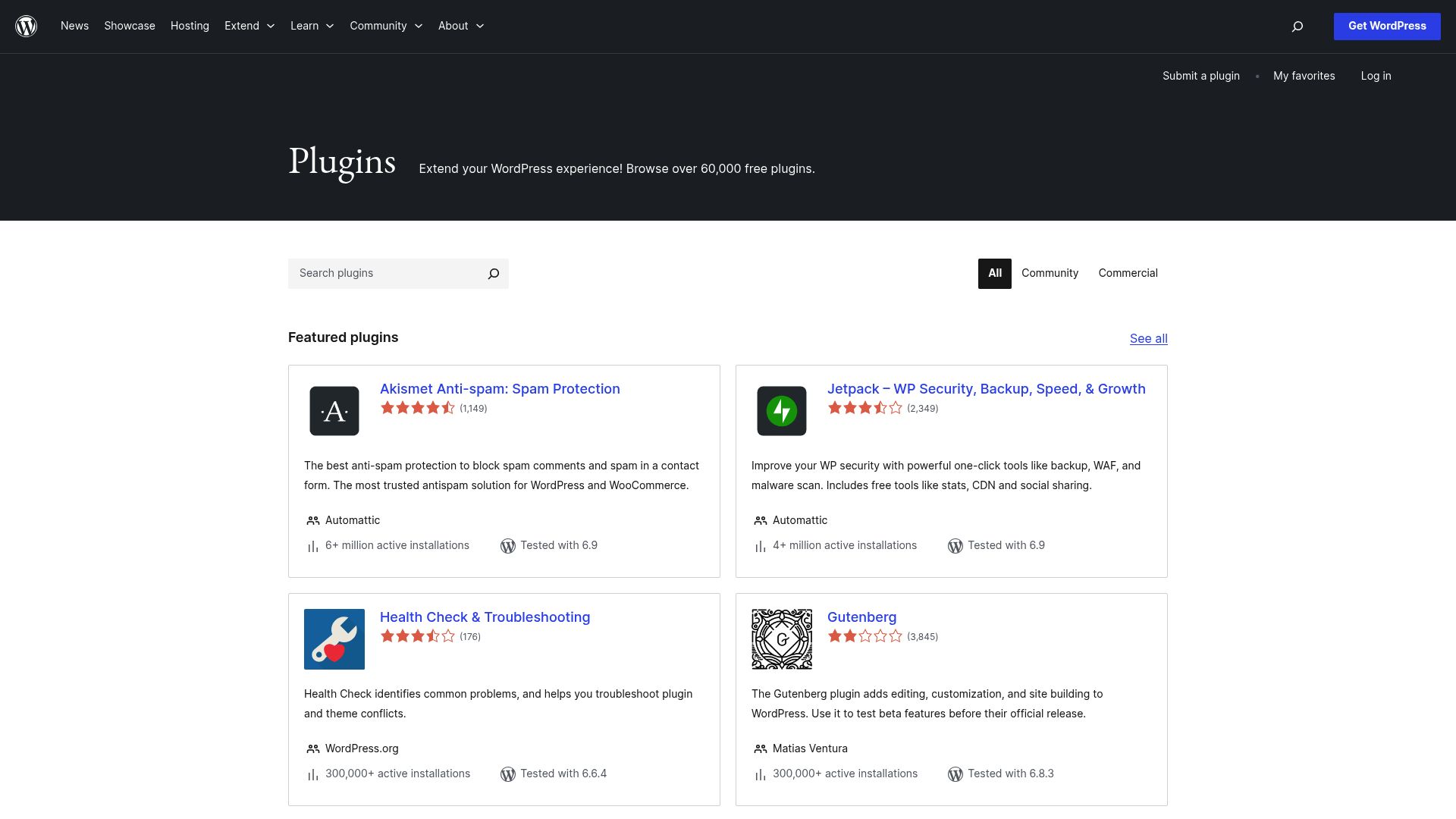
One major issue is API dependency. Most "open source" AI builders actually rely on external APIs (like OpenAI's GPT-4) to function. While the builder code is free, you still have to pay for the intelligence that powers it.
If you are building a custom website builder without subscription hopes, this can be a rude awakening. You might not pay the builder company, but you will receive a bill from the AI provider based on usage.
Furthermore, compatibility hell is real.
You might find an amazing open-source AI plugin that generates text perfectly.
Then you install an open-source gallery plugin. Suddenly, the AI plugin stops working because they both try to use the same JavaScript library.
Resolving these conflicts requires reading error logs and understanding code. If a snippet of code like var x = 5; looks like complete gibberish to you, that will be a major roadblock.
Detailed Comparison: Open Source vs. Managed Platforms
To help you really see the trade-offs, let's put them side-by-side. This isn't about deciding which one is universally "better," but figuring out which one is the right tool for *your* business right now.
The table makes the divide pretty clear.
The AI website builder open source path offers unlimited potential but demands unlimited responsibility.
When Should You Choose Open Source?
We aren't here to say open source is bad. It is the backbone of the internet for a reason.
There are specific scenarios where it is absolutely the right choice.
If you are a developer or a tech-savvy entrepreneur, the flexibility is unmatched. If you need to build a web application that does something completely novel, like a real-time AI-generated poetry battle platform, a managed builder might be too restrictive.
Choose open source if you have a strict policy on data sovereignty. If you legally cannot store your data on a third-party cloud, self-hosting is your only option.
If you have more time than money, the sweat equity you put into an open source site can save you cash in the short term. Just be aware that your time has value, too.
When is a Managed Platform Like Kleap the Smarter Move?
For the vast majority of small businesses, entrepreneurs, and freelancers, time is the most scarce resource.
You don't want to spend your Sunday afternoon debugging a database connection error.
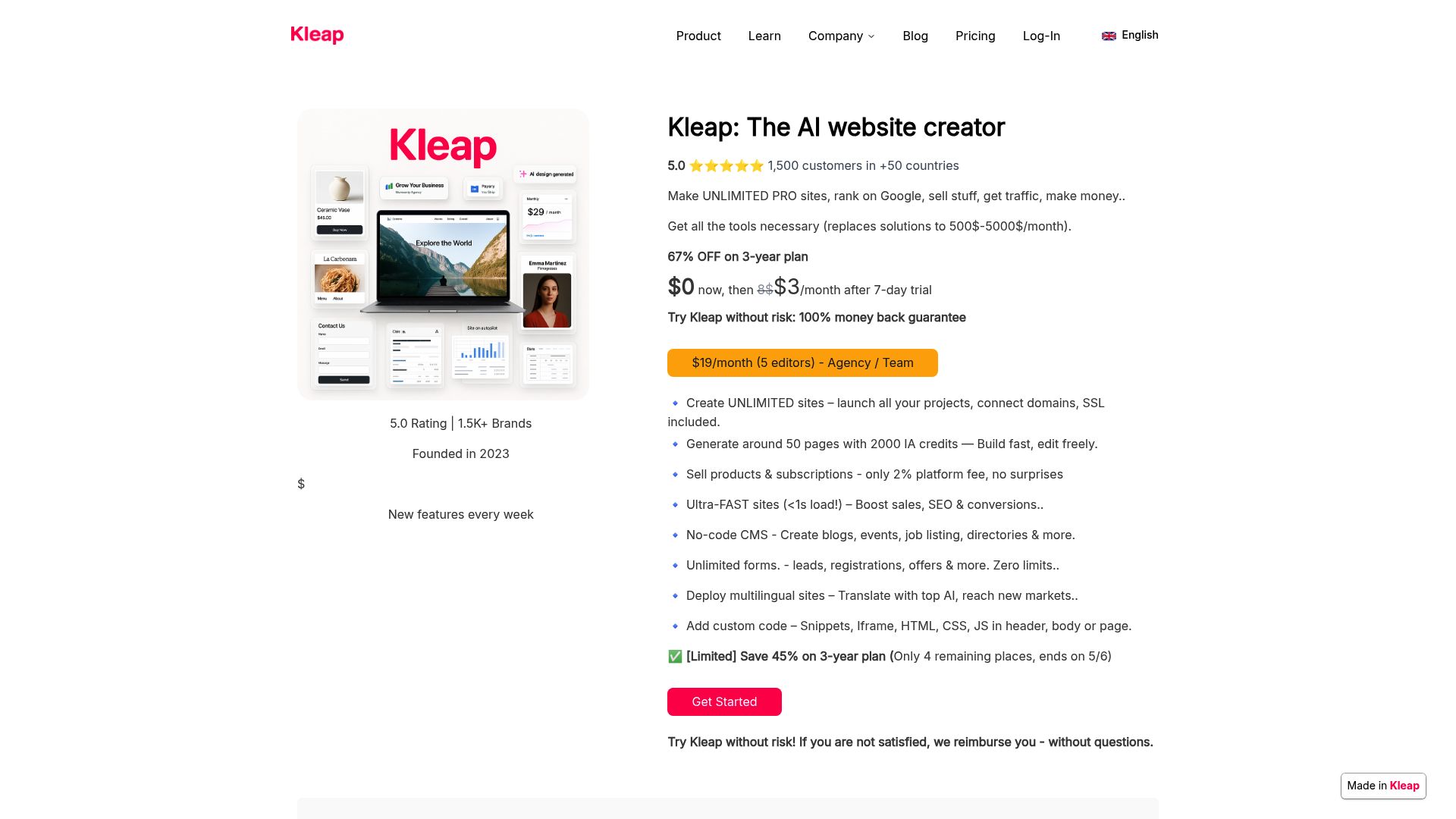
This is where Kleap shines. We take the power of AI and package it in a way that is accessible. You get the benefits of AI generation, fast copy, beautiful layouts, and smart functionality without the technical headache.
If you want a fast, low-effort setup, a managed platform is superior.
You answer a few questions, and the AI builds the site.
Security is another huge factor. If you are running an online store, do you really want to be personally responsible for securing credit card transactions?
Managed platforms adhere to strict compliance standards that are difficult to replicate on a DIY server.
Essentially, if your goal is to use your website as a tool to grow your business, rather than making the website be your business project, a managed solution allows you to focus on what matters: your customers.

The Hidden Cost of 'Free': A Real-World Perspective
Let's look at a scenario.
You decide to build a portfolio site. You download an open source AI builder.
It is free.
Great start.
First, you need hosting. That's $10 a month for decent speed. Then you need a domain.
Another $15 a year.
You realize the free AI plugin is limited, so you buy the 'Pro' version for $50. Then you need a security plugin because you noticed some bot traffic.
Another $30.
Suddenly, your 'free' site has cost you $100 upfront and $10 a month. But then an update breaks your gallery, and you spend four hours fixing it.
If your hourly rate is $50, you just spent $200 of your time.
Compare this to a predictable subscription where hosting, security, and AI tools are bundled. The AI website builder open source route often ends up being more expensive when you factor in the total cost of ownership and the value of your time.
📸 kleap.co
Why Hybrid Solutions Might Be the Future
The industry is moving toward a middle ground. We are seeing open source projects offering 'managed hosting' versions, and managed platforms offering more API access.
However, for now, the divide remains clear. The choice depends on your DNA as a business owner.
Are you a builder, or are you a user?
If you are a freelancer selling web design services, mastering an AI website builder open source tool can be a career asset. You can mark up the maintenance services you provide to clients.
But if you are a freelancer selling copywriting or photography, your website is just a marketing channel.
You need it to be up, fast, and beautiful.
You don't need access to the kernel code.
The Verdict: Control vs. Convenience
Deciding between an AI website builder open source solution and a managed platform like Kleap comes down to a simple trade-off: control versus convenience.
Open source gives you the keys to the castle, but you also have to clean the moat and repair the roof. Managed platforms invite you into a fully furnished penthouse where the concierge handles everything.
Sources like KumoHQ suggest that while open source fosters innovation, the 'it just works' factor of managed platforms is pivotal for business adoption. The complexity of open source can eat into the time that could be spent on core business activities.
Bringing It All Together
The digital landscape is vast enough for both approaches. There is no single 'best' website builder, only the best one for your specific needs.
If you prioritize deep customization, have technical resources, and demand data sovereignty, the open source path is rewarding.
It is a journey of learning and building.
However, if you prioritize speed, security, and ease of use, a managed AI platform is the logical choice. It allows you to leverage the power of AI without getting your hands dirty in the code.
At Kleap, we believe that technology should empower you, not burden you. The team has built the platform to give you the creative freedom you want with the reliability you need. Why spend hours configuring a server when you could be closing your next deal?
If you are ready to launch a stunning, professional website in minutes rather than weeks, it is time to stop fixing code and start building your business.
Ready to experience the power of AI without the headache?
Try Kleap today and see the difference a managed platform can make.
Frequently Asked Questions (FAQ)
Is an open source AI website builder completely free?
Typically, the software license is free. However, you will still pay for web hosting, domain names, and often for premium plugins or API usage fees for the AI features.
Can I switch from an open source builder to Kleap later?
Yes, you can definitely migrate. While you can't just copy and paste the backend code, it’s easy to recreate your content and structure on Kleap, and the AI tools are there to help speed up the whole process.
Do I need to know how to code to use an open source AI builder?
Technically, no, but it helps a lot. If you don't have any coding knowledge, trying to fix errors, customize your layout, or handle security updates can become a huge and frustrating headache.
Which is more secure: open source or managed platforms?
For the average person, managed platforms are usually more secure since the provider handles all security patches and firewalls for you automatically. With open source, its security is entirely up to you and how actively you maintain and update it.