Can I Build an Ecommerce Website with AI? 3 Key Steps

It is the single most common question we hear from aspiring entrepreneurs and freelancers looking to break into the digital market. You have a product idea or a service to sell, but you are staring at a blank screen wondering if you have the technical skills to pull it off.
So, let's get right to it. Can I build an ecommerce website with AI? Yes, absolutely. In 2024, it’s not just possible; it’s probably the smartest and fastest way to get your business off the ground.
Think back to the old days of hiring a developer for a small fortune or losing your weekends trying to tame WordPress plugins that would crash every time you hit 'update'. Thankfully, those days are over.
The game has completely changed.
We're in the middle of a huge shift. AI isn't just a fancy tool for writing blog intros anymore; it's the architect building the entire framework of your online shop.
If you are a small business owner or a freelancer, this technology is the equalizer you have been waiting for.
It allows you to compete with established brands without the overhead.

But how does it actually work?
Does it sacrifice quality for speed?
And most importantly, which platform is right for your specific needs?
We are going to break all of that down.
Key takeaways
- To understand why the answer to "can I build an ecommerce website with AI" is such a resounding yes,
- So, let's clear up a common myth: people often think AI builders are just for simple, one-page websites.
- Building the site is step one.
- To really answer, "can I build an ecommerce website with AI," you've got to figure out which AI is best for you.
- Every single day you put off building your website is a day of lost sales.
The Evolution of Website Building: Why AI Changed the Game
To understand why the answer to "can I build an ecommerce website with AI" is such a resounding yes, you have to look at where we came from.
Ten years ago, building an online store was a logistical nightmare.
You had to buy a domain, find hosting, install a CMS, choose a theme, customize the CSS, and figure out how to securely process credit cards. It was a friction-heavy process that killed countless business ideas before they ever launched.
Today, AI platforms have compressed that weeks-long process into minutes.
The core philosophy of modern builders like Kleap, Shopify, and Hostinger is that technology should be invisible.
You should focus on your product, not your server settings.
When you use an AI builder, you essentially have a conversation with a digital architect.
You tell it what you do, and it builds the room for you.
From Blank Slate to Fully Stocked Store
The magic happens in the onboarding process.
AI ecommerce builders work by asking you a few simple questions about your business. What's your store name?
What's your business all about?
Who are you trying to reach?
You just feed these simple details to the AI, and it gets to work, creating a personalized site structure just for you.
It's pretty wild. I've read that tools like Ucraft Next's UC Copilot can whip up a fully functional website, complete with text and features, in about 2.3 minutes from just a simple description. Source.
Seriously, let that sink in for a second. Two minutes.
A similar story exists with Network Solutions' AI builder, which can spin up a basic, ready-to-customize site in about 6 minutes right after you tell it what you want to achieve. Source.
Even platforms known for their heavy design focus, like Strikingly, can provide you with three different design options in around 90 seconds.
What this crazy-fast automation really means is you can go from nothing to a professional-looking online store, ready for customers, in just a few hours. Source.
Try it — build your site while you read
Describe what you want and get a live, publishable site in seconds. Free to start, no code.
Join 200,000+ makers building real websites with Kleap.
Core Features: What AI Actually Handles for You
Let's clear up a common myth: people often think AI builders are just for simple, one-page 'brochure' sites. The thinking is that they're fine for a portfolio, but they crumble when you try to run a real shop with all its moving parts. That is outdated thinking.
When you ask 'can I build an ecommerce website with AI,' you are asking if the AI can handle the logistics of commerce. Let's look at the specific capabilities these platforms offer.
Intelligent Product Management
Managing inventory is usually the most tedious part of running an online store.
Uploading photos, writing descriptions, and tagging categories is exhausting.
AI changes this workflow. You can upload up to 1000 products with images and descriptions on platforms like Hostinger.
Source. But here is the cool part: many platforms include AI product generators.
These tools automatically create product descriptions when you upload images.
If you are selling a 'Handmade Ceramic Vase,' the AI analyzes the image and writes a compelling description about its 'earthy tones' and 'minimalist design.' You can edit it, of course, but the blank page problem is solved. Source.
Furthermore, AI-powered image editing tools help enhance your product photos without requiring design skills. Source. They ensure your store looks consistent and professional.
Secure Payments and Checkout Logic
You cannot have a store without a register.
Integrating a payment gateway used to require an API key and a prayer. Now, it is the default.
Pretty much every solid platform out there now comes with built-in payment processing and checkouts that are already optimized to get you more sales. Source.
The whole point is to stop people from abandoning their shopping carts, which is a huge deal. A clunky, frustrating checkout is the quickest way to lose a sale.
AI builders are designed with all the proven tricks of the trade to ensure that the journey from 'Add to Cart' to 'Thanks for your order!' is as smooth as possible.
Oh, and the logistics. If you have ever tried to manually calculate shipping rates for different zones, you know exactly how painful that can be.
Built-in shipping options and automatic tax calculation tools streamline the logistics side of your business. Source.
Delivery management systems help you track and organize orders efficiently. Source. For a small business owner, having this automated means you don't need a degree in supply chain management to send a package.
Can I Build an Ecommerce Website With AI Optimized for Google?
Building the site is step one. Getting people to find it is step two.
This is where many DIY attempts fail. You build a pretty site, but Google does not favor it.
AI is particularly good at the technical side of SEO (Search Engine Optimization).
AI SEO assistants provide focus keyword suggestions and help complete your site's SEO details without technical hassle.
Instead of guessing what to put in your meta description, the AI analyzes your content and writes it for you. It ensures your sitemap is tidy and your site loads quickly.
But it's not all technical SEO; these tools are also a huge help with your content marketing.
You've got tools that can draft emails or even blog posts in your brand's voice, helping you pull in more traffic and keep your customers engaged.
Okay, so the market is packed with choices, and it can feel a little overwhelming.
To really answer, "can I build an ecommerce website with AI," you've got to figure out which AI is the right one for you.
Here at Kleap, we're all about a mobile-first philosophy that lets creators build right from their phones. But to make the best choice, you need the full picture of what's out there.
We've intentionally built Kleap to be different. It’s a website builder designed for service-based businesses and creators who live and die by speed.
If you're the kind of entrepreneur who basically runs your entire business from your phone, then you’ll find that Kleap is in a league of its own.
A lot of other platforms were originally built for desktop and then awkwardly crammed onto a smaller screen.
We did the opposite. Kleap was born on mobile, designed from day one to be powerful on the device you use most.
It uses AI to spin up high-converting pages in a flash, which is perfect for freelancers and small businesses who just want to sell their services or digital products without getting lost in a complicated dashboard.
We've streamlined the whole thing so much that you could build your site while you're waiting for your morning coffee.
You can't talk about ecommerce without mentioning the 800-pound gorilla in the room: Shopify.
Shopify was built from the ground up for ecommerce, mixing its new AI-powered site creation with that checkout system everyone knows is top-notch. Source.
It has a tool called Shopify Magic that helps write product descriptions, headlines, and even customer emails.
They also have a feature called Sidekick, which is like having a little AI business coach right in your dashboard, giving you personalized tips. Source.
Kleap vs Shopify for ecommerce often comes down to complexity.
Shopify is powerful, but it can be overwhelming and expensive for a solopreneur just starting out. If you need complex inventory management for thousands of SKUs, Shopify is great.
Hostinger: Speed and Affordability
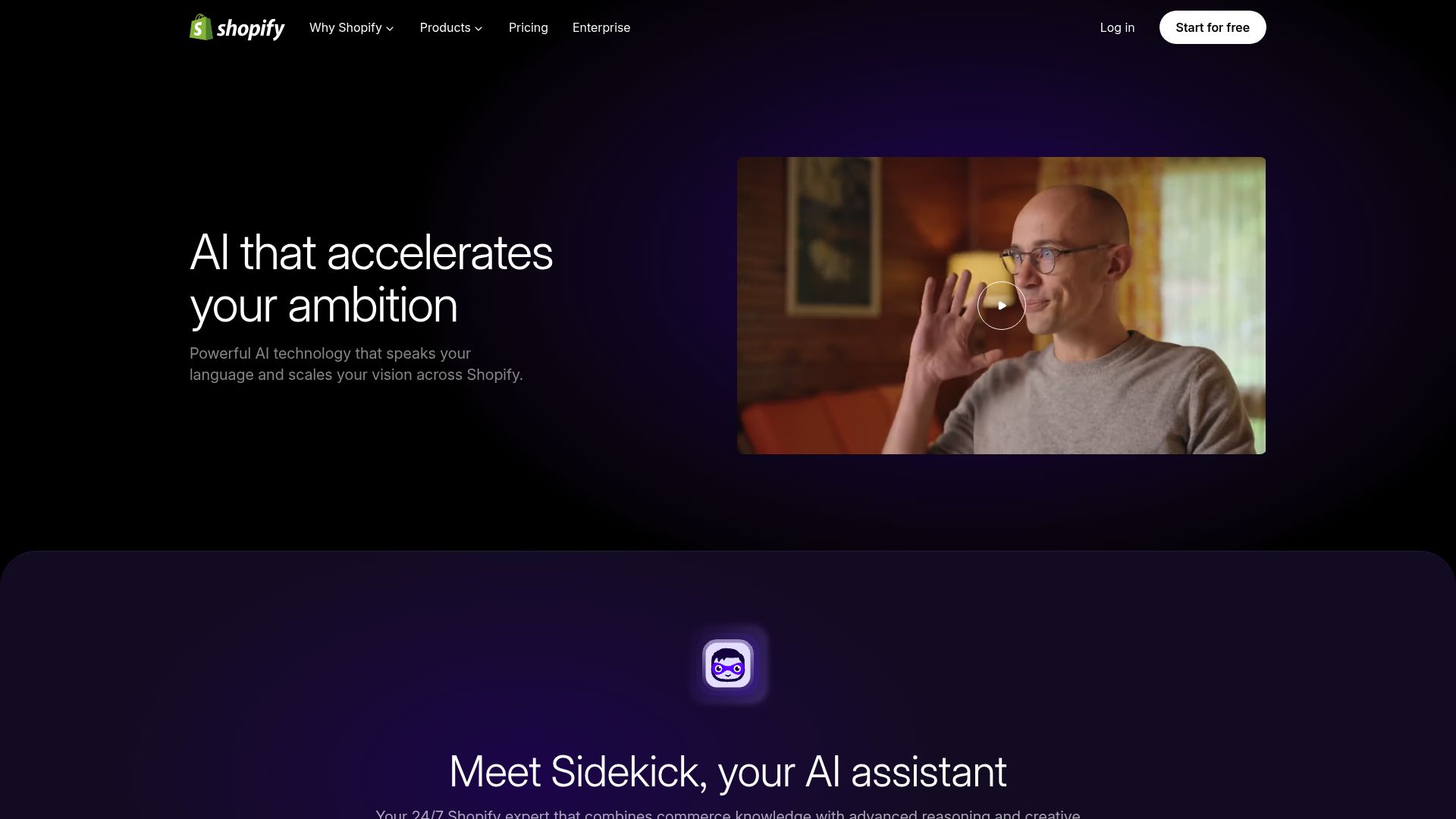
Hostinger's tearing it up with their AI tools, their builder can get a store up and running in less than a minute. It comes with an AI-powered product description writer: an SEO helper, and even a logo maker.
It's a really solid choice if you're watching your budget and just need to get a standard, functional site online quickly.
Wix gets a lot of praise for having one of the best all-around AI builders with a whole suite of AI tools
Plus, it’s built on a foundation of solid security and the kind of powerful infrastructure big companies use. Source.
Wix is amazing if you're the type who loves to drag and drop every single pixel into its perfect place. The only catch? All that freedom can sometimes bog you down in "design paralysis," where you're just tweaking forever instead of actually selling.
Let's be honest
Their Design Intelligence toolkit is a huge bonus for small businesses, giving you tools to really nail down your brand's look and feel. Source.
If your whole brand is built on stunning visuals, such as being a photographer selling prints, then Squarespace should definitely be on your list.
Here’s something most people don't think about enough
Every single day you put off building your website is a day of lost sales. When you launch with an AI builder, you're not just saving a ton of money on a developer; you're also saving precious time. Source.
You maintain full control with easy-to-use tools, built-in hosting, and security.
Traditionally, you might wait three months for an agency to build your site. They may charge you $5,000. With AI platforms, you can be live this afternoon. The monthly subscription costs less than a lunch.
This democratization of technology means that the barrier to entry is virtually zero. The only thing stopping you is the decision to start.
No Coding Skills? No Problem
You might be worried that using an AI builder means you are stuck with whatever the robot spits out. That's a valid concern, but unfounded.
All these platforms operate on the principle that anyone can build a professional ecommerce site. You don't need to know HTML, CSS, or any programming language.
Instead, you receive drag-and-drop editors that allow you to customize layouts. You can change fonts and reorganize content intuitively. Source. After the AI generates your initial site, you have complete control to tweak and customize every element until it aligns with your vision.
For example, if the AI places a "Contact Us" section at the bottom and you want it at the top, you simply drag it there.
It is tactile and visual.
Kleap vs Shopify for Ecommerce: A Quick Reality Check
Let's address the keyword kleap vs shopify for ecommerce directly because it is a comparison many of our users make. Here is the breakdown.
Shopify is an ecosystem. It has an app store with thousands of plugins.
If you want to drop-ship products from AliExpress or run complex wholesale pricing tiers, Shopify is built for that. However, that complexity comes with a learning curve.
Kleap is built for the modern creator. It is for the person who sells a course, a digital guide, a consultation, or a curated selection of physical products. It is streamlined.
If you want to spend weeks learning a platform, go with the big legacy players. If you want to spend minutes building a site so you can get back to your actual business, Kleap is likely the better fit.
Website Builder for Service Businesses: The Untapped Potential
While we are talking about ecommerce, we shouldn't forget that selling services is ecommerce. You are processing a transaction online.
This is where the term website builder for service businesses becomes relevant.
Many traditional ecommerce platforms (like early versions of Shopify or WooCommerce) were terrible for services. They forced you to have shipping addresses for digital downloads or consultations.
AI builders have gotten much smarter about this. Platforms like Kleap and Ucraft allow you to set up appointment bookings and digital product delivery as easily as shipping a t-shirt. Source.
If you are a consultant, a yoga instructor, or a graphic designer, you need a system that understands you aren't shipping a box.
You are delivering value.
The AI can structure your site to highlight testimonials and booking calendars rather than product galleries.
Practical Tips for Success with AI Builders
Just because the AI builds the site doesn't mean you can go on autopilot. Here are some actionable takeaways to ensure your store succeeds.
1. High-Quality Imagery is Non-Negotiable
The AI can organize your layout, but it cannot take photos of your product for you. Use good lighting. If you are selling services, use high-quality headshots.
Trust is visually transferred.
2. Refine the Copy
AI writes great drafts.
But you should add your personality. If your brand is quirky, edit the text to sound quirky.
Don't settle for the generic "Welcome to our store" text.
3. Test the Checkout
Before you announce your launch, buy something from your own store and go through the process.
See if the confirmation email looks right. The AI sets it up, but you need to verify the experience.
The Future is Automated
The question "can I build an ecommerce website with AI" will soon seem as outdated as asking "can I send a letter via email?"
It is becoming the standard.
The technology is liberating small business owners from the tyranny of technical debt. It allows you to be agile, test ideas quickly, and pivot without losing thousands of dollars.
Whether you choose Kleap for its mobile-first agility or another platform for its specific feature set, the power is now in your hands. The gatekeepers are gone.

Ready to Start?
You don't need a tech team. You don't need a massive budget. You just need an idea and a few minutes.
At Kleap, we are dedicated to making this process as effortless as possible. Why not try building your site today?
It might just be the most productive ten minutes of your year.
FAQ
Can I really build a full store without coding?
Yes. AI website builders enable you to create a fully functional online store, including payments, shipping, and product management, without writing a single line of code.
Is Kleap better than Shopify? That really depends on what you're trying to do. If you're running a service business, you're a creator, or you just want something fast and mobile-friendly, you'll probably find Kleap is quicker and a lot easier to handle.
Shopify really shines when you're dealing with huge retail operations and have complex inventory to manage.
How long does it really take to build a site with AI? You'd be surprised. Most AI builders can produce the basic framework for your site in less than 5 minutes.
From there, adding your own products and giving it your personal brand touch usually means you can have a site ready to go live in just a couple of hours.