5 Mobile-Responsive Site Builders for Small Business

You are sitting in a coffee shop and looking around. Everyone is glued to their phone.
They are searching for local services: buying products, or reading reviews.
Now imagine they land on your business website and have to pinch and zoom just to read your phone number. They leave immediately.
This scenarios plays out thousands of times a day.
Finding the right responsive website builder for small business is not just about making things look pretty. It is about survival. As someone who has built countless sites and advised hundreds of entrepreneurs, I know the struggle of choosing between complex tools and over-simplified toys.
You need a platform that works as hard as you do. You need visibility on Google and a flawless mobile experience.
In this guide, I will walk you through the research-backed leaders of the industry and show you exactly how to pick the tool that turns visitors into paying customers.

Why a Responsive Website Builder for Small Business is Non-Negotiable
Let's get straight to the point.
Google uses mobile-first indexing.
This means the search engine predominantly uses the mobile version of the content for indexing and ranking.
If your site isn't responsible, you are invisible.
A responsive website builder for small business ensures your layout adapts automatically to any screen size. Whether a customer views your site on an iPhone, a Samsung tablet, or a massive desktop monitor, the experience remains seamless.
But there is more to it than just screen sizes. Speed matters. Mobile networks can be spotty.
The best builders optimize images and code automatically so your site loads before your customer loses patience.
For entrepreneurs and freelancers, this technology used to cost thousands in developer fees.
Now, it is baked into the platforms we use every day.
Try it — build your site while you read
Describe what you want and get a live, publishable site in seconds. Free to start, no code.
Join 200,000+ makers building real websites with Kleap.
Top Contenders: Finding Your Mobile Friendly Website Builder Tool
The market is flooded with options. It can be overwhelming.
Fortunately, extensive research from reputable testing labs has clarified the winners for 2025. We looked at expert reviews to bring you a curated list.
Here is naturally how the landscape looks for the modern entrepreneur.

1. Wix, The "Safe Bet" All-Rounder
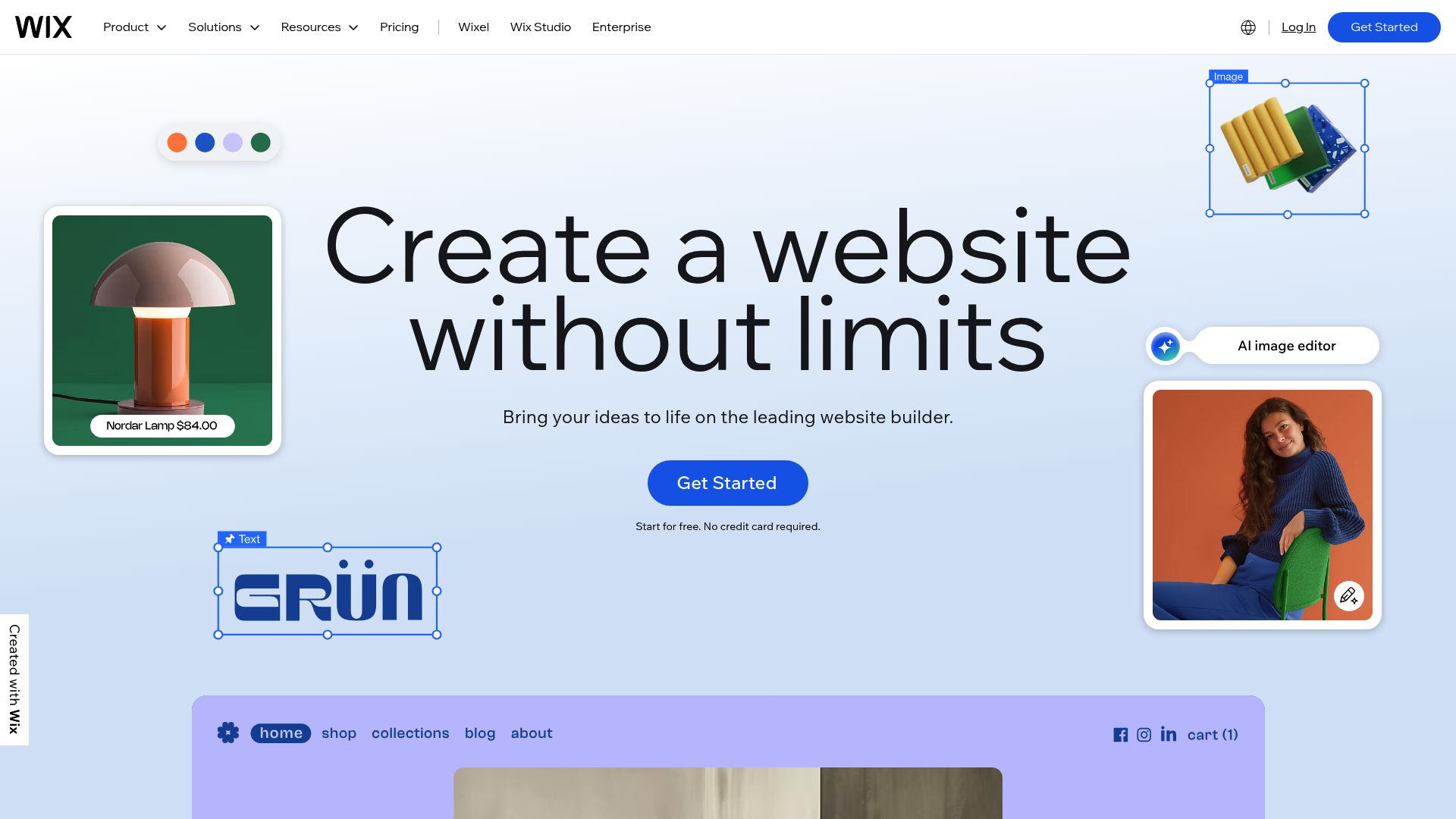
If you ask five people which builder to use, three will probably say Wix. It has earned its reputation. Independent testing labs consistently rank Wix as the best overall choice for general small businesses.
It acts as a massive Swiss Army knife. You get a blog: an online store, booking capabilities, and marketing tools all under one roof. For a responsive website builder for small business, it offers over 200 mobile-ready templates.
What I appreciate about Wix is the built-in marketing suite. You are not just building a site; you are building an engine.
It includes email marketing tools that integrate with services like Mailchimp and a decent CRM to track your leads. Their SEO tools have also improved drastically, offering AI meta-tag creation and integration with Semrush for keyword data.
However, there is a catch. With great power comes great complexity. The editor allows you to move anything anywhere, which means you can accidentally break your mobile layout if you aren't careful.
You might find yourself tweaking the mobile view manually to get it just right.
📸 wix.com
According to Website Builder Expert, Wix is particularly ideal for service businesses and local brick-and-mortar shops that require a single tool to manage almost everything without needing to code.
2. Kleap, The AI-Powered Mobile-First Specialist
While the giants like Wix cover everything, we at Kleap take a different approach.
We noticed that most small business owners don't have weeks to drag and drop elements. You need to be online yesterday.
Kleap is built specifically as a mobile friendly website builder tool.
Our philosophy is mobile-first, not mobile-afterthought. The AI generates the structure for you, ensuring that the site essentially functions like a high-end app on mobile devices.
You can hook it up to payment processors and booking systems in a snap. Honestly, if you've ever felt that Wix is just too much to handle or that Squarespace boxes you in, Kleap is that sweet spot. It is the nimble alternative built for how fast we all have to move these days.
3. Shopify, The King of E-commerce
If you are selling distinct physical products, stop looking and just go with Shopify. Honestly, it's the gold standard for a reason.
Time and time again, when experts test these platforms, Shopify consistently comes out on top for e-commerce.
Think of it less as a website builder and more like a complete retail command center. Things like inventory management, selling across different platforms, and even tools to win back customers who abandon their carts?
It's all just there, ready to go.
And when it comes to how it looks on a phone, reviews I've seen from places like Tooltester highlight that Shopify's new themes are designed for mobile from the ground up, which really helps turn visitors into buyers.
It scales beautifully. You can start as a solopreneur selling handmade candles and grow into a multi-million dollar brand without ever changing platforms.
But let's be real, there's a downside: the price. It's definitely an investment, not some quick, cheap fix.

4. Squarespace, The Aesthetic Choice for Creatives
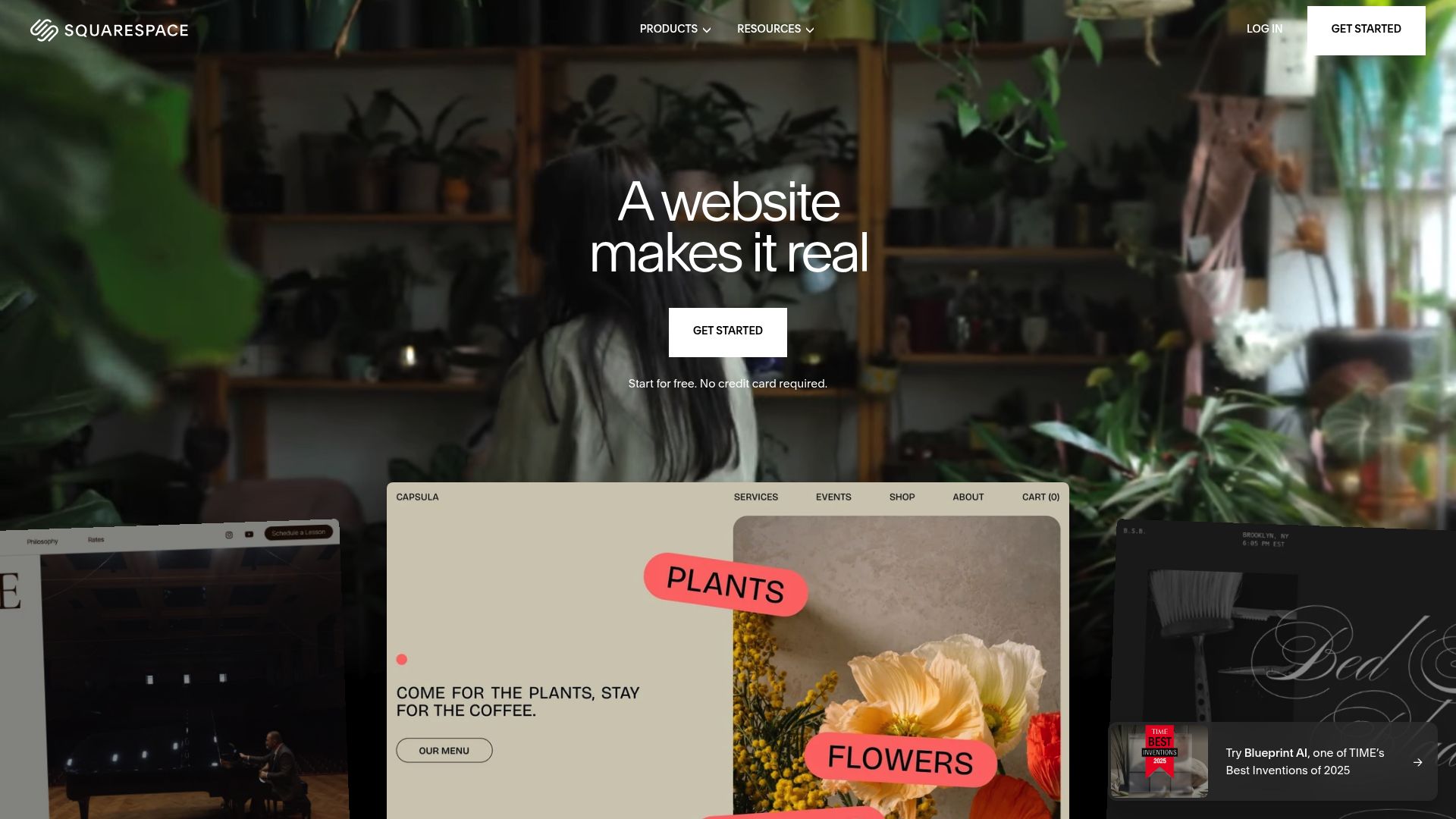
You have probably heard their podcasts ads. Squarespace lives up to the hype when it comes to design.
If you are a photographer, consultant, or restaurant owner, image is everything.
Experts praise Squarespace for its "agency-built" look. You don't need a designer's eye because the templates prevent you from making ugly mistakes. The responsiveness is locked in.
You cannot break the mobile view as easily as you can on other platforms because the grid system is more rigid.
It is fantastic for service businesses thanks to the Acuity Scheduling integration. Clients can book appointments directly on your mobile site without friction.
Site Builder Report notes that it is the top design-led option for services and creatives.
5. Hostinger Website Builder, The Budget-Friendly Contender
Sometimes cash flow is tight.
I get it. If you need a professional site for the price of a cup of coffee, Hostinger (formerly Zyro) is the smart move.
It is surprisingly capable for the price.
You get a small business website builder with seo basics and responsive templates for a fraction of the cost of competitors. We are talking about plans often starting around the $2.99 mark.
It includes AI tools to help write text and generate logos. It is not as powerful as Wix or as specialized as Shopify. However, for a simple brochure site or portfolio, it punches above its weight.
It is perfect for the lean startup that needs to validate an idea cheaply.
Critical Features in a Small Business Website Builder with SEO
Many builders claim to be "SEO ready," but that can mean very different things. When you evaluate a responsive website builder for small business, you need to look under the hood.
Technical SEO vs. On-Page SEO Most builders handle the technical stuff. They create the sitemap, ensure SSL security, and handle mobile rendering. But what about the content?
A great builder guides you.
It should prompt you to add alt text to images and write meta descriptions.
Speed Optimization Google loves speed. Platforms like Kleap and Shopify are built to be speedy right from the start. But if you end up picking a clunky theme on WordPress or bog down a Wix template with too much stuff, you could find yourself fighting to get good "Core Web Vitals" scores from Google. This could happen without a lot of manual tweaking.
Structured Data Okay, this here is the secret sauce. In simple terms, structured data is what tells search engines, 'Hey, this page is about a local business,' or 'This is a product page.'
The really smart builders handle all this coding for you behind the scenes. This is how you get those cool 'rich snippets' (like star ratings or event times) to show up right in the search results.

How to Choose: A Practical Decision Matrix
Still undecided?
Let's break it down by your specific situation.
Business isn't one-size-fits-all, and neither is your website tool.
Scenario A: The Service Provider
You are a consultant, plumber, or therapist. You need bookings and trust.
Recommendation: Look at Kleap for speed and AI setup, or Squarespace for high-end aesthetics.
Stick to clean designs where the phone number and "Book Now" button are sticky on the mobile screen.
Scenario B: The E-commerce merchant
You sell physical goods.
Recommendation:Shopify. Do not overthink it. The extra cost is worth the reliability.
If you only have one or two products, a simpler builder with a PayPal button might suffice, but for growth, go with the pro tool.
Scenario C: The Content Creator
You blog, share videos, and maybe sell a digital course.
Recommendation:Wix or WordPress (if you are tech-savvy). You need flexibility in how you display content.
Ensure the small business website builder with seo features are robust so your articles rank.
The Future is Automated and Mobile
We are moving past the era of "drag and drop" into the era of "describe and generate." The manual labor of web design is vanishing.
AI is taking over the heavy lifting. This is great news for you.
It means you can focus on your product and your customers rather than worrying about padding and margins. Tools like Kleap are leading this charge by ensuring that when you build, you build for the future.
Remember that a website is never truly "finished." It is a living extension of your business. The right tool makes it easy to update a price, add a testimonial, or publish a blog post from your phone while you are waiting in line at the bank.
Final Thoughts
Selecting the best responsive website builder for small business comes down to honest self-reflection. How much time do you have? What is your budget?
What is your technical skill level?
For total control and features, Wix is the default powerhouse. For pure e-commerce, Shopify reigns supreme.
For design lovers, Squarespace wins.
And for the modern entrepreneur who wants AI efficiency and a mobile-first approach, Kleap is ready to serve.
Don't let analysis paralysis stop you.
The only bad website is the one that doesn't exist.
Pick a tool, get your content up, and start selling.
Ready to launch a site that looks stunning on every device without the headache?
Frequently Asked Questions
What’s the most budget-friendly responsive website builder for a small business?
You'll find that Hostinger Website Builder and the plans from Wix that show ads are some of the cheapest ways to get started.
But, if you want a professional site without their ads on it, you should probably budget somewhere between $10 to $25 a month.
Can I switch website builders later?
Technically yes, but it is difficult.
You usually cannot export your design file from one platform to another. You would have to rebuild the site on the new platform, though you can keep your domain name. This is why choosing the right mobile friendly website builder tool from the start is crucial.
Do I need to know coding to use these builders?
Absolutely not. All the platforms mentioned in this article (Wix, Shopify, Kleap, Squarespace) are "No-Code" solutions designed specifically for non-technical users.
How much does mobile-friendliness really affect my Google ranking?
Honestly, it's a huge deal and a primary ranking factor.
Google now uses what they call 'mobile-first indexing.' This just means they look at the mobile version of your site first to decide how to rank you. So, if your site is a mess on mobile, you can bet your SEO is going to take a major hit.