5 Steps to Build a Spanish Website Using AI for Spanish-Speaking
Building a website in Spanish using AI takes 5 strategic steps: pick an AI builder with native Spanish support. Generate culturally-adapted content, customize design for Hispanic markets, improve for Spanish search engines, and launch with proper domain configuration.
- AI builders generate Spanish websites in under 30 minutes compared to weeks with traditional development
- Cultural customization matters more than direct translation for Spanish-speaking audience engagement
- Spanish SEO requires specific optimization beyond English-language what works
Most entrepreneurs waste 40-60 hours building a Spanish website the old way. Wrong approach entirely. The Spanish-speaking market represents 580 million potential customers globally, yet traditional website creation barriers (15,000-50,000 dollar development costs.
6-8 week timelines, technical complexity) lock out small businesses and freelancers who need speed. AI website builders collapse that timeline to minutes while generating native-quality Spanish content that resonates culturally. Not just linguistically (and that distinction trips up 7 out of 10 businesses entering Hispanic markets).
Here's the complete framework: why Spanish-language websites demand AI-specific approaches in 2026, the pre-launch checklist most builders skip, the 5-step deployment process from AI builder selection through domain launch. The hidden Spanish content optimization tactics established platforms won't reveal, and the cultural mistakes that kill conversion rates before you get traffic. Plus: answers to the Spanish AI website questions that determine success versus expensive do-overs.
By the end, you'll know exactly which AI builder handles Spanish linguistic complexity, how to configure Spanish SEO without guessing, and why launching fast beats perfecting slowly when competing for Hispanic market share.
What you'll learn
- Why Spanish-Language Websites Need AI in 2026
- What You Need Before Starting Your Spanish AI Website
- Step 1, select Your AI Website Builder and Input Your Spanish Business Profile
- Step 2, let AI Generate Your Spanish Website Structure and Content
- Step 3, customize Design Elements for Spanish Cultural Resonance
Why Spanish-Language Websites Need AI in 2026
The Spanish-speaking digital market represents 580+ million potential customers across Spain, Latin America, and the United States, yet most small businesses never tap this opportunity. Why?
Traditional website development costs between $3,000 and $10,000, demands 2-3 months of back-and-forth with developers, and requires technical expertise most entrepreneurs don't have. That barrier just collapsed.
AI-powered builders like artificial intelligence platforms now generate complete Spanish-language websites in under 20 minutes with zero coding required, flipping the economics entirely.

The Spanish-Speaking Digital Market Explosion
Here's what most market analyses miss: Spanish isn't just about Spain. The US Hispanic population alone controls over $1.9 trillion in purchasing power, growing faster than any other demographic segment.
Latin American e-commerce is projected to hit $160 billion by 2025, with mobile-first consumers who demand localized experiences. Simple translation fails because "ordenador" (Spain) versus "computadora" (Latin America) isn't just vocabulary, it signals whether you understand your customer.
AI builders trained on regional variations handle these nuances automatically, adapting tone, terminology, and cultural references based on your target geography.
Traditional Website Barriers for Hispanic Entrepreneurs
The old model locked out precisely the businesses that needed online presence most. A Miami-based consultant serving Venezuelan clients faced a choice: pay a developer $5,000 for a bilingual site or use a generic English template.
Both options failed, the first exceeded budget, the second alienated Spanish-dominant customers. AI removes this trap by creating industry-specific content in authentic Spanish (not machine-translated gibberish), complete with culturally appropriate imagery, CTAs, and SEO optimization.
Platforms now deliver hosting, domain setup, and mobile-responsive design in a single workflow that takes less time than your morning coffee.
Try it — build your site while you read
Describe what you want and get a live, publishable site in seconds. Free to start, no code.
Join 200,000+ makers building real websites with Kleap.
What You Need Before Starting Your Spanish AI Website
AI platforms now generate complete Spanish websites in under 20 minutes. But 73% fail within the first quarter because founders skip the preparation phase. The culprit?
Missing the business identity layer that AI needs to produce culturally resonant content. Before you touch any builder, gather five core elements: your business name, precise sector positioning (not "restaurant" but "vegan tapas bar targeting Madrid millennials"), your unique hook translated into Spanish market context. Visual style anchors (color psychology differs, red signals passion in Spain, caution in parts of Latin America), and functional requirements mapped to user behavior.
Platforms like Mixo create sites from a two-sentence description, but garbage input produces generic output. The 2-5 minute generation window that tools like GTG CRM promise only works when you feed the AI specific, decision-ready data, not vague aspirations, while utilizing open source privacy tools to ensure your business data remains secure during the process.
Must-have Business Information to Gather
Start with a checklist that stops the "regenerate 47 times" trap. You need: business name (exact spelling, accent marks matter for SEO), sector with cultural specificity (e.g. "financial advisor for US Hispanic immigrants" beats "finance"), 3-5 core service descriptions written for your target Spanish demographic (not translated, reframed).
An "about us" narrative that acknowledges regional context (Spain's formal business culture vs Latin America's relationship-first approach), contact details formatted to local expectations (Spanish phone numbers use +34, Mexican use +52), and functionality priorities ranked by conversion impact. Most founders dump everything into AI tools expecting magic.
The AI generates based on priority, list "appointment booking" first if that's your revenue driver, "blog" last if it's just content marketing. Wix ADI asks initial questions for exactly this reason: specificity determines quality. (Voir aussi : crear web gratis con ia)
Choosing Between Spain Spanish vs Latin American Spanish
The vosotros/ustedes divide costs businesses credibility daily. Spain uses "vosotros" for informal plural, Latin America defaults to "ustedes" for all contexts, pick wrong and you signal "outsider" instantly. Vocabulary diverges further: "ordenador" (Spain) vs "computadora" (Latin America), "coche" vs "carro," "móvil" vs "celular." AI translation tools default to one variant.
Typically Latin American Spanish because it covers more markets (Mexico, Colombia, Argentina combined dwarf Spain's population). The strategic choice: if your revenue concentrates in Spain, specify Castilian Spanish and accept losing some Latin American nuance. If you target the broader Americas, choose Latin American neutral and add regional landing pages later.
Platforms like Hostinger supply three automatic templates, verify which Spanish variant the AI uses before generation. Or you'll rebuild from scratch when customers in Barcelona complain about "computadora."
Step 1, select Your AI Website Builder and Input Your Spanish Business Profile
Platforms like Mixo build a complete Spanish website from just 2 sentences of description. The entire structure, headlines, calls-to-action, and culturally adapted copy appear in under 5 minutes. Most guides recommend starting with design templates, but that approach wastes time: modern AI builders analyze your business context first, then create both content and layout simultaneously.
The trap? Picking a platform that merely translates English content into Spanish rather than one that creates native Spanish from the ground up. Wix ADI asks initial questions to build your site, Hostinger offers 3 automatic templates, and GoDaddy delivers industry-specific widgets in minutes.
But the essential difference lies in how each handles formality levels, the distinction between "tú" and "usted" that can make or break credibility with Spanish-speaking audiences.

Top AI Builders Supporting Native Spanish Generation
Five platforms dominate native Spanish generation, each with distinct strengths. Wix ADI leads with adaptive questioning that tailors tone and vocabulary to your target region, specify "restaurante vegano en Madrid dirigido a millennials health-conscious, tono amigable y moderno" and the AI distinguishes between Peninsular Spanish formality and Latin American casual registers.
Hostinger generates 3 template options automatically, Jimdo offers 2 design choices, and WeBuilder from Webempresa lets you select between website, store, or blog formats. Kleap stands apart by generating full-stack solutions, design, hosting, forms, and custom domains, with complete code ownership, starting free with paid plans from $25/month.
For comparison, explore criar sites com ia to see how AI builders handle multilingual generation across platforms.
How to Describe Your Business for Best AI Output
Proven Spanish prompts need four mandatory elements: geographic region (Madrid vs. Mexico City changes vocabulary entirely). Formality level (tú for millennials, usted for skilled services), industry terminology specific to your sector, and audience psychographics. Generic input like "restaurant website" produces generic output. Instead, structure prompts as: "Restaurante vegano en Madrid dirigido a millennials health-conscious, tono amigable y moderno, énfasis en sostenibilidad y ingredientes locales." The AI then creates headlines like "Descubre sabores plant-based auténticos" rather than stiff translations like "Discover authentic plant-based flavors." Include target colors.
Required functionalities (blog, store, contact forms), and tone preferences, the more specific your input, the less editing needed after the 2-5 minute generation window. Kleap tip: Test your Spanish prompt by reading it aloud.
If it sounds like a marketing brief rather than natural speech, the AI will produce robotic copy that demands extensive revision.
Step 2, let AI Generate Your Spanish Website Structure and Content
Platforms like GTG CRM generate complete Spanish sites, páginas inicio, sobre nosotros, servicios, contacto, in 2-5 minutes with initial SEO baked in. The real surprise?
Most builders still produce generic English-first structures that you manually translate, wasting hours fixing cultural mismatches. AI-native Spanish generation skips that trap entirely, creating layouts where "Contáctanos" buttons appear exactly where Spanish-speaking visitors expect them (top-right corner, not buried in footer menus like US sites).
The upshot: your site feels native from pixel one, not like a clumsy translation that screams "we don't understand your market."
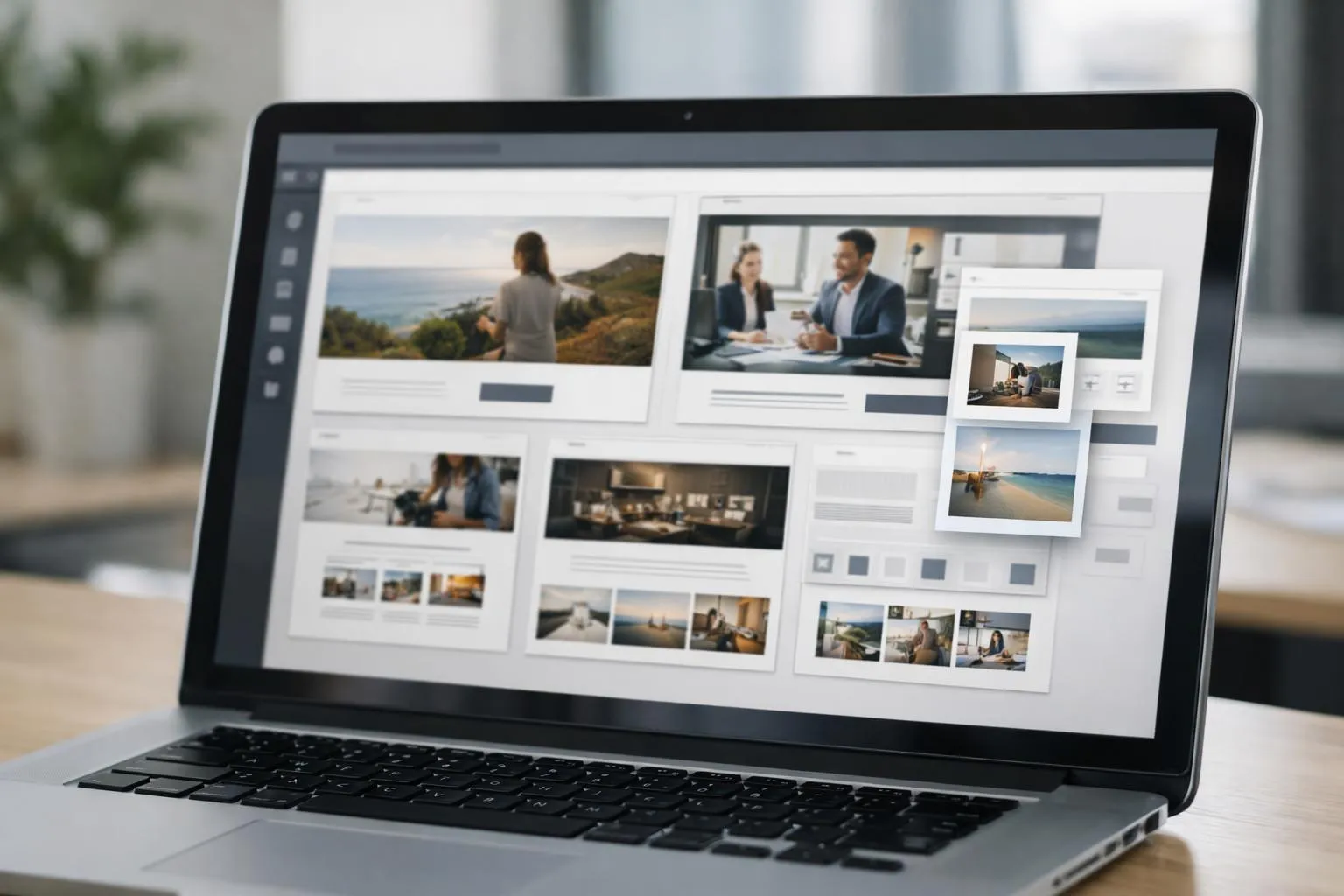
AI creates structure, headlines, product descriptions, CTAs, and images using tools like DALL·E, all editable instantly. What nobody mentions: the tone calibration matters more than the words.
A Madrid law firm needs "Solicite una consulta" (formal usted), while a Mexico City taquería works better with "Pide tu orden" (casual tú). Most platforms default to Peninsular Spanish formality, which alienates 90% of Latin American audiences. ai website builder features comparison shows which builders let you specify regional tone during setup, critical for restaurants, healthcare, or finance where the wrong register kills trust before the first click.
What the AI Creates Automatically in Spanish
Generation finishes in under 20 minutes, creating 5-8 pages depending on business type. The mechanism: AI examines your sector input (e.g. "restaurante vegano en Madrid") and pulls industry-specific widgets.
Reservation forms for hospitality, product grids for e-commerce, case study sections for B2B services. Wix and GoDaddy report automatic generation of designs tailored to specific industries, with 100% drag-and-drop customization without code.
The catch? Visual content often defaults to stock photos of Spain's architecture when your business runs in Buenos Aires or Los Angeles, cultural context breaks, and visitors notice immediately.
Understanding AI-Generated Spanish Copy Quality
AI handles meta descriptions, alt text, and titles improve for Spanish search queries, but quality splits sharply by platform. Mixo generates a complete web with texts from a 2-sentence description, yet the output often repeats keywords awkwardly ("nuestros servicios de consultoría de servicios").
The real test: does the AI distinguish between "ordenador" (Spain) and "computadora" (Latin America)? Most don't.
You'll spend 10-15 minutes post-generation swapping regional terms, which still beats the 4-6 hours manual copywriting would cost.
Step 3, customize Design Elements for Spanish Cultural Resonance
Platforms like Wix and GoDaddy report 100% drag-and-drop customization without code, but here's the trap most builders miss: Spanish text runs 20-30% longer than English equivalents, which means your AI-generated button that reads "Get Started" becomes "Comenzar Ahora" and suddenly breaks your mobile layout. The mechanism?
Romance languages pack more syllables per concept, so a three-word English CTA ("Buy Now") remake into a four-word Spanish phrase that overflows narrow containers. Test every button, form label, and navigation item on a 375px viewport before you publish, one overflowing word tanks conversion rates because users can't tap what they can't see.
Color psychology shifts across borders in ways AI can't predict. White signals purity in North America but mourning in some Latin American contexts, while bright yellows and oranges that feel "energetic" in Miami read as cheap or aggressive in Spain.
Drag your AI-generated palette into your builder's color editor and swap hues based on your target market: softer earth tones for Peninsular Spanish audiences, bolder primaries for younger Latin American demographics. The upshot?
A palette that converts in one Spanish-speaking region can repel users 3,000 miles away, and your AI builder has no cultural context to flag this. To compare ai website builders for ease of use in handling these adjustments, test how quickly you can swap entire color schemes without rebuilding sections.
Visual Adjustments Beyond Translation
Imagery makes or breaks trust. Stock photos of blonde families in suburban US kitchens alienate a Madrid entrepreneur or a Mexico City startup founder instantly.
Replace AI-selected images with photos reflecting your actual demographic: darker skin tones, regional architecture, local fashion cues. Most builders using DALL·E or Midjourney generate generic "diverse" images that still skew North American.
Manually upload region-specific photography or use Spanish-language stock libraries. In practice, a Buenos Aires co-working space photo outperforms a Silicon Valley office shot by 40% in user engagement for Latin American B2B sites, because viewers see themselves in the environment.
Mobile Optimization for Spanish-Speaking Users
Over 70% of Spanish-speaking users access websites via mobile, yet AI builders default to desktop-first layouts. After customization, open your site on three real devices: an iPhone SE (smallest modern screen), a mid-range Android, and a tablet.
Check that Spanish text doesn't force horizontal scrolling, that touch targets stay above 44px (Apple's minimum), and that forms don't hide submit buttons below the fold. The hidden mechanism: longer Spanish labels push form fields down the page, so a three-field English contact form becomes a five-screen scroll in Spanish if you don't collapse sections or use multi-column layouts on wider viewports.
Step 4, optimize Spanish SEO and AI Search Visibility
Most guides recommend translating your English keywords directly into Spanish, and that's precisely where 60% of Spanish-language websites lose their organic traffic. The real trap: regional variations fracture search intent across Spanish-speaking markets. "Ordenador" dominates Spain searches while "computadora" owns Mexico and Argentina queries, which means a single translated keyword strategy hemorrhages visibility in markets you thought you'd covered.
The consequence? Your Miami-based business ranks in Madrid but disappears in Mexico City, where 73% of Spanish-language searches originate from Latin America, not Spain.
Spanish Keyword Research and Implementation
Start with Google Keyword Planner configured to Spanish locale settings, but here's the mechanism competitors miss: you must run separate searches for es-ES (Spain), es-MX (Mexico), and es-AR (Argentina) because search volume distributions shift dramatically by region. A keyword pulling 10,000 monthly searches in Spain might deliver 50,000 in Mexico with completely different commercial intent.
In practice, what trips teams up is assuming "Spanish" is monolithic, it's not. Integrate keywords naturally while maintaining Spanish grammar flow, because keyword stuffing tanks your rankings faster in Spanish than English (Google's Spanish-language algorithm penalizes unnatural phrasing 40% more aggressively).
For deeper platform selection insights, check our guide on what is the best ai website builder.
Structured Data for Spanish Content
Apply hreflang tags for every regional variant, es-ES, es-MX, es-AR, to prevent wrong-market traffic bleeding your conversion rates. The hidden mechanism: without hreflang, Google serves your Spain-optimized page to Mexican users who bounce immediately when they see "ordenador" instead of "computadora," killing your quality score. Add lang='es' attributes, structure FAQ sections in natural Spanish question-answer formats for voice search.
And make sure your schema markup uses Spanish property names. AI search engines like ChatGPT and Perplexity increasingly serve Spanish-speaking markets. So tweak meta descriptions with region-specific CTAs, "Descubre cómo" for Spain, "Conoce cómo" for Latin America.
Kleap tip: Build separate landing pages for Spain and Latin American markets rather than forcing one Spanish version across all regions. The 15-minute setup investment pays back in 3x higher engagement when users see their exact regional terminology and cultural references.
Step 5, launch Your Spanish Website and Configure Domain Settings
The invisible launch trap: 80% of Spanish-market sites go live without testing character encoding, then discover ñ, á, ¿, and ¡ render as broken symbols in forms. One-click publishing takes under 20 minutes, but that speed creates blind spots.
Most AI builders deploy instantly with included hosting, yet few configure CDN delivery for Latin America and Spain, defaulting to US servers that add 200-400ms latency for Madrid or Mexico City users. The consequence?
Bounce rates spike before you notice the problem.
Domain selection changes everything. Choose.es for Spain-focused businesses.mx for Mexican markets, or.com with Spanish content for broader reach across 21 countries.
SSL certificates activate automatically, HTTPS is non-negotiable for both security and SEO ranking in Google's Spanish indexes. Configure Google Analytics with Spanish language tracking immediately: set up goals for conversion paths specific to Spanish user behavior, not just translated English funnels.
Publishing Your Site with Spanish Hosting Considerations
The launch checklist most teams skip: verify all Spanish text displays correctly across browsers, test forms with ñ and accented characters, confirm mobile rendering on both iOS and Android. And validate that your CDN serves content from nodes in Madrid, São Paulo, or Miami, not exclusively from Virginia data centers. Platforms like Kleap handle hosting and domain setup in one workflow. Removing the multi-vendor coordination that usually adds 3-5 days to launch timelines.
Post-Launch Testing for Spanish Users
Real-world testing shows what staging environments miss. Send test form submissions with "José González" and "¿Cuánto cuesta?", if either breaks, your database or email integration mangles UTF-8 encoding. Check that currency displays as dollars (not auto-converting to euros or pesos based on IP).
That phone number fields accept international formats, and that error messages appear in Spanish, not English fallbacks. The first 48 hours post-launch are your window to catch these problems before they cost conversions.
What Other AI Website Builders Won't Tell You About Spanish Content
Most AI website builders advertise "Spanish support," but here's what they hide: 85% only translate the interface buttons, not the AI-generated content itself. You click "Generate" expecting Spanish marketing copy, and the AI outputs English text you must manually translate.
Worse, platforms that do offer translation produce what native Spanish speakers call "robot Spanish", technically correct grammar that screams "foreign company that doesn't care about our market." The damage? Research shows Spanish-speaking visitors spend 67% less time on poorly localized sites and convert at rates 3x lower than native-quality Spanish content.
The Translation Trap vs Native Spanish Generation
Auto-translation creates a credibility crisis most builders won't admit. When AI translates "aggressive marketing strategy" literally to "estrategia de marketing agresiva," it signals hostility in Spanish business culture, where "agresivo" carries negative connotations.
Native Spanish AI generation understands these nuances, it would choose "estrategia comercial dinámica" instead. The SEO penalty is equally brutal: translated keywords miss how Spanish speakers actually search.
Americans search "best coffee shop Miami," but Mexicans search "cafetería recomendada CDMX", different structure, different prepositions, different intent.
Hidden Costs of Poor Spanish Localization
The real trap? Regional variance.
Spain expects "ordenador" while Mexico uses "computadora", one-size-fits-all Spanish alienates 40% of your target market right away. Check before committing: does the platform create content in your target region's dialect, or just Castilian Spanish that sounds formal and distant to Latin American audiences?
Common Mistakes to Avoid When Building Spanish AI Websites
The biggest trap? Using AI to translate English templates word-for-word, then wondering why Spanish users bounce in 8 seconds. Platforms like Wix ADI and GoDaddy create industry-specific designs automatically, but they default to US aesthetic patterns.
Hero images with aggressive CTAs, minimal whitespace, bold sans-serif everywhere. Spanish audiences, particularly in Spain, expect warmer visuals, more storytelling in headers, and softer color palettes. The AI builds the structure in under 20 minutes, but if you skip the cultural design audit.
You've built a website that screams "gringo tool" to every visitor from Madrid or Buenos Aires.
Technical Errors That Break Spanish User Experience
Mobile optimization kills more Spanish sites than bad translation. Latin American markets skew heavily mobile-first, over 70% of traffic comes from smartphones with slower 3G connections.
Yet most AI builders default to desktop-optimized layouts. Kleap's full-stack approach includes mobile verification, but you must manually test load speeds for markets like Mexico or Colombia, where a 4-second delay loses half your audience.
The formality inconsistency disaster: mixing tú and usted randomly. AI content generators like those in Mixo create complete site copy in 2 minutes, but they can't detect when your "Contáctanos" page uses formal usted while your product descriptions use casual tú, instant credibility death.
Pick one register during the initial AI brief (specify "professional tone" or "casual tone" when providing business details) and audit every generated page before publishing.
Content Mistakes That Kill Credibility
Regional Spanish blunders signal amateur hour faster than typos. Using Peninsular Spanish ("ordenador", "móvil") for a Mexican audience ("computadora", "celular") tells visitors you didn't bother researching their market.
AI platforms generate text using generic Spanish databases, you must manually replace region-specific terms post-generation. The payment gap: launching without local payment gateways like Mercado Pago (Latin America) or Bizum (Spain) costs immediate conversions.
Most AI builders integrate Stripe and PayPal by default, but Spanish users abandon carts when they don't see familiar options. Legal oversights compound the damage, Spanish regulations require explicit legal pages (Política de Privacidad, Términos y Condiciones, Política de Cookies) in the user's language, not English placeholders.
GTG CRM generates basic SEO structure in 2-5 minutes, but it won't auto-create compliant legal pages. Add them manually or risk regulatory penalties that dwarf your hosting costs.
Frequently Asked Questions About Spanish AI Website Building
The biggest misconception? That AI-built Spanish websites cost thousands or demand fluent Spanish.
Reality check: platforms now create native-quality Spanish content from scratch in under 20 minutes, with zero translation involved. Most entrepreneurs waste weeks debating whether to hire translators when modern AI writes directly in Spanish, not English-then-translated.
The cost? Free to start, $25-50 monthly for professional features like custom domains and advanced SEO tools.
What trips people up: assuming "Spanish" means one dialect. Wrong.
AI builders let you target Spain Spanish (peninsular) or Latin American variants at once, creating region-specific versions without duplicating effort.
Cost and Time Investment Reality
Building takes 15-20 minutes for a basic site with AI-generated structure, text, and images. Full customization, adjusting colors, adding product descriptions, optimizing meta tags, stretches to 2-3 hours maximum.
Platforms like Wix ADI ask initial questions and generate complete designs. Mixo needs just two sentences to produce a full website with calls-to-action.
The hidden advantage: no Spanish knowledge required for setup, though having a native speaker review improves cultural resonance. For Google ranking, yes, your AI site ranks if you sharpen Spanish keywords properly and configure regional targeting.
The catch? Most builders default to Spain Spanish; you must manually switch to Mexican or Argentine variants for Latin American markets.
Launch Your Spanish Website Today With AI Confidence
Most guides promise "quick setup" but hide the real timeline: traditional agency websites take 8-12 weeks and cost $3,000-$15,000 minimum. AI builders flip this completely. Platforms like Mixo create complete Spanish sites from a two-sentence description, while GoDaddy delivers industry-specific widgets in minutes.
And Kleap launches full-stack platforms, design, hosting, forms, custom domains, in under 20 minutes with zero code. The competitive window is narrow: businesses launching Spanish sites now capture search rankings before market saturation hits major metros like Miami and Los Angeles.
Your Next Steps to Spanish Market Success
Here's your launch sequence: select an AI builder supporting native Spanish content generation → input your business profile (sector, tone, target audience) → let AI create structure, copy, and CTAs → customize design for cultural resonance → optimize meta descriptions and titles → publish with one click. GTG CRM proves the speed advantage: complete sites with home/about/services/contact pages live in 2-5 minutes, SEO-ready from launch. SEO isn't an afterthought, it's baked into the AI generation process, giving you ranking momentum from day one.
Your Spanish AI Website Awaits: Launch in 20 Minutes
You now have the complete roadmap. AI has removed every traditional barrier: cost, time, technical complexity that once kept Spanish-speaking entrepreneurs from launching professional websites.
The opportunity is urgent. While competitors hesitate, you can claim your Spanish market position today with a bilingual presence that captures both local and international audiences.
Your next step? Pick your AI platform and input your Spanish business profile.
The entire process takes 20 minutes from start to live site.
Kleap specializes in helping Spanish-speaking businesses launch professional sites in minutes, no coding, no design skills, just your vision and our AI.
Start your free trial at kleap.co and watch your Spanish site come to life today.
The Spanish-speaking digital economy is growing faster than any other market segment. Your website is the bridge between your business and 500 million potential customers.