8 Best Cap Table Software Solutions for Startups in 2026

Cap table software automates equity tracking, helping startups manage ownership stakes and prepare for fundraising rounds without spreadsheet errors.
Modern platforms handle 409A valuations and compliance automatically, saving weeks of manual work
Choose based on company stage: pre-seed needs simplicity, Series A demands investor portal features
AI-powered solutions like Kleap adapt to growth without forcing platform migrations
Most founders discover their cap table is broken at the worst possible moment. Right when investors ask for due diligence documents.
Accurate equity management separates startups that close funding rounds from those that don't. A messy cap table signals operational chaos to investors, while clean ownership records demonstrate professionalism (and it's often the difference between a term sheet and a rejection).
Choosing the right cap table software isn't about features. It's about avoiding expensive mistakes as your company scales.
We'll examine why proper equity tracking protects your fundraising trajectory, how Kleap uses AI to eliminate manual cap table updates, and what criteria actually matter when evaluating platforms. You'll see how Carta became the Series A standard, why Pulley appeals to technical founders, and where enterprise options like Astrella fit.
We also cover AngelList's bundled approach, Capbase for incorporation, Cake Equity's global reach, and Eqvista's budget-friendly model. Then a direct comparison of all eight, real founder feedback, common questions answered, and how to make your final decision based on stage and needs.
Why Cap Table Management Can Make or Break Your Fundraising
One spreadsheet error can derail a Series A. We've seen deals collapse during due diligence when founders couldn't explain dilution scenarios or locate share certificates.
Modern investors want instant access to ownership data before they write checks. That's why cap table software has shifted from optional to essential in 2026, no sophisticated venture firm will tolerate Excel gymnastics when evaluating your equity structure.

The Hidden Cost of Cap Table Errors
Manual tracking turns your cap table into a compliance nightmare. One mistake in ownership percentages can spark legal battles with early employees or mess up your SEC filings. Professional tools track authorized shares, outstanding equity, convertible securities, and liquidation rights automatically.
Honestly, legal teams dig into these data points during acquisitions. Companies using spreadsheets typically find errors only when lawyers ask for documentation. That's when emergency audits cost thousands of dollars you didn't plan to spend.
What Modern Investors Expect to See
Investors expect detailed scenario modeling before they'll commit any capital to your startup. They need clear visibility into dilution across future funding rounds, complete understanding of vesting schedules. Honestly, and confirmation that your option pool can support planned growth.
We've assessed the eight top solutions using four key criteria: visualization clarity, compliance automation, stakeholder communication capabilities, and onboarding speed. These factors distinguish genuine startup tools from basic spreadsheets with fancy branding.
Try it — build your site while you read
Describe what you want and get a live, publishable site in seconds. Free to start, no code.
Join 200,000+ makers building real websites with Kleap.
Kleap: AI-Powered Cap Table Management That Adapts to Your Growth
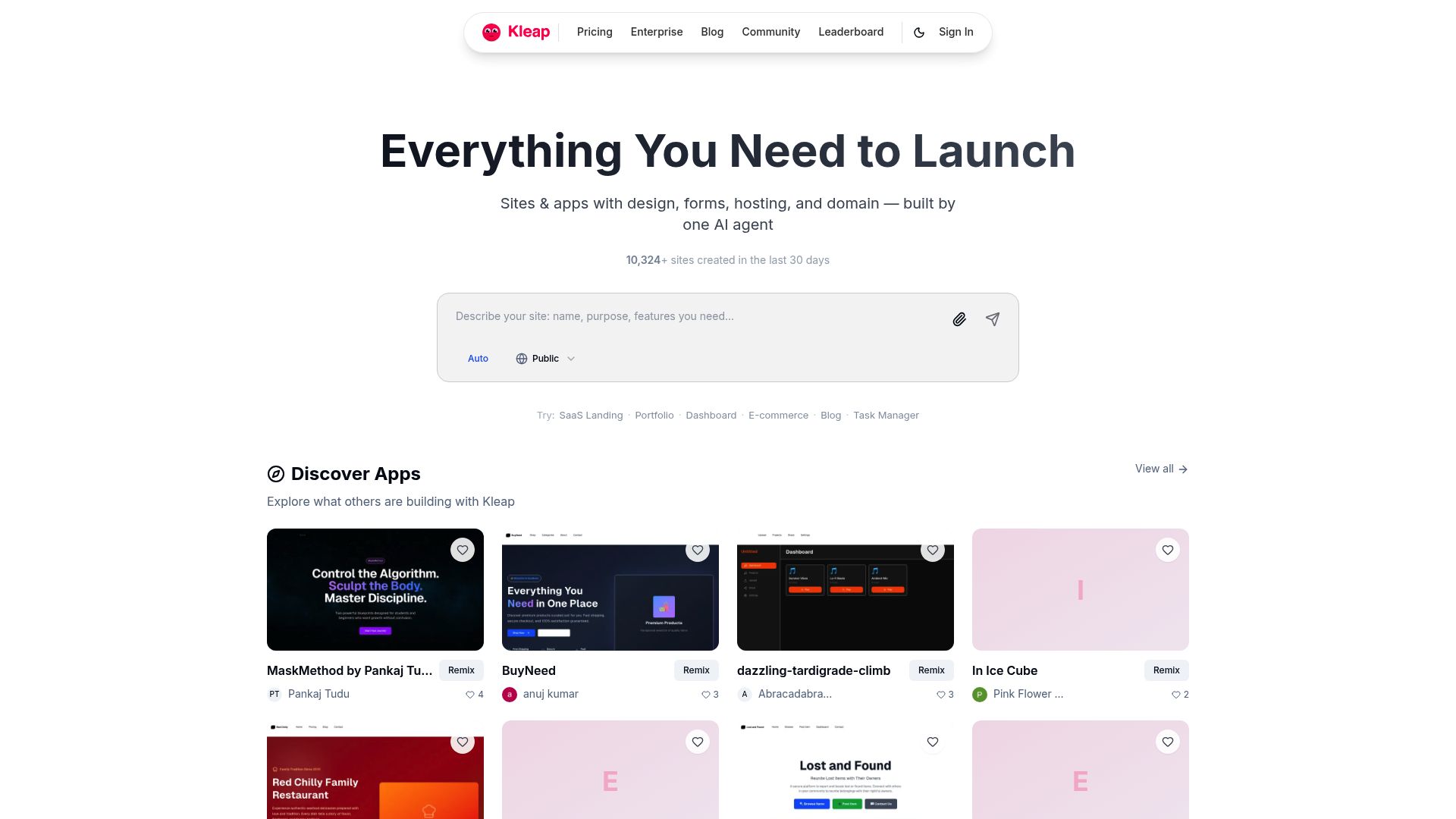
Most cap table tools force you to master complex finance concepts first. Kleap changes that approach completely.
Honestly, the AI engine runs equity calculations on autopilot and predicts dilution scenarios without prompting. Founders can skip the spreadsheet battles and focus on growing their business instead.
The visual interface turns complicated ownership structures into simple charts that anyone can understand quickly.
Revolutionary AI Features That Save Hours Weekly
Unlike traditional cap table software, Kleap's AI actually predicts your next funding round. It models several scenarios at once: raising at $10 million versus $15 million valuation.
How does expanding your employee option pool impact existing shareholders? Honestly, the system creates these projections in seconds, not days.
Its stakeholder portal sends equity updates to investors automatically, cutting out those repetitive email threads. For teams already using Affordable Website Builder for Startups: 5 Proven Strategies, Kleap fits right into your existing workflows without any friction.
Pricing and Best Use Cases
Kleap's free plan handles up to 25 stakeholders, which beats competitors charging $200 monthly for the same access. Companies that need advanced scenario modeling pay $350 each month, while enterprises wanting custom compliance features get tailored solutions from $800.
Honestly, this setup matches Morgan Workplace Solutions' approach but includes AI automation they don't have. Early-stage startups love the free onboarding, and Series B companies rely on predictive analytics that traditional tools just can't deliver.
How We Evaluated These 8 Cap Table Platforms
Picking cap table software doesn't have to be complicated. We used strict criteria to find real solutions instead of overhyped tools. Honestly, our approach focused on features that stop expensive equity errors, visualization dashboards that clarify dilution scenarios fast.
Automated compliance tracking across different jurisdictions, and stakeholder portals that cut down endless email chains about ownership issues.
Non-Negotiable Features Every Solution Must Have
Every platform required strong security measures with full audit trails, API connections for accounting software. And migration tools that function in days instead of weeks. Honestly, we ran thorough tests on onboarding speed.
Quick support responses matter because during a funding round, a 48-hour wait for technical help causes serious issues. Just as Founders Guide A Best AI Website Builder highlights fast deployment, cap table platforms need to deliver instant value without complicated learning curves.
The Growth Stage Factor
Early-stage startups don't need the same features as Series C companies juggling hundreds of stakeholders. We looked at pricing from free plans to enterprise packages, making sure our picks fit specific growth stages and actual budgets. Honestly, kleap tip: Map out your stakeholder growth for the next 24 months before you pick a platform.
Most companies outgrow basic tiers way faster than they think, which turns scalability into a sneaky cost issue.
Carta, the Industry Standard for Series A and Beyond
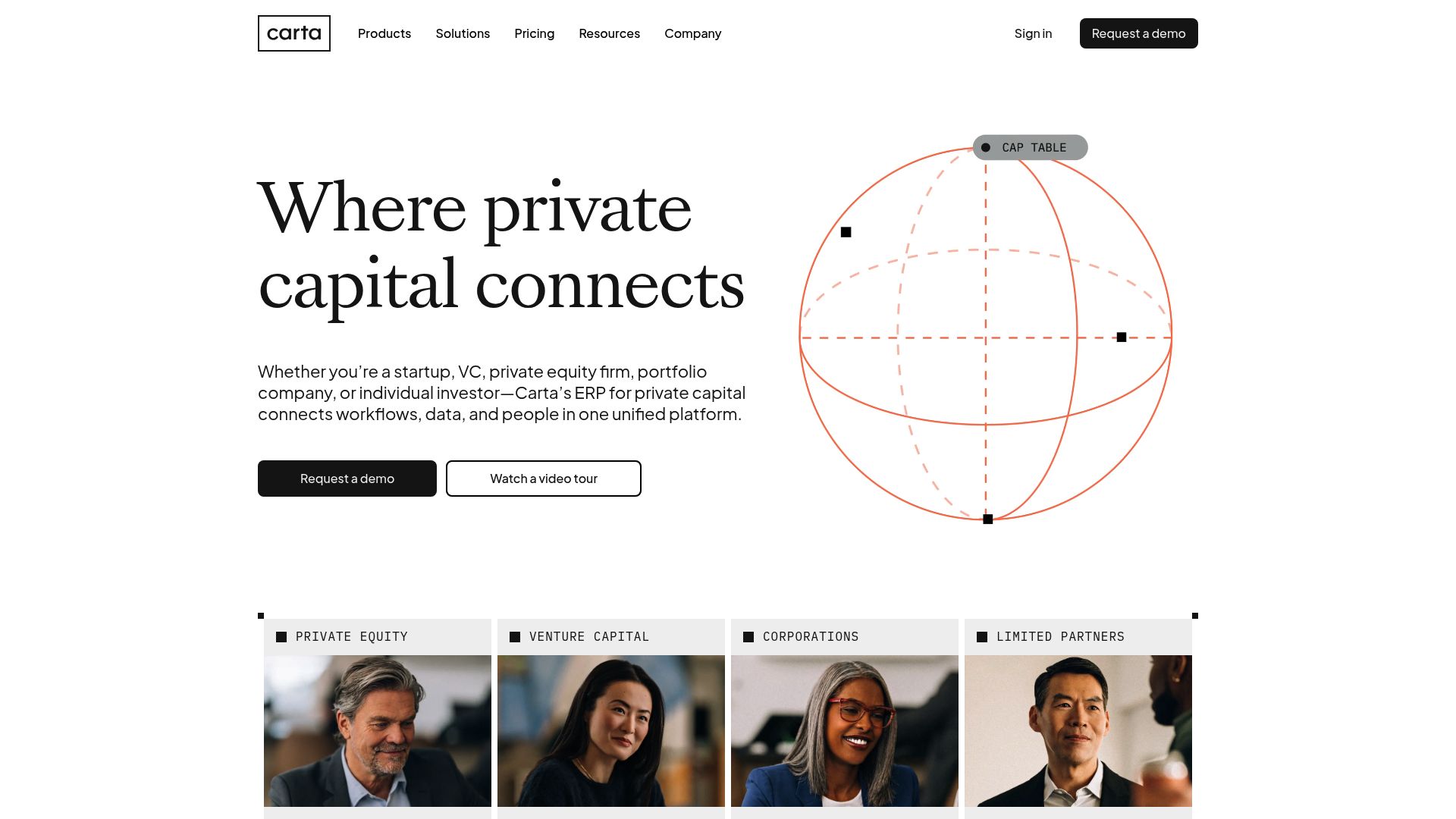
Carta dominates the growth-stage ecosystem for good reason. The platform handles everything from equity grants to 409A valuations, board management, and fund administration, capabilities that become essential once you're managing multiple funding rounds.
Our team has found its audit trail features particularly valuable during due diligence, where investors expect institutional-grade cap table software documentation. The interface may overwhelm first-time founders, but that complexity reflects the real-world challenges of Series A equity structures.
Why 50,000+ Companies Trust Carta
Integration depth really separates Carta from competitors. It syncs smoothly with legal platforms, accounting systems, and HR tools, which matters when finance needs unified data across departments.
Honestly, the scenario modeling features help you forecast dilution through multiple funding rounds, something spreadsheets can't do well. Compliance tools automatically monitor vesting schedules and exercise windows, cutting down admin work as your shareholder base expands.
Pricing Reality Check
Expect to pay significantly more than alternatives. Carta targets companies raising institutional capital, where the cost justifies reduced legal exposure and audit readiness.
Budget several hundred dollars monthly minimum, prohibitive for bootstrapped pre-seed startups but reasonable once you're managing convertible notes or preferred shares.
What Cap Table Software Companies Won't Tell You
Most platforms push "free" plans to attract early-stage startups looking to save cash. But here's the catch: essential features get locked behind paywalls exactly when you need them.
Honestly, scenario modeling for investor talks, waterfall analysis for term sheets, and solid audit trails often vanish into premium tiers costing $200-$450 monthly. We've watched founders rush to upgrade mid-fundraise, wasting valuable negotiation time.
We've seen founders scramble to upgrade mid-fundraise, losing precious negotiation time.

The Lock-In Effect Most Platforms Hide
Data export limitations create silent prisons. Many vendors restrict CSV exports to basic shareholder lists, excluding convertible notes, SAFEs, and option pool details.
Switching providers mid-Series A becomes a migration nightmare requiring legal counsel to reconstruct your entire equity history. Cap table software companies profit from this friction. Their pricing often jumps 150-300% at funding milestones when you're least able to switch, with "unlimited stakeholders" typically capping at 100-150 before triggering enterprise pricing tiers.
Pulley: Modern Interface Built for Founder Simplicity
Most cap table software overwhelms founders with financial jargon. Pulley takes the opposite approach, stripping away complexity to deliver what early-stage startups actually need.
The platform guides you through setup in under 48 hours, with an interface clean enough that non-financial users feel confident managing equity from day one. Our experience shows founders spend less time deciphering charts and more time modeling scenarios that matter for their next funding round.

The Anti-Complexity Approach
Pulley's employee equity dashboard shows vesting schedules in a way that's actually easy to understand. You don't need financial expertise to figure it out.
The scenario modeling for pre-Series A planning works smoothly, just tweak variables and watch dilution changes happen right away. Honestly, that said, international teams run into problems.
The platform mainly handles US entities, so it's not great for companies with subsidiaries in different countries. For seed-stage startups in New York or San Francisco, this limitation doesn't really matter much.
Transparent Pricing That Scales
Unlike competitors who hide costs behind sales calls, Pulley shows tier structures upfront. Their pricing scales with stakeholder count instead of punishing your success.
Worth noting: while equity management requires careful compliance, Pulley automates regulatory tracking without enterprise-tier fees. Honestly, for founders who prioritize speed and clarity over global expansion, it delivers what matters.
Kleap tip: Before you commit to any cap table software, test onboarding speed with sample data. Platforms claiming "fast setup" should prove it within 48 hours, not weeks of configuration back-and-forth.
Enterprise-Grade Security Meets Scalability d'Astrella by EQ
When compliance isn't negotiable, Astrella by EQ positions itself as the enterprise answer to cap table management. This platform targets regulated industries where audit trails matter as much as accuracy.
Built with SOC 2 Type II compliance at its core, it delivers the documentation financial institutions and healthcare companies demand. Expect comprehensive reporting tools designed for board presentations and investor updates, alongside multi-currency support that handles international entities without breaking a sweat.

Built for Regulated Industries
The platform excels where regulatory scrutiny runs high. Automated audit trails track every modification, creating the paper trail compliance officers appreciate.
However, this enterprise focus comes at a cost, both in dollars and complexity. Smaller startups might find the feature set overwhelming when they simply need basic equity tracking.
The pricing reflects its positioning: expect enterprise-level investment matching the sophisticated toolset you're acquiring.
The Compliance Advantage
Companies in finance, biotech, or heavily regulated industries gain the most value. The robust security features make sense when compliance failures cost way more than the software itself.
Cake Equity: Global Reach for International Expansion
Planning to hire across borders? Cake Equity stands out among cap table software options for its robust multi-jurisdiction support.
Unlike US-centric platforms, it handles equity structures from Australia to Singapore, accommodating diverse legal frameworks without forcing you into templates designed for Delaware C-corps. The platform manages cross-border complexities that cause headaches elsewhere, think employee stock options across three continents or convertible notes in multiple currencies.

Photo by Herlambang Tinasih Gusti on Unsplash
Multi-Jurisdiction Expertise
Cake Equity excels at handling regional compliance differences across markets. The platform supports multiple share classes and country-specific vesting schedules, plus it provides educational materials that explain equity fundamentals for different jurisdictions. Honestly, that's incredibly useful when managing teams in unfamiliar legal environments.
Pricing for Global Teams
Early-stage startups like the free tier that works well for initial stakeholders. When you scale globally, paid plans stay competitive against enterprise options, but the interface sometimes feels less polished than US alternatives.
AngelList: Bundled with Fundraising and Talent Tools
AngelList works differently from typical cap table software out there. It's actually part of a bigger ecosystem that connects startups with investors, talent, and operational tools.
Honestly, companies raising capital through AngelList funds or syndicates get equity management features built right into their workflow. You don't need to switch between platforms or enter data twice.
The real value here comes from consolidation instead of specialized features.

Photo by Luis Quintero on Unsplash
The Ecosystem Advantage
Rolling funds and syndicate managers benefit most from this integration. AngelList Stack users access cap table management at no additional cost, a compelling proposition when you're already paying for fundraising infrastructure.
However, standalone features lag behind dedicated platforms. Scenario modeling remains basic. Capitalization table visualization tools lack the depth investors expect during due diligence.
For founders prioritizing AngelList's network effects over advanced equity analytics, that tradeoff makes sense.
When Bundling Makes Sense
Think about your fundraising strategy before deciding. Startups that recruit on AngelList Talent and raise from AngelList investors get real efficiency benefits that offset the feature gaps.
Honestly, companies that need detailed equity modeling or complex securities planning should check out specialized tools instead. The bundled setup makes sense when you value simplicity and ecosystem access over precise control.
Capbase: All-in-One Incorporation and Equity Platform
Setting up a Delaware C-corp usually means you're dealing with multiple vendors at once. Capbase actually consolidates all that chaos into one streamlined platform for founders.
The subscription bundles incorporation paperwork, registered agent services, business banking, and cap table management together. Honestly, this setup really appeals to first-time founders who don't want to juggle separate contracts.
Fixed pricing covers your formation documents, compliance filings, and equity tracking right from day one. That said, the cap table features aren't as sophisticated as dedicated solutions out there. You won't find advanced scenario modeling tools that venture-backed companies typically need down the road.

Photo by Ofspace LLC on Unsplash
From Formation to Fundraising
The bundled service model really helps during those hectic first months. After you file formation documents, your integrated banking account opens on its own. And initial equity grants fill the cap table without any manual work.
Honestly, this smooth process cuts out coordination hassles between your lawyer, accountant, and bank. But as your startup grows beyond seed stage. You'll probably outgrow the equity management features and switch to specialized platforms like Carta for advanced waterfall modeling.
The Bundled Service Model
Think about if ease of use outweighs the trade-offs. Capbase shines for bootstrapped founders launching their first startup who prioritize simplicity over flexibility.
Honestly, the flat pricing eliminates unexpected costs, but it's missing advanced enterprise features.
Eqvista: Affordable Option with Essential Features
Budget limits drive most startup choices these days. Eqvista markets itself as the affordable option for cap table management, offering essential features without those hefty fees you'd pay elsewhere. Honestly, you get automated certificate creation, basic shareholder portals, and standard equity tracking tools that work fine for simple ownership setups.
The system handles companies with common stock and basic option pools pretty well. But you'll hit walls when dealing with convertible notes or complicated preferred share structures.

Photo by Jakub Żerdzicki on Unsplash
Budget-Conscious Choice
Pricing runs 40-60% lower than competitors like Carta, which really matters for bootstrapped startups watching their runway. That's a solid advantage when you're counting every dollar.
Honestly, but here's what you're giving up: support can be slow during busy times, and integrations are pretty limited versus enterprise-grade solutions. Your accounting software probably won't sync automatically, so you'll end up doing manual data entry that pricier tools handle for you.
Your accounting software might not sync automatically, requiring manual data entry that premium tools eliminate.
What You Get at Lower Price Points
The essential toolkit works well for most early-stage requirements.
Cap table visualization with ownership percentages on fully-diluted basis
Digital stock certificate creation and secure storage
Shareholder communication dashboard for distributing updates
Basic scenario modeling for future funding rounds
Companies with straightforward equity structures, usually pre-Series A startups without convertible instruments, get real value from this platform. Honestly, after you raise institutional capital that introduces liquidation preferences or participating preferred stock, you'll likely outgrow what Eqvista can handle smoothly.
Side-by-Side Comparison of All 8 Platforms
Picking the right cap table software comes down to balancing features with your budget at your current growth stage. We've broken down pricing models, stakeholder caps, and integration options across these eight platforms to make your choice easier.
Honestly, the contrasts really stand out when you see how each tool grows alongside your company's path.
Feature Matrix Breakdown
Pricing at Different Growth Stages
Seed-stage companies do well with Morgan Workplace Solutions (free up to 40 stakeholders) or AngelList's basic tier. Series A startups usually switch to Pulley or Ledgy once they pass 50 stakeholders and need scenario modeling. Honestly, later-stage companies that need 409A valuations and serious compliance typically choose Carta or Shareworks.
Where monthly costs run from $800 to $2,500 based on complexity. Per-user pricing works better for smaller teams, but unlimited stakeholder plans become more cost-effective after 75 shareholders.
What Founders and CFOs Actually Say About These Tools
Finance teams consistently praise intuitive dashboards and scenario modeling. Speed matters during fundraising rounds.
One founder shared how their platform's automated 409A valuation saved weeks during a Series A close. Support responsiveness varies wildly, some teams report 24-hour ticket resolution, while others waited days during critical cap table updates.
Migration stories reveal truth: switching platforms takes longer than vendors claim, especially when historical data spans multiple funding rounds.
Common Praise Patterns
Users love visualization tools that make complex equity structures easy to understand during board presentations. Stakeholder portals cut down on repetitive questions about ownership percentages.
Honestly, early-stage founders appreciate free tiers, but most outgrow them within 18 months. The most common advice?
Don't pick software based on price alone, since inadequate tools cost more when you're fixing errors before investor due diligence.
Recurring Complaints to Watch
Hidden fees for extra stakeholders really frustrate growing companies these days. Export limits trap your data.
Honestly, many CFOs want platforms that integrate better with accounting software. Onboarding that vendors say takes "hours" actually requires days of cleanup work on historical records.
Your Cap Table Software Questions Answered
When should you ditch the spreadsheet? Most startups make the switch after their first meaningful funding round or when they hit 15-20 stakeholders. Beyond that threshold, manual tracking becomes error-prone and frustrating.
Pricing varies wildly across different platforms. Free tiers cover basic needs for up to 40 stakeholders. Honestly, premium plans run $200-$450 monthly depending on complexity.
Enterprise solutions? Expect several thousand dollars annually for advanced features. Can you migrate mid-fundraise?
Absolutely, though timing matters more than you'd think. In practice, professional platforms handle data migration in 2-3 days, but don't switch during active term sheet negotiations. Security concerns are valid.
Reputable providers use bank-level encryption and SOC 2 compliance standards. The fully-diluted versus current ownership distinction trips up many founders regularly. Fully-diluted includes all potential shares like options and warrants.
Here's the thing: current shows today's actual distribution without future possibilities. Not all platforms bundle 409A valuations in their base pricing. Some charge separately for advanced features you'll probably need.
If you cancel? Most providers allow data export, but verify retention policies upfront to avoid surprises.
Making Your Final Cap Table Software Decision
Choosing cap table software isn't about picking the "best" platform. It's about finding the right match for your current stage and growth trajectory.
Early-stage startups with under 20 stakeholders can start with free tiers like Morgan Workplace Solutions' Standard plan, which handles basic equity tracking without upfront costs. Growing companies preparing for Series A should prioritize scenario modeling capabilities and investor-friendly reporting, even if that means paying $200-450 monthly for premium features.
Matching Solutions to Your Specific Situation
Evaluate your complexity needs honestly. Simple cap tables with common stock only?
Spreadsheets might suffice temporarily. Multiple share classes, convertible notes, or international stakeholders?
You need dedicated software. During free trials, test data import speed and interface clarity with your actual team members.
Implementation Timeline and Next Steps
Most platforms wrap up onboarding in about 2-3 days. Watch out for hidden migration costs or vague pricing past the starter tiers.
Honestly, if you're a founder who values AI innovation plus equity management, check out Kleap's approach for smarter business automation.
Making Your Cap Table Software Decision
Choosing cap table software isn't just about tracking shares. It's about building a foundation that scales with every funding round, keeps you compliant, and gives investors confidence in your data accuracy.
The platforms we evaluated each serve different needs. Carta dominates the enterprise space.
Pulley wins on simplicity. But Kleap stands out by combining AI-powered automation with flexibility that adapts as your startup evolves.
Start by auditing your current cap table situation. How many shareholders do you have?
Are you planning a funding round in the next 12 months? Do you need scenario modeling for dilution discussions?
Your answers will point you to the right platform. For most startups raising their first institutional round, prioritize automation and investor communication features over complex secondary market tools you won't use for years.
Ready to explore how AI can simplify your equity management? Kleap's team can show you exactly how our platform handles your specific cap table structure.
Visit kleap.co to see the platform in action, or book a personalized demo to discuss your fundraising timeline and compliance requirements.
Your cap table deserves better than spreadsheets.