Why qr-code voor bedrijven Is the Marketing Tool Your Business Has Been Missing
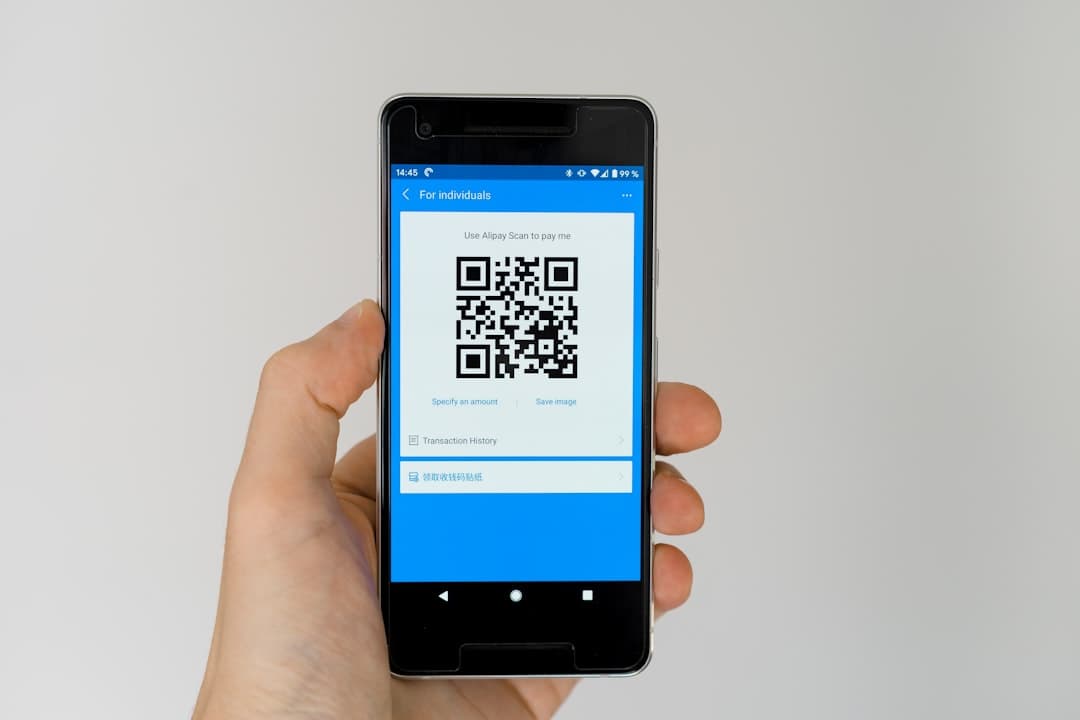
A QR code for businesses lets any business bridge physical and digital touchpoints instantly, with zero printing costs beyond a simple scan.
- Setup takes minutes: most QR code generators produce a scannable, trackable code in under five minutes
- Link any offline asset (packaging, signage, business cards) directly to a landing page, menu, or campaign
- Dynamic QR codes let you update the destination URL without reprinting a single physical material
Most marketing budgets chase expensive channels while ignoring one of the highest-conversion tools sitting in plain sight.
The concept of a QR code for businesses has quietly evolved from a logistics novelty into a serious customer acquisition and engagement mechanism, one that works whether you run a food truck in Austin or a SaaS platform serving clients across three continents.
For entrepreneurs, agencies, and enterprise teams already refine every digital touchpoint, the real opportunity isn't the QR code itself; it's what happens in the data layer after the scan.
This article cuts through the surface-level advice to show you exactly where QR codes generate measurable business impact, and where most implementations quietly fail before they start.
The gist
- A QR code encodes data, URLs, text, contact details, and payment links, readable by any smartphone camera
- Static QR codes are fixed after creation; dynamic codes let you update the destination without reprinting
- Dynamic codes release scan tracking, geo-analytics, and A/B testing of destinations
- For businesses, dynamic QR codes are almost always worth the small additional investment
- Common formats for print and digital use: PNG (screens) and SVG (high-res print)
What a Business QR Code Actually Does (and Why It Matters in 2026)
Most businesses treat QR codes as glorified shortcuts to a homepage. That misses the point entirely.
A QR code encodes a URL, phone number, contact details, or payment link into a scannable 2D barcode. Any smartphone camera reads it instantly, no app required. For businesses, that means bridging physical touchpoints (packaging, receipts, menus, business cards) directly to digital actions, without friction.
From Two-Dimensional Barcode to Business Asset
The real value isn't the scan itself, it's what happens after. Businesses commonly deploy codes on flyers, product packaging, digital signage, and invoices to send customers to websites, feedback forms, payment flows, or marketing landing pages.
As Beambox notes, QR codes help businesses bridge the gap between physical and digital marketing. For download and print use, PNG works for screens while SVG handles high-resolution print without quality loss.
Static vs. Dynamic QR Codes: Which One Does Your Business Need?
Here's what most guides skip: static codes are permanent. Change your destination URL, and you're reprinting everything.
Dynamic codes let you update the linked destination after creation, without touching the printed code. That single difference unlocks scan tracking, geographic analytics, and destination A/B testing.
- Static codes: fixed destination, no tracking, ideal for permanent content
- Dynamic codes: editable destination, scan analytics, campaign flexibility
For any business running campaigns or measuring customer engagement, dynamic codes are almost always worth the investment. The flexibility alone justifies it, and the analytics turn a passive barcode into measurable marketing data that informs every future campaign decision.
Try it — build your site while you read
Describe what you want and get a live, publishable site in seconds. Free to start, no code.
Join 200,000+ makers building real websites with Kleap.
7 High-Impact Ways Businesses Are Using QR Codes Right Now
SVG format is recommended for high-resolution print use, while PNG suits screen display, a distinction that prevents blurry codes on large printed materials.
Most guides treat business QR codes as a novelty, a cute shortcut to a website. That framing misses the point entirely.
Today, a well-placed code on a receipt, package, or storefront window is a conversion tool that collapses the distance between a physical moment and a digital action. Here are seven ways businesses are putting them to work right now, with real use cases that go well beyond "scan to visit our homepage."
From Product Pages to Payment Flows
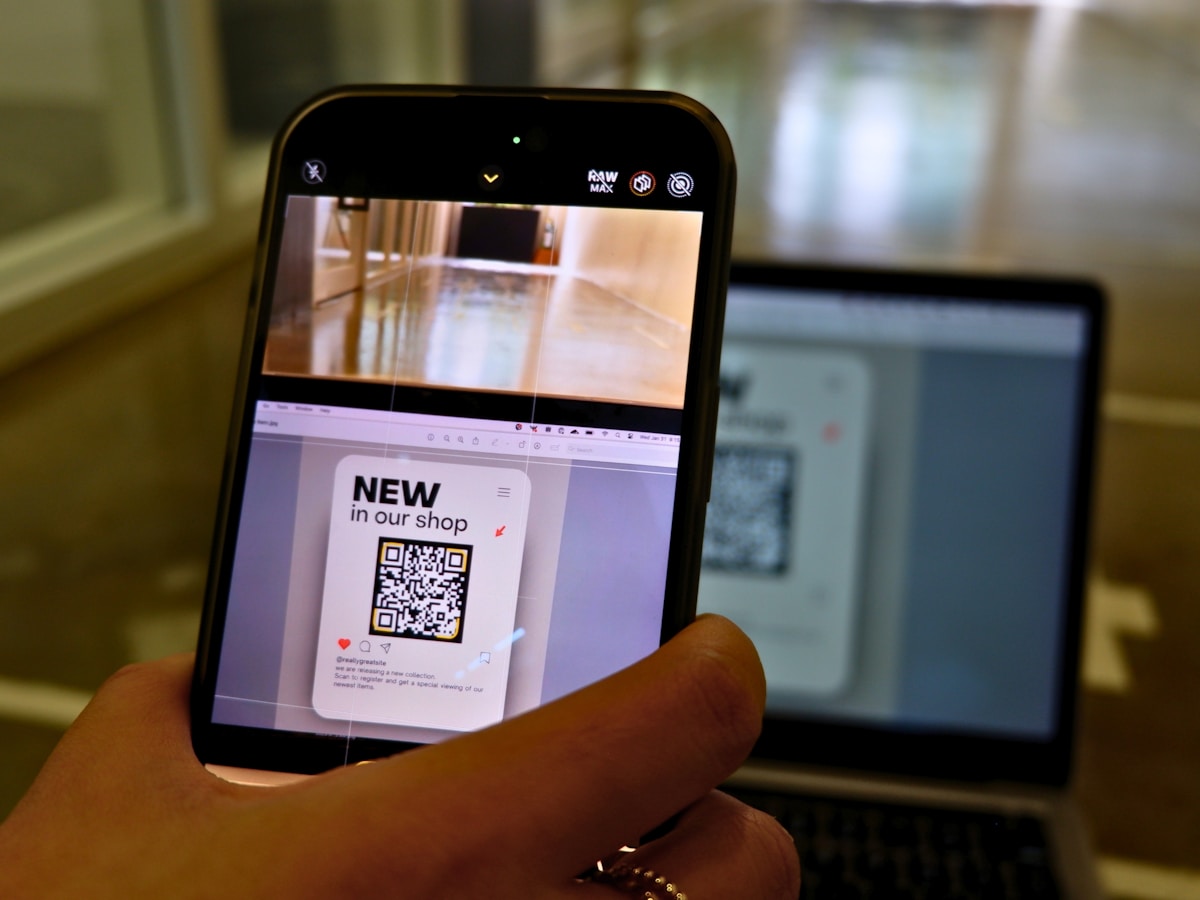
- Printed materials to product pages. A Chicago startup prints a QR code on every packaging insert. One scan takes the customer to an onboarding landing page, a how-to video, or a limited upsell offer, no typing required.
- Contactless payments. Restaurants, pop-up shops, and e-commerce brands add QR codes to invoices and checkout counters. Customers scan and pay without cash or cards, reducing friction at the final step.
- Feedback collection. A New York boutique places a small sign at checkout pointing to a 90-second survey. Scan rates beat email follow-ups because the moment of action is immediate, not delayed.
- App downloads and social follows. A single QR code on a flyer replaces a clunky URL. Users land directly on the App Store listing or Instagram profile, no search, no misspelling.
- Digital menus. Restaurants replaced laminated menus with table-top QR codes years ago. The hidden benefit: updating prices or seasonal items takes seconds, not a reprint budget.
- vCard contact sharing. Freelancers and sales reps encode their full contact details into a QR code on their business card. One scan saves the contact, no manual entry, no lost cards.
- Campaign landing pages. A Los Angeles e-commerce brand runs a product launch. Every offline touchpoint, poster, packaging, direct mail, points to the same dynamic landing page, trackable by scan count.
How Brick-and-Mortar Stores and E-Commerce Both Win
The contrarian insight most marketers overlook: dynamic QR codes let you change the destination after printing. A flyer printed in January can point to a Valentine's Day campaign in February, then a spring sale in March (same printed asset, zero reprinting cost).
Platforms like Kleap make this practical by letting you build and update the landing page the code points to, keeping your offline and online presence in sync without developer involvement.
How to Create a Branded QR Code That Actually Gets Scanned
Most businesses print their QR codes and walk away. Wrong move.
A poorly designed code on a flyer loses scans not because people ignore it, but because low contrast, missing context, or a slow destination page kills the action before it starts. The design and the destination are inseparable; get either wrong and the whole chain breaks.

Design Principles That Drive Scan Rates
Contrast is non-negotiable. A dark foreground on a light background is the baseline; reverse that and most smartphone cameras struggle to parse the pattern.
Beyond contrast, embedding your logo in the center of the code builds instant brand recognition without breaking scannability, since QR codes carry built-in error correction that accommodates the overlap. What most guides skip entirely: the frame around the code matters as much as the code itself.
- Use a call-to-action frame such as "Scan to order" or "Scan to learn more"; passive codes get ignored
- Keep brand colors in the foreground, never the background, to preserve contrast ratios
- Test on at least three different devices before printing or publishing at scale
- Avoid placing the code on busy or patterned backgrounds; solid surfaces only
Building the Landing Page Behind Your QR Code
Here is where most campaigns actually fail. The scan happens, then a slow, desktop-optimized page loads in four seconds on mobile and the user bounces.
The destination must be mobile-ready, conversion-focused, and visually consistent with the QR code's branding. A mismatched experience breaks trust immediately.
Speed is the hard constraint. Pages that take longer than three seconds to load on mobile waste a major share of earned scans.
The landing page design should mirror the colors, logo, and tone of the physical material carrying the code. That visual continuity signals professionalism and keeps users engaged long enough to act.
Kleap tip: Use Kleap's AI builder to generate a fully mobile-optimized landing page in minutes, with no coding required. Describe your offer in plain language, and Kleap produces a conversion-ready page that matches your brand identity, so every scan leads somewhere worth going.
What QR Code Vendors Won't Tell You Before You Buy
The moment you cancel your subscription, most dynamic QR codes go dark. Not degraded, not slower, completely dead.
Every printed flyer, business card, and packaging label you distributed becomes a broken experience overnight. This is the detail vendors bury in their pricing FAQ, and it is the single biggest lock-in trap in the entire QR code industry.
The Hidden Costs and Lock-In Traps to Avoid
Freemium plans feel generous until a real campaign hits. QR TIGER's freemium tier caps dynamic codes at 500 scans per code, workable for a small test but useless for any serious marketing push.
The deeper trap is structural: when your QR code redirects through a vendor's domain rather than your own, you're renting the destination, not owning it. Switch platforms, lapse on a payment, and your offline materials are instantly worthless.
The fix is straightforward but rarely mentioned. Host your destination page on a domain you control.
Build your landing page on a platform like Kleap with a custom domain, point your QR code there, and the vendor becomes irrelevant. You can swap QR code generators freely without reprinting a single piece of collateral.
Ownership of the destination URL is the only real protection against vendor lock-in.
Metrics That Matter vs. Metrics That Just Look Good
Total scan count is a vanity metric. It tells you someone pointed a camera at your code, and nothing more.
The analytics that actually drive ROI are time-of-scan (which reveals peak engagement windows), device type (which shapes your mobile UX priorities), and post-scan conversion rate (which tells you whether the destination page is doing its job).
- Total scans: directional only, not actionable on its own
- Time-of-scan data: reveals when your audience is most receptive
- Device breakdown: informs responsive design decisions for your landing page
- Post-scan conversion: the only metric that connects QR activity to business outcomes
Vendors that surface only total scans are hiding the gap between traffic and results. Demand conversion-level data, or build your destination on a platform where you can install your own analytics stack independently.
How to Choose the Right QR Code Platform for Your Business Size
Most businesses pick a QR code tool based on price alone. That's the wrong move.
The platform that works for a freelancer in San Francisco running three campaigns will break down completely for a Chicago-based SME managing thirty product lines and a regional sales team. Business stage determines requirements, not budget preference.

Freelancers and Startups vs. Growing SMEs
Solo entrepreneurs and early-stage startups rarely need more than dynamic code support and basic scan tracking. A free-tier tool handles the volume.
The real investment belongs elsewhere: the destination page. A polished, fast-loading landing page built with Kleap's AI builder converts far better than a premium QR dashboard pointing to a generic website.
At $25/month for Pro, Kleap delivers the destination quality that makes every scan meaningful.
Different Needs, Different Tools
- Freelancers and startups: dynamic codes, basic analytics, one or two destinations
- Growing SMEs: multi-code management, branded short URLs, team access, deeper scan reporting
- Enterprise teams: bulk generation, API integrations, advanced attribution dashboards
Pairing Your QR Code Generator with an AI Website Builder
Here is the contrarian insight most vendor comparison guides skip: upgrading your QR tool rarely moves the needle as much as upgrading where the code lands. A scan that hits a slow, unbranded page wastes every dollar spent on print, packaging, or campaign placement.
Kleap's Business plan at $50/month lets growing teams build multiple AI-powered pages fast, giving every code a destination worth scanning.
Frequently Asked Questions
What is the difference between a static and a dynamic QR code for businesses?
Static QR codes are locked the moment you generate them. The destination URL is baked into the pattern itself, so if you need to update where it points, you're printing new codes.
Dynamic QR codes store a short redirect URL instead, meaning you can change the destination anytime without touching the printed code. For businesses running campaigns, menus, or product pages that evolve, dynamic is almost always the smarter choice.
How do I create a QR code that links to my business website?
The short answer: use a QR code generator, paste your URL, and download the result. Most tools handle this in under a minute.
Where businesses go wrong is stopping there. The URL you link to matters as much as the code itself.
A slow-loading page, a homepage that buries the relevant information, or a non-mobile-optimized layout will kill your conversion rate before the scan even counts as a win.
If you're building or rebuilding that destination page, Kleap's AI builder lets you generate a skilled, mobile-ready landing page from a single prompt, ensuring the whole chain from scan to conversion actually works.
Can I customize a business QR code with my logo and brand colors?
Yes, and you should. A branded QR code with your logo centered and your brand palette applied consistently sees meaningfully higher scan rates than a plain black-and-white grid.
The one rule: always test scannability after customizing. Heavy color contrast changes or oversized logos can break readability on certain scanner apps.
Run it through at least three different devices before printing at scale.
How many scans can I expect from a business QR code campaign?
It varies so much that any specific number would be misleading.
Placement is the single biggest variable. A QR code on a busy restaurant table tent in a high-traffic location will outperform one buried in a product manual by orders of magnitude.
Context, visibility, and the incentive you offer (discount, exclusive content, easy checkout) drive scan volume far more than the code itself.
What you can control is what happens after the scan. A fast, relevant, well-designed landing page built with a tool like Kleap converts curious scanners into actual customers.
That's where the real ROI lives.
What should the landing page behind my business QR code include?
Three things above all else: a clear headline that matches the promise on the physical material, one primary call to action, and a page that loads in under three seconds on mobile.
Beyond that, keep it focused. QR code traffic arrives with intent but low patience.
A contact form, a product showcase, a booking widget, or a special offer all work well. What doesn't work is a generic homepage that forces the visitor to hunt for what the QR code promised them.
Are free QR code generators good enough for small businesses?
For basic static codes linking to a stable URL, yes. Free tools get the job done.
The limitations show up fast once you need analytics, dynamic redirects, or branded design at scale. I've seen small businesses hit a wall when a free tool sunsets its service or puts generated codes behind a paywall after the fact.
If the QR code is tied to printed materials you're distributing widely, that's a real operational risk worth thinking through before you commit.
Your Business QR Code Is Only as Powerful as What Happens After the Scan
The QR code itself is just the door; Kleap is the room worth walking into.
Start today: generate a free dynamic QR code, point it to a Kleap-built landing page, and watch your scan data tell you exactly what your customers want.
Kleap's AI landing page builder lets you go from idea to live in minutes, no code, no designer, no delay. Whether you're a solo entrepreneur or running a full marketing team, the free tier gives you everything you need to test, iterate, and convert.
Try Kleap for free at kleap.co and build the landing page your next QR code deserves.
The businesses pulling ahead in 2026 aren't the ones with the biggest budgets; they're the ones who closed the gap between the scan and the sale.