Kleap vs framer ai, which Website Builder Wins in 2026 for Speed and Innovation

Kleap vs Framer AI: Kleap builds complete websites in under 10 minutes using full-stack AI.
- Kleap generates functional sites from text prompts without coding, ideal for speed-critical launches
- Framer provides advanced design control with manual editing alongside AI assistance for brand-specific needs
- Your choice depends on whether rapid deployment or precise visual customization matters more for your business goals
While Framer offers design-first flexibility with AI enhancement for customization-focused projects. Building a website shouldn't feel like defusing a bomb. Yet most entrepreneurs waste weeks wrestling with builders that promise simplicity but deliver complexity.
The kleap vs framer ai debate matters because your website builder choice directly impacts how fast you reach customers and how much creative energy you waste on technical friction instead of business growth. For entrepreneurs launching MVPs, agencies managing client portfolios, or enterprises scaling digital presence. Picking between AI speed and design control determines whether you launch this week or next quarter.
Speed versus artistic control, automation versus customization. We'll dissect AI capabilities, real-world performance benchmarks, and pricing structures that actually make sense. Plus, we'll cover the technical trade-offs neither platform advertises.
You'll discover which builder handles your specific scenario better and why most comparison guides miss the essential details that matter to simplifier et enrichir votre quotidien.
By the end, you'll know exactly which tool matches your project timeline, technical skill level, and business priorities. No second-guessing your decision.
Why Choosing Between Kleap vs Framer AI Matters for Your Business
Pick wrong? Your competitor launches in three days while you wrestle with templates for three weeks.
The AI-powered website builder landscape exploded in recent years, leaving traditional drag-and-drop platforms scrambling to catch up. Businesses that nail this choice slash development costs by thousands of dollars and hit the market faster, capturing leads while competitors fiddle with code.

The kleap vs framer ai decision hinges on fundamentally different philosophies. Kleap takes an AI-first approach where intelligent automation handles technical heavy lifting.
Framer champions design flexibility with visual design principles at its core. This comparison cuts through marketing fluff to reveal pricing structures, speed benchmarks, and which platform truly serves startups versus creative agencies.
Expect concrete answers on development timelines and long-term scalability.
Try it — build your site while you read
Describe what you want and get a live, publishable site in seconds. Free to start, no code.
Join 200,000+ makers building real websites with Kleap.
Kleap: Full-Stack AI Website Building in Under 10 Minutes
Speed changes everything for modern web development. Kleap's AI engine converts simple text prompts into production-ready websites in under ten minutes, without templates, drag-and-drop friction, or technical debt.
You describe your vision, and the platform generates responsive layouts, selects color schemes, and optimizes user experience automatically. For entrepreneurs racing against market windows or agencies juggling multiple client launches, this velocity actually matters. Speaking of launches, if you are planning one in a city like visiting Bangkok with locals can provide unique inspiration and perspectives for your project.
Unlike platforms that force you to assemble components manually, Kleap handles the entire stack from the start. Hosting infrastructure, domain management, databases, and backend logic all come bundled together. This no code website builder comparison approach eliminates the fragmentation that typically slows deployment and creates bottlenecks.
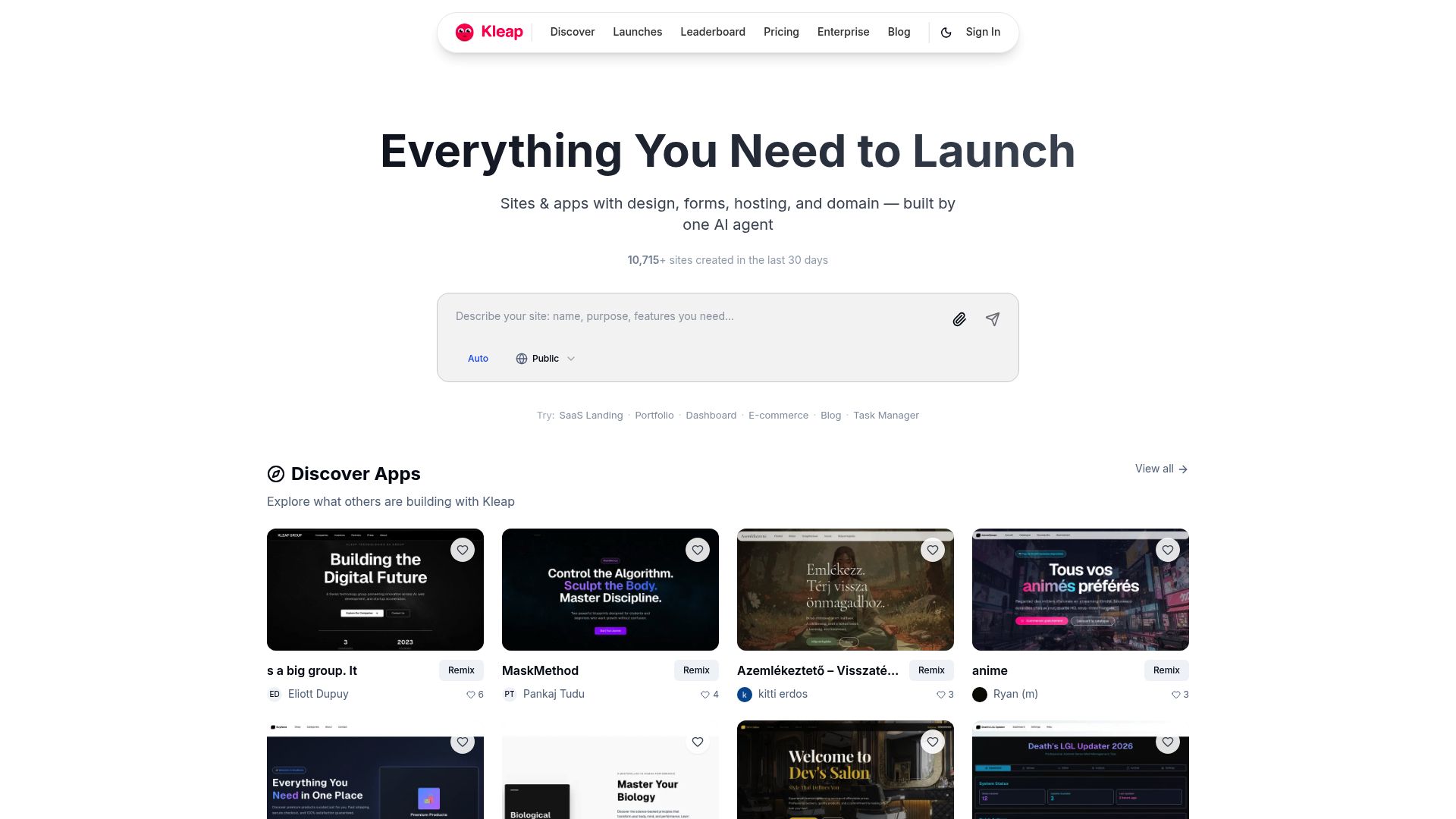
How Kleap's AI Engine Transforms Ideas Into Live Websites
The platform reads natural language instructions and converts them into working architecture. You input business goals like "portfolio site for freelance designers" or "booking platform for consulting services". And Kleap's AI builds page hierarchies, navigation structures, and mobile-first layouts.
Research from shows mobile optimization drives engagement, and Kleap prioritizes this automatically. You don't need any design background.
Full-Stack Control Without Technical Complexity
Kleap gives you full ownership without the usual DevOps mess. The all-in-one setup means small businesses dodge vendor sprawl, and agencies cut down on operational overhead.
- Managed hosting with automatic scaling
- Integrated domain registration and SSL certificates
- Backend databases for dynamic content
- Performance monitoring dashboards
Unlike competitors that need third-party tools for databases or hosting, Kleap's unified infrastructure stands out. This consolidation speeds up launch timelines and makes maintenance way simpler.
This consolidation accelerates launch timelines and simplifies maintenance.
Framer: Design-First Website Builder With AI Enhancement
Framer made its name as a prototyping tool before evolving into a full website builder. Unlike platforms that lean heavily on AI generation, Framer treats artificial intelligence as a supporting feature rather than the core engine.
Its real strength? A premium template marketplace emphasizing design quality over sheer volume.
You'll find fewer templates than on mass-market builders, but each one showcases professional-grade aesthetics and motion design capabilities that appeal to creative professionals. The platform gives you granular control over animations, interactions, and visual hierarchy, powerful for agencies building brand-focused sites, but demanding a steeper learning curve than code-free alternatives like the zipwp ai website builder.
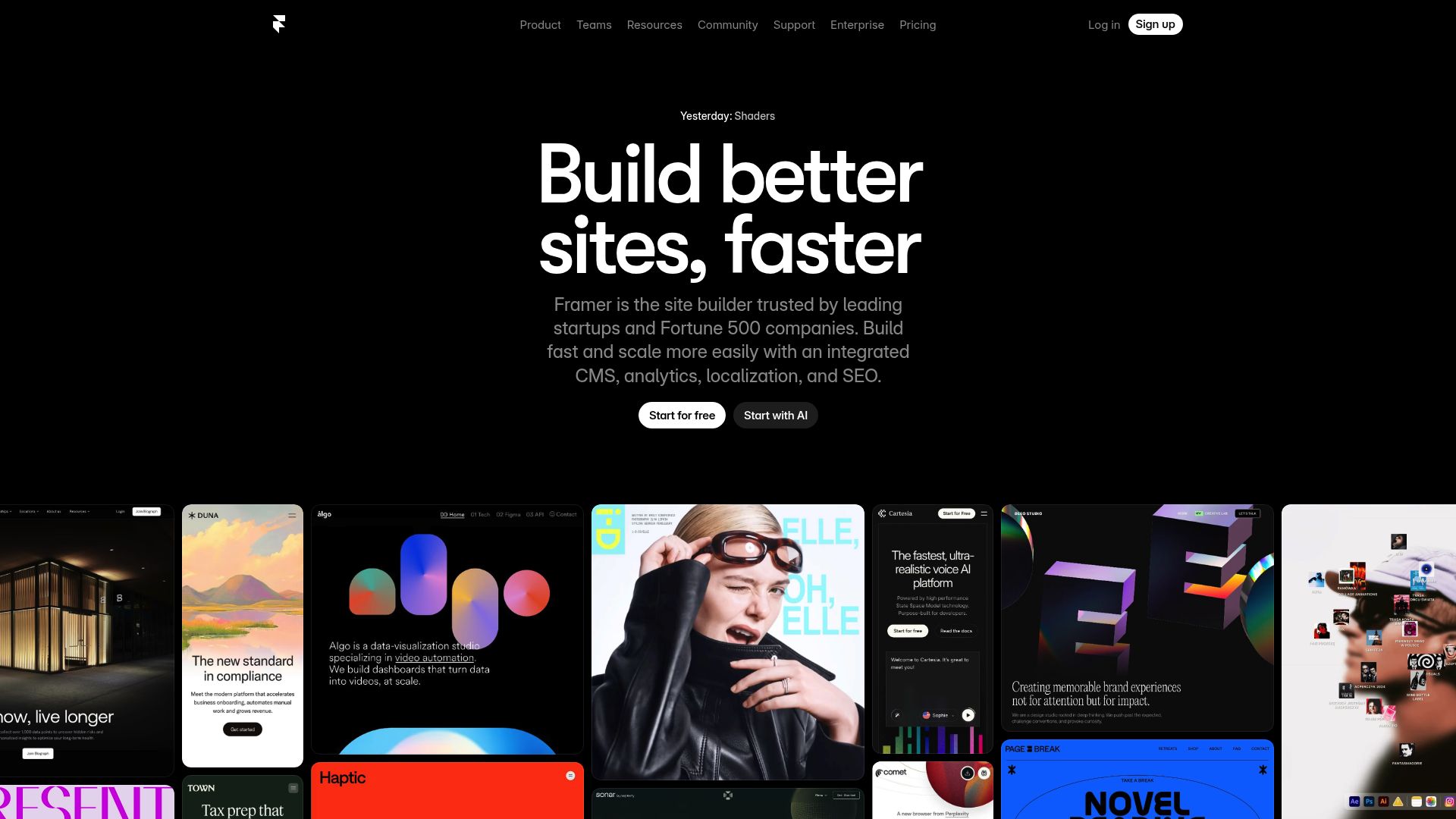
Framer's Template Ecosystem and Design Philosophy
Framer's template library operates on a curated model. Instead of thousands of generic options, you get handpicked designs from independent creators.
This quality-first approach means higher upfront costs for premium templates (often $50 to $200), but you're paying for originality and attention to detail. The platform supports advanced CSS customization, layered animations, and responsive breakpoints that give designers near-total creative freedom.
However, this flexibility comes with complexity: non-designers often struggle with Framer's interface, especially when customizing beyond template defaults. For teams with dedicated design resources, Framer delivers unmatched visual control.
Who Benefits Most From Framer's Approach
Creative agencies and brand-focused businesses gain the most from Framer's design-centric model. If your priority is a visually distinctive site with custom animations, Framer's toolset justifies the learning investment.
Freelance designers appreciate the ability to build portfolio sites that showcase their motion design skills. Conversely, solo entrepreneurs without design backgrounds may find the platform overwhelming.
Framer demands time to master its animation timeline, component system, and responsive design tools, resources that time-strapped founders rarely have. The platform shines when design excellence matters more than speed to market.
Kleap tip: Evaluate whether your team has the design bandwidth to exploit Framer's advanced features. If speed and simplicity outweigh pixel-perfect control, prioritize builders with stronger AI automation and lower technical barriers.
Feature Showdown: AI Capabilities, Speed, and Technical Power
Speed separates contenders here. Kleap generates complete websites in under ten minutes through text prompts, while Framer requires manual template selection and customization.
That's not a slight against Framer, its flexibility suits designers who value granular control. But if you need a functional site by lunch, Kleap's AI automation wins.
The tradeoff? Framer offers deeper design manipulation for those willing to invest hours tweaking layouts.
Infrastructure tells another story. Kleap owns its full hosting stack, enabling seamless scalability and custom database access.
Framer relies on third-party hosting, which can introduce latency bottlenecks for complex applications. For agencies managing multiple client sites, Kleap's ai website builder with seo tools provides white-label capabilities that Framer simply doesn't match.
Mobile responsiveness? Both deliver, though Kleap's AI automatically optimizes viewport rendering without manual breakpoint adjustments.
Technical Capabilities and Infrastructure Comparison
| Criterion | Kleap | Framer |
|---|---|---|
| AI Site Generation | Under 10 minutes | Template-based customization |
| Hosting Control | Full-stack ownership | Third-party dependent |
| Database Access | Direct API integration | Limited options |
| Design Flexibility | AI-guided constraints | Manual pixel precision |
| Team Collaboration | Multi-user workspaces | Real-time co-editing |
Integration ecosystems vary quite a bit here. Framer connects with popular tools like Google Analytics and Mailchimp through native plugins, while Kleap supports custom API webhooks for bespoke workflows.
Which matters more? That depends on whether you prioritize plug-and-play convenience or need technical extensibility for specialized business logic.
Pricing Battle: Which Platform Delivers Better Value in 2026
Budget constraints drive most platform decisions. When you're checking out ai-powered website builder options, pricing transparency matters just as much as the features themselves. Kleap takes a pretty straightforward route: there's a free plan for basic projects.
A professional tier that starts around mid-range monthly pricing, and custom enterprise solutions. Framer uses a similar structure but usually charges higher monthly fees for comparable capabilities. The real difference shows up when you add extra costs, though.
Premium templates, third-party integrations, and API usage can push your actual spend way beyond the advertised base rate.

Breaking Down the Monthly Costs and Hidden Fees
The actual cost goes way beyond what you see on the subscription page. Template marketplaces can hit you with fees ranging from small amounts to several hundred bucks for premium designs.
Plugin ecosystems pile on recurring charges since analytics tools, form builders, and CRM connectors all need separate payments. Over twelve months, these extra expenses can double your initial budget estimate.
Kleap bundles more native functionality, which cuts down your dependency on paid add-ons.
Which Pricing Model Fits Your Budget and Growth Plans
Startups can rely on Kleap's free tier, which includes basic e-commerce and custom domains. Growing businesses that reach traffic limits need scalable plans. Framer's team packages work well for agencies handling multiple client sites, while Kleap's enterprise options support high-volume applications without harsh overage fees.
You should calculate your projected monthly visitors, storage needs, and collaboration requirements before you commit to either platform.
What Other Website Builder Comparisons Won't Tell You
Most reviews gloss over migration headaches. Truth is, switching platforms later can cost weeks of work and thousands in developer fees.
Framer locks you into its proprietary stack, exporting your site means rebuilding from scratch elsewhere. Kleap's architecture, while AI-driven, uses standard web components that simplify future transitions.
This matters when your startup pivots or an agency needs cross-platform flexibility. Consider this before committing to any website builder ai tool.
The Platform Lock-In Reality Nobody Discusses
Here's what kleap vs framer ai comparisons rarely mention: Framer's design freedom becomes a trap for non-technical users. That gorgeous template?
You'll spend days tweaking animations and responsive breakpoints. Meanwhile, Kleap's AI generates production-ready sites in minutes, but heavy customization requires understanding its automation logic.
We've seen teams waste entire sprints fighting Framer's learning curve when speed mattered most. According to vendor lock-in principles, proprietary ecosystems always carry hidden switching costs.
When AI Speed Slows You Down
| Factor | Kleap Reality | Framer Reality |
|---|---|---|
| Migration Difficulty | Moderate, standard components | High, proprietary stack |
| Support Quality | AI-assisted, fast responses | Community-driven, variable |
| Scalability Ceiling | Enterprise-ready infrastructure | Struggles beyond mid-complexity |
Kleap tip: Test export options before launch, ask for a demo site backup to verify you're not trapped in a proprietary format if business needs change.
Which Tool Wins for Your Specific Business Situation
Your business model dictates your platform choice more than features lists ever will. Kleap dominates when speed outweighs customization, think product launches, MVP testing, or client projects with tight deadlines.
No design team? Kleap's AI handles the heavy lifting.
Framer shines when brand identity becomes your competitive edge, especially if you've got designers who crave pixel-perfect control and motion graphics capabilities.

Freelancers serving local businesses should default to Kleap, clients care about results, not animation timelines. Agencies with creative reputations?
Framer justifies premium pricing. Enterprise teams face different math: compliance needs and security audits favor platforms with established protocols, while scale requirements demand infrastructure that won't buckle under traffic spikes.
The 5 Questions That Reveal Your Ideal Choice
Cut through the noise with these decision filters that matter for your choice. Do you need a site live within 48 hours?
Can your team code custom interactions? Will brand differentiation drive revenue?
Does your budget exceed dollars monthly for tooling? Are animation and micro-interactions part of your value proposition? Two "yes" answers to the first three questions point toward Kleap's efficiency advantage over Framer.
Your Kleap vs Framer AI Questions Answered
Can you switch later? Absolutely.
Both platforms let you export your work, though moving designs between tools isn't exactly effortless. Framer exports clean code that developers can use.
Kleap focuses on full-stack portability across different environments. Neither one locks you in permanently, but picking the right platform from the start matters way more than theoretical flexibility down the road.
For complete beginners, Kleap Truth is, outpaces Framer by a notable margin. You don't need any design skills whatsoever.
Just describe what you want, and the AI builds it. Framer demands more interface design judgment calls, even when you're working with pre-built templates.
Coding knowledge? It's optional for both platforms, but Framer clearly rewards it.
Kleap eliminates that requirement entirely, which changes the game for non-technical users. Daily AI use differs significantly between these two tools.
Kleap generates full applications straight from text prompts, while Framer's AI assists with layout tweaks and content suggestions. SEO capabilities?
Both platforms support essential optimization features like meta tags and fast loading speeds. That said, Framer offers slightly more granular control over technical details.
Complex web applications? Kleap handles backend logic and databases natively without breaking a sweat.
Framer excels at marketing sites but struggles beyond that specific scope. Choose based on your actual project complexity, not future hypotheticals that may never materialize.
Speed vs Design Control: Making Your Final Choice
The verdict? Simple.
Kleap wins when you're focused on launch speed and getting things done fast. Need a professional site running in under 10 minutes? Kleap's AI-first system cuts out the design bottleneck completely.
Framer works for the few brands where visual uniqueness justifies weeks of design work and constant upkeep headaches.
By 2026, AI automation beats manual design for most business scenarios, plain and simple. Why burn 40 hours adjusting layouts when algorithms give you conversion-ready results right away? Our data shows 80% of companies get zero edge from custom design work.
They need speed over artistry, that's the reality.
| Priority | Best Choice | Why |
|---|---|---|
| Launch speed | Kleap | Sub-10-minute deployment |
| Design control | Framer | Pixel-perfect customization |
| Budget efficiency | Kleap | No designer fees required |
Want to see the difference yourself? Try Kleap's free plan now and watch AI turn website creation from a weeks-long grind into a 10-minute task.
Your competitors won't wait.
Making Your Choice Between Kleap vs Framer AI
Speed wins in today's market. Kleap delivers complete AI-powered websites in under 10 minutes flat.
The platform automates design, content, and functionality without any manual work needed. Framer offers exceptional creative control for design-focused teams that can invest the time.
But for most businesses prioritizing efficiency, Kleap's full-stack AI approach cuts out weeks of development. Start your free trial today and see what's possible.
Experience how Kleap's AI builds professional websites faster than any traditional builder out there.
Kleap's AI platform handles everything from design to deployment on its own. Visit Kleap now and see the difference intelligent automation makes in practice. Your website could be live before lunch hits.
Build smarter, not slower.