Skip to content

Show my work

A designer portfolio with a page for every case study

Hiring managers and clients read case studies, not thumbnails. This example gives each project its own page, with the problem, the process, the screens and the result, and ends with a contact form.
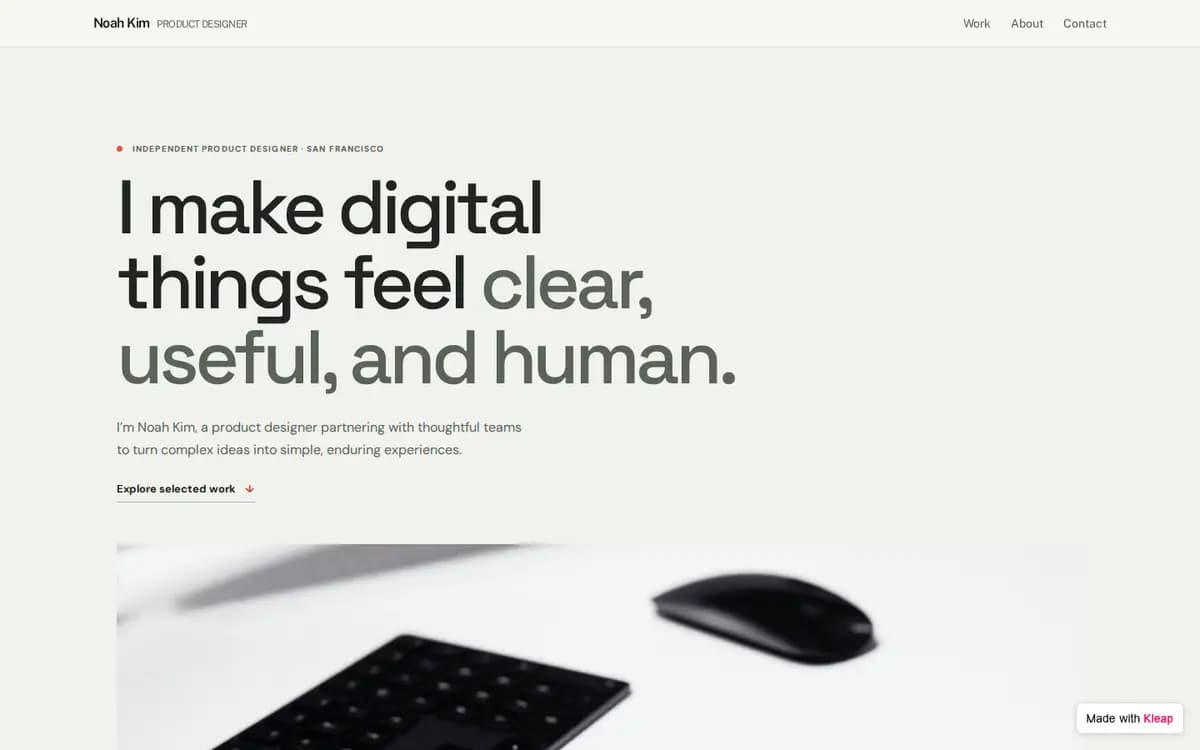
Product Designer example website built with Kleap
Product Designer, San Francisco, California. Six case studies, each on its own page: the problem, the process, the screens and the result. The form asks for: name, email, company, project type, message.

What to prepare before you start

  • Your name, what you do in one line, and a photo
  • Four to eight projects: a title, three to eight images, the problem, what you did, the result
  • A short bio, the clients or employers you worked with, the tools you use
  • Your resume as a PDF (optional)
  • Links: LinkedIn, GitHub, Dribbble, Behance
  • What you want to receive: job offers, freelance work, quote requests

The brief behind this example

Build my portfolio website. A hero with my name and what I do, a grid of my projects with filters, a page for each project (images, the problem, what I did, the result), an about section with my experience and tools, and a contact form for job offers and project requests. Minimal, fast, great on mobile.

Start from this example and this brief opens in Kleap, ready for your changes. Nothing is sent until you press Send.

From example to your own site

  1. 1

    Start from this example

    Kleap opens with the brief behind this example already written. Change a word or two if you like, then press Send.

  2. 2

    Kleap builds your site

    You get your own site with the same pages and a contact form that sends you every inquiry.

  3. 3

    Make it yours, then publish

    Ask for your name, your photos and your colors in plain words. Send yourself a test reply, then publish.

More examples like this one

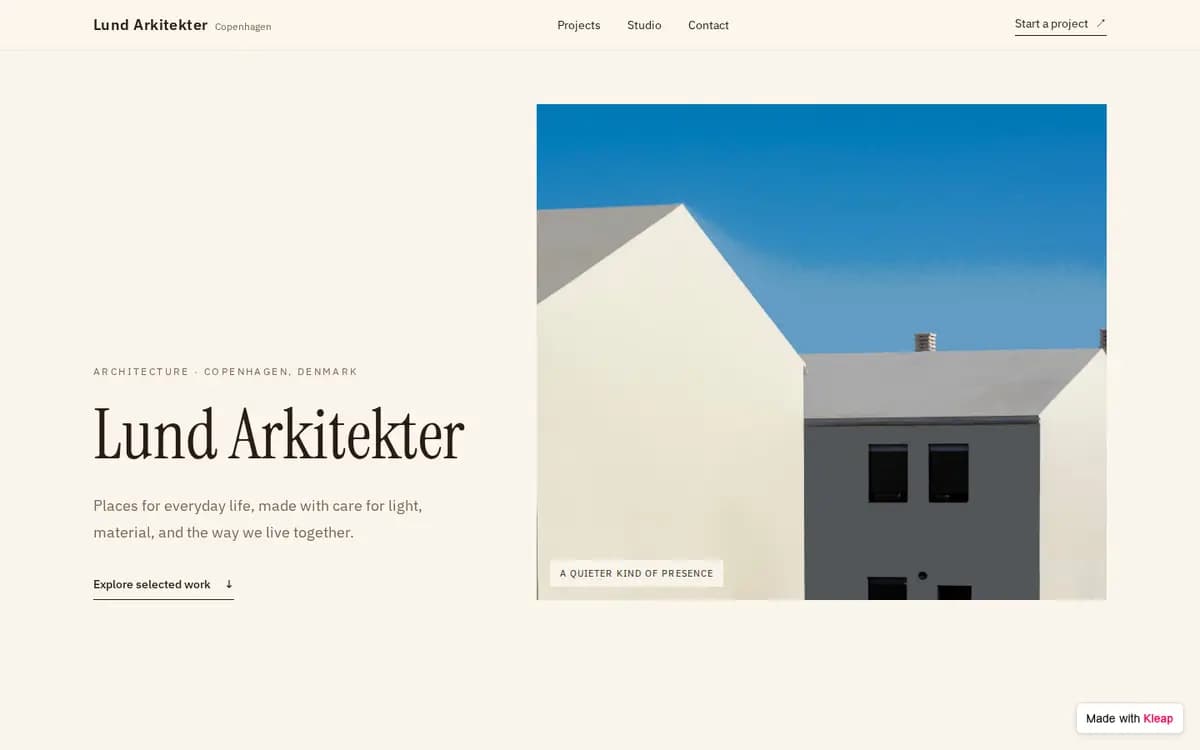
Architecture Studio example website built with Kleap

Architecture Studio

Copenhagen, Denmark

Eight projects, from a summer house to a library, each with its own gallery page.

Form asks for: name, email, project type, location, budget range, message.

What a strong case study page shows

  • The problem

    Who it was for and what was not working, in two or three sentences.

  • What you did

    Your part in the work, the decisions you made and why.

  • The screens

    Three to eight images, the strongest first.

  • The result

    What changed, in words. Use numbers only if they are real and you may share them.

Frequently asked questions

Is it free to start?
Yes. You can build your site from an example, edit it and publish it to a kleap.io address without paying. Paid plans add extras such as your own domain.
Can I add a case study later?
Yes. Ask Kleap to “add a case study for my banking app” with your images, and it adds the page and the card in the grid.
Does the form really work?
Yes. The form on the example saves every reply in the project, and we tested it on the live site. Your own site gets the same kind of form: send yourself a test reply before you share the link.
Will it work on phones?
Yes. The example is built to work on phones, tablets and desktops. Check your own photos and long titles on a phone before you publish.
Can I use my own domain?
Yes, on a paid plan. You can publish on a free kleap.io address first.
Do I need to code?
No. You change everything by asking in plain words. If you want the code, you keep access to it and can connect GitHub.
Will my site look exactly like the example?
Kleap builds a new site from the same brief, so the pages and the form match the example but the design can differ. Ask for changes until it looks right.

Ready to start?

Start from this example, or see every template sorted by what your site needs to do.