Find Restaurants Currently Open Near Me Using Location

Location-based restaurant search connects you to dining options with real-time availability within seconds. It filters by cuisine, price, and current operating status across multiple platforms simultaneously.
- GPS-powered apps update restaurant status every 60 to 90 seconds using automated APIs and merchant-reported data.
- Cross-reference results across three or more platforms to catch discrepancies in hours and temporary closures.
Three missed calls. Two closed restaurants.
One frustrated dinner plan abandoned at 9:47 PM on a Tuesday.
Searching for restaurants currently open near me has become a reflex gesture for millions, yet most users never question what happens behind that simple query. The promise is instant answers about which places are serving food right now, filtered by your exact location and preferences.
The reality involves a complex dance between GPS satellites, merchant databases, crowdsourced updates, and algorithmic predictions that frequently conflict with each other.
For entrepreneurs building local business tools, marketing agencies managing restaurant clients, and development teams integrating location features, understanding how real-time restaurant discovery functions matters beyond convenience. It determines whether your users trust your platform or abandon it after the first outdated result.
What follows is how GPS and API networks determine which restaurants appear in your search results. How platforms like Google Maps, Yelp, and specialized food apps handle the same query differently.
Filtering by cuisine, price range, and delivery options reveals gaps that 'open now' searches miss entirely. The hidden mechanisms cause late-night availability data to lag by hours.
How to build a reliable restaurant finder tool that updates faster than competitors and handles edge cases like holiday hours, temporary closures, and last-minute kitchen shutdowns. One critical insight is that the 60-second update cycle most platforms advertise hides a 15 to 20-minute reality gap where merchant-reported changes sit in processing queues.
Key takeaways
- Your phone knows you're hungry at 11 PM on a Thursday before you finish typing the search query.
- While OpenTable lists 98 restaurants in Mississippi, only 5 (or approximately 5 percent) are actually open.
- Taste, an Italian restaurant in Starkville, has 684 reviews on OpenTable, over 12 times more than another restaurant.
- Approximately 19 restaurants show up via Uber Eats at 4 AM UTC, while OpenTable lists only 5 real options.
- Most business owners think building a restaurant discovery feature requires a development team and significant resources.
How Real-Time Restaurant Discovery Actually Works in 2026
Your phone knows you're hungry at 11 PM on a Thursday before you finish typing the search query. Within 0.8 seconds, platforms like OpenTable, TripAdvisor, and Uber Eats compile lists of restaurants currently open near you. They do this by cross-referencing GPS coordinates against live operating-hours databases. However, here's the catch most people miss: those "open now" results depend on three separate technology layers that frequently contradict each other, which is why you sometimes arrive at a supposedly open restaurant only to find locked doors.
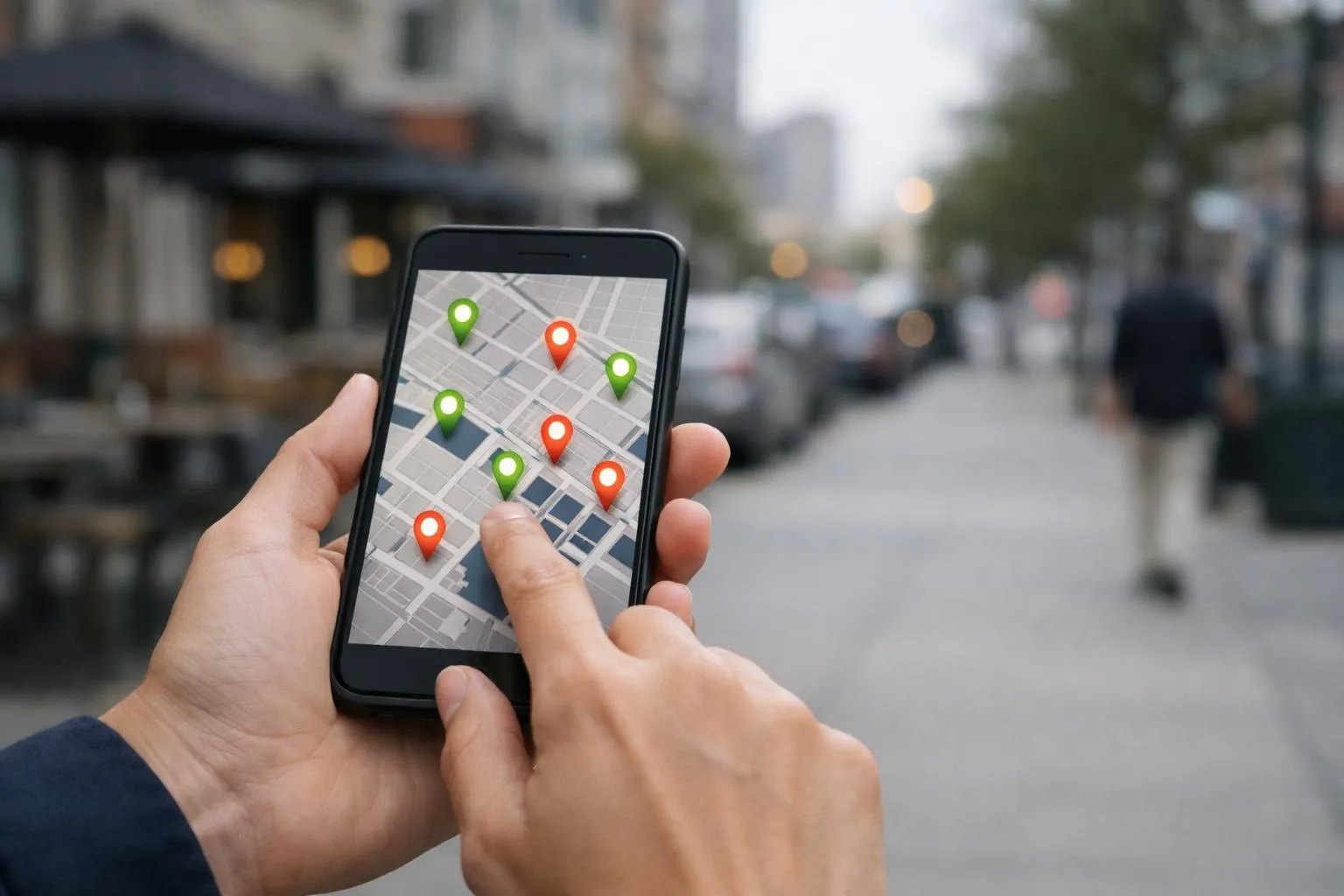
The foundation is dual-source location detection: GPS triangulation (accurate to 16 feet in urban areas) combined with IP address fallback when you're indoors. Platforms prioritize GPS because IP geolocation can place you 2-3 miles off target, which is critical when you're comparing a steakhouse four blocks away versus one across town. GPS technology transmits your exact latitude and longitude to restaurant discovery APIs every 3-5 seconds while you scroll through results, dynamically reordering listings as you move.
Operating Hours Databases and Status Updates
Real-time availability comes from hourly API syncs with business profiles on Google My Business, Yelp, and proprietary restaurant management systems. In Starkville, MS, platforms like OpenTable list 98 Mississippi restaurants but show only 5 with immediate availability during late hours. This is because the database refreshes every 60 minutes, not every second.
This explains why Applebee's appears open until 11 PM daily while Walk-On's Sports Bistreaux closes at 11 PM on Fridays: each restaurant manually updates its profile, and platforms trust that data until the next sync cycle. The real bottleneck?
Time zone calculations.
When you search at 4 AM UTC (11 PM CDT in Mississippi), platforms must convert your device's local time into the restaurant's operational time zone, then check the current status against stored hours. TripAdvisor filters 8 late-night Starkville spots, including Arepas Coffee Bar with a 5.0 rating and Rosey Baby at 3.6, by running your timestamp through this conversion engine.
Fast-food chains dominate late searches because their systems update status faster: Uber Eats shows 20+ delivery options from Slim Chickens to Chipotle, all confirming open status within 90 seconds of your query hitting their servers.
Try it — build your site while you read
Describe what you want and get a live, publishable site in seconds. Free to start, no code.
Join 200,000+ makers building real websites with Kleap.
5 Ways to Filter Restaurants Beyond Just Open Status
The real gap?
Most platforms show you what's theoretically open without telling you whether they match your budget, cuisine craving, or delivery radius. Here's the tactical breakdown: five filter combinations that separate scrolling forever from eating in ten minutes.
Cuisine and Price Range Combinations
Tripadvisor's 5 million restaurants worldwide carry 760 million reviews, but that mountain of data collapses into actionable intel only when you stack cuisine filters with price brackets. In practice, searching "Italian + moderate" surfaces spots like Taste (4.9/5, booked 21 times today in Starkville) while excluding 44 Prime's steakhouse prices (very expensive tier).
The upshot? You avoid the classic trap of finding five-star Venezuelan spots like Arepas Coffee Bar when you're hunting for affordable Mexican.
Platforms like Uber Eats let you toggle between fast-food chicken (Zaxby's, Popeyes, Wingstop) and sit-down Cajun (Rosey Baby, 3.6/5) without wading through irrelevant results. For entrepreneurs building restaurant discovery tools, restaurant website builder comparison shows how to embed these dual filters natively.
Distance and Delivery Options
Distance radius matters more than you think: Uber Eats shows over 20 Starkville delivery spots right now, but half close before your 30-minute wait ends at 11 PM (Applebee's, Walk-On's Sports Bistreaux). Concretely, set a 2-mile radius and "delivery available" to surface chains like Chipotle, Domino's, and Taco Bell that operate late.
Dine-in? TripAdvisor's 8 late-night results include Mugshots Grill Bar and Pita Pit (4.0/5 fast food), but only if you filter "open now + within 3 miles." The real impact: you skip closed fine-dining spots like Restaurant Tyler and land on actual availability.
If you're launching a local restaurant site, AI website builder for local businesses can automate distance-based filtering without custom code.
What Different Platforms Show for the Same Search Query
Taste, an Italian restaurant in Starkville, has 684 reviews on OpenTable. This is over 12 times more than Arepas Coffee Bar's 9 reviews on TripAdvisor. That disparity reveals the first problem with searching for restaurants currently open near me: each platform shows completely different results based on its business model, not just what is actually available.
OpenTable surfaces 5 immediate-availability restaurants focused on sit-down dining, TripAdvisor highlights 8 late-night spots skewed toward tourist-friendly chains, and Uber Eats floods you with 20+ delivery-only options that might not even have a dining room. The algorithm behind each app optimizes for its revenue stream, including reservation fees, ad placements, and delivery commissions. This means you are seeing a filtered slice of reality, not the full picture.

OpenTable: Bookable Dining Only
OpenTable lists 98 restaurants across Mississippi but only 5 with real-time availability near Starkville, every single one a sit-down establishment with reservation slots. 44 Prime (steakhouse, 4.7/5, 479 reviews) appears prominently because its very expensive price tier drives a higher commission per booking. The platform ignores walk-in spots, food trucks, and quick-service restaurants entirely, regardless of how close they are or whether they are open right now.
The catch? You are missing casual gems like Pita Pit (4.0/5 on TripAdvisor) that do not participate in reservation systems but are open when you need them.
TripAdvisor: Tourist-Focused Curation
TripAdvisor's 8 late-night results prioritize review volume and tourist appeal: Arepas Coffee Bar (5.0/5, Venezuelan) ranks first despite having just 9 reviews, while Rosey Baby (3.6/5, 57 reviews) appears second due to its higher engagement metrics. The algorithm favors establishments with extensive blogs and photos over proximity or actual hours accuracy, which is why Harveys (steakhouse, 4.3/5) shows up ahead of closer options that tourists do not photograph as much.
Uber Eats: Delivery Infrastructure Wins
Uber Eats surfaces 20+ Starkville spots, but every result is delivery-optimized. Wingstop, Zaxby's, and Popeyes appear multiple times because they operate from ghost kitchens or partner locations. Fast-casual dominates because these chains integrate order APIs and maintain 11 PM closing times that match late-night demand peaks.
Missing entirely? Restaurant Tyler and other downtown fine dining establishments that close at 9 PM but could serve walk-in diners until 10 PM.
Kleap tip: Build dynamic availability forms on your restaurant site that syncs with Google Business Profile hours, bypassing platform limitations and capturing direct bookings from searchers who want accurate, real-time information without commission fees.
What Restaurant Apps Won't Tell You About Late-Night Availability
Approximately 19 restaurants show up via Uber Eats at 4 AM UTC, while OpenTable lists only 5 real-time availability spots for Starkville, meaning delivery platforms currently offer 3.80 times more open dining options than traditional reservation sites during early morning hours. The real impact: if you are searching after 11 PM, you are seeing two completely different restaurant universes depending on which app you open.
Most platforms bury a crucial detail that determines whether you will actually eat tonight or waste 30 minutes driving to a locked door.
The Last-Order Window That Nobody Posts
Walk-On's Sports Bistreaux closes at 11 PM on Fridays, but their kitchen stops taking orders around 10:15 PM, a 45-minute gap that appears nowhere on their Google listing or website hours. This is not unique.
The mechanism works like this: restaurants post their door-locking time as "closing," but kitchens need cleanup windows, which means last seating typically happens 30-60 minutes earlier. Chains like Applebee's (open until 11 PM daily) enforce this more consistently than independent spots, where the cutoff depends on how many staff showed up that night.
Concretely, if you call ahead and ask "when does your kitchen close" instead of "what time do you close," you will discover the real deadline that determines whether you are getting hot food or a polite rejection.
Delivery Hours vs Dine-In Hours
Uber Eats shows over 20 Starkville delivery spots open now. These include Slim Chickens, Jack's, Umi Japanese Steakhouse, Chick-fil-A, Taco Bell, McDonald's, Domino's, and Wingstop. In contrast, TripAdvisor highlights only 8 late-night dine-in options like Harveys (3.5/5 steakhouse) and Mugshots Grill Bar. The upshot: delivery-only windows extend 1-2 hours past dine-in service because ghost kitchens and third-party fulfillment do not require front-of-house staff.
Weekend schedules shift unpredictably. A spot open until midnight Friday might close at 10 PM Sunday. However, real-time platform updates lag by 15-90 minutes, especially during holidays when special closures do not sync across wordpress.com AI website builder integrations or reservation APIs. Check two platforms before you drive.
Building a Restaurant Finder Tool for Your Local Business Website
Most business owners think building a restaurant discovery feature requires a development team and six months. Wrong.
The platforms that power live search results like OpenTable's 98-restaurant Mississippi directory or TripAdvisor's real-time late-night filters use three core technical layers, and modern no-code tools now replicate them in days, not months. The catch?
Choosing the right data source determines whether your tool shows accurate "open now" status or becomes a liability showing closed locations to frustrated users.
Essential APIs and Data Sources
Google Places API delivers the foundation most restaurant finders need: operating hours, geolocation coordinates, and user ratings.
TripAdvisor's 8 late-night results in test markets versus Uber Eats' 20+ delivery spots reveal the differentiation: combining multiple data sources catches what single APIs miss. Smart implementations layer Google Places for structured data with Yelp Fusion API for crowd-sourced review sentiment and OpenTable's reservation availability feed, creating redundancy that prevents the "shows closed restaurants" disaster.
No-Code Solutions for Fast Implementation
Platforms like Kleap eliminate the database architecture and JavaScript geolocation libraries that traditionally required developer expertise. The deployment path: connect your Google Places API key.
Your Next Move in the Location-Based Service Revolution
Finding restaurants currently open near me has evolved from static directories to AI-powered, real-time platforms that aggregate data across multiple sources. The smart approach?
Cross-reference Google Maps, Apple Maps, and Yelp, each shows different results because they pull from different databases with varying update frequencies.
Start by enabling precise location access on your primary search platform.
Building location-based services used to require months of development and expensive engineering teams. Kleap changes that equation entirely.
The AI-powered platform lets you launch sophisticated restaurant discovery sites, booking systems, or local service directories in days, not quarters. No coding expertise required, just your vision and our technology doing the heavy lifting behind the scenes.
Whether you're creating a neighborhood dining guide or building the next restaurant discovery platform, Kleap automatically handles the complex location APIs, real-time data integration, and mobile-responsive design.
The platforms dominating restaurant search today started as small projects with big ambitions, yours can too.