Kleap vs Squarespace for AI Websites in 2026, Which One Should You Choose?

Kleap vs. Squarespace for AI websites depends on whether you need source-code access and natural-language project generation or prefer AI-assisted design within a managed, hosted platform. Kleap's documentation describes prompt-to-project generation, editable source files, a built-in code editor, and GitHub synchronization. Squarespace uses Blueprint AI to create tailored sites that remain within its visual-builder ecosystem.
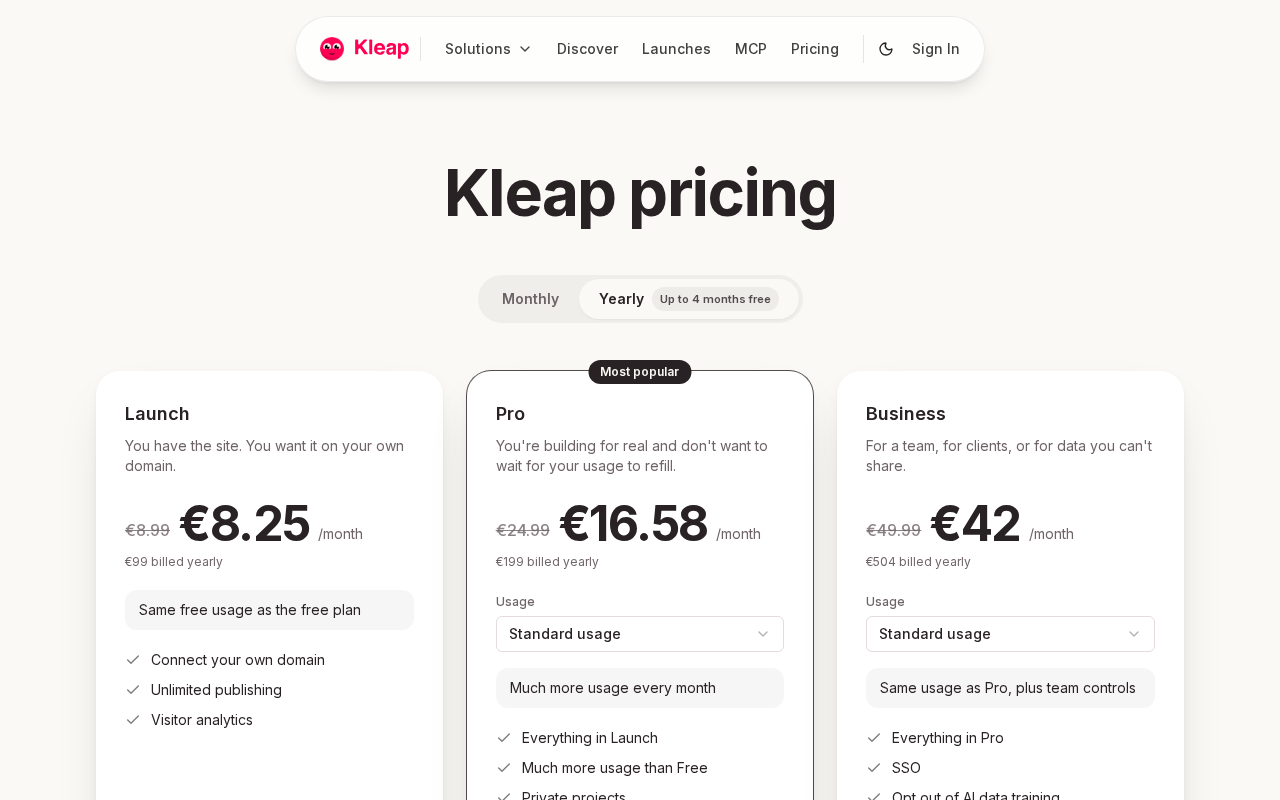
Kleap offers free publishing on a Kleap subdomain, with custom domains starting at $8.25/moyearly per month on its Launch plan. AI usage is credit-based across tiers.
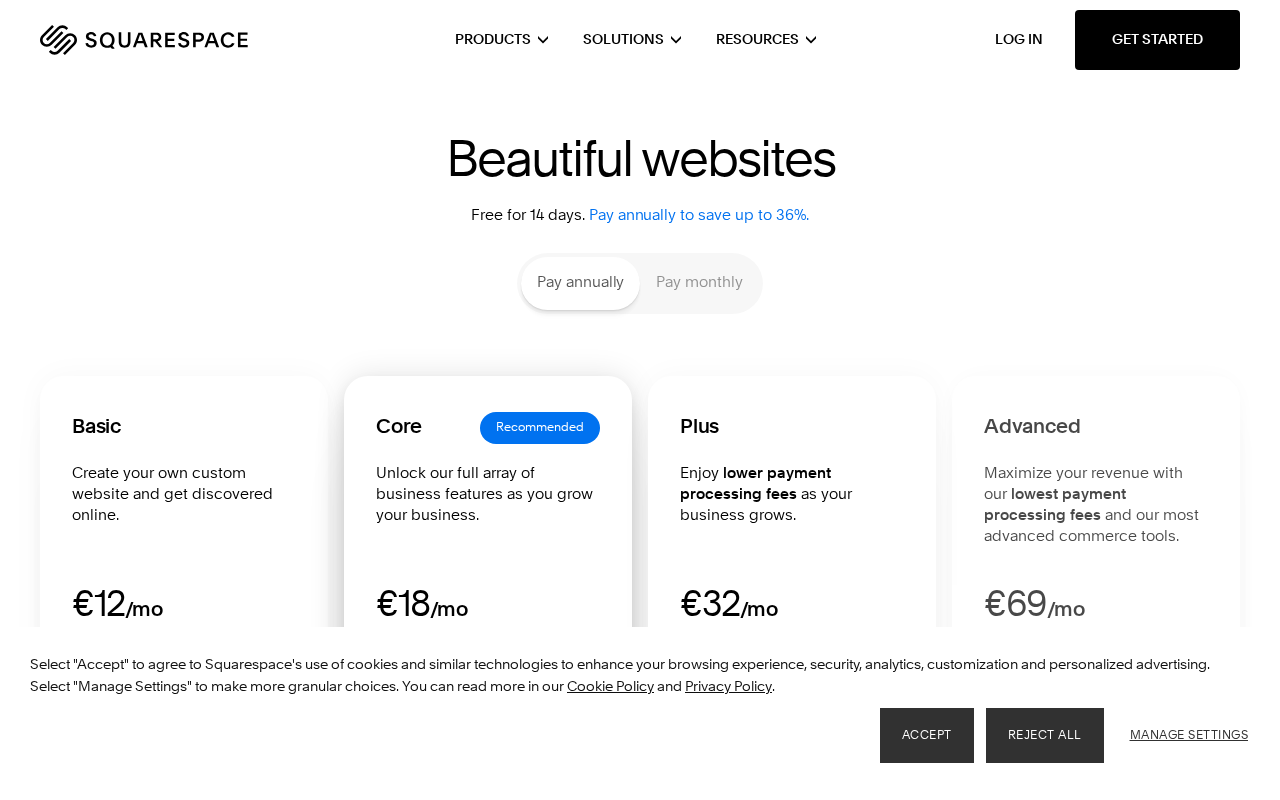
Squarespace requires a paid subscription to publish after its 14-day trial, with plans starting at $16/mo per month. Its AI features are integrated into the platform rather than presented as a separate credit system.
- Kleap documents databases, user accounts, and forms, making it more relevant for interactive prototypes and lightweight applications.
- Squarespace is better suited to content, portfolios, memberships, and standard online stores, with established commerce plans and managed infrastructure.
Kleap: AI-First Creation Beyond the Standard Website Builder
Kleap positions itself as an AI development environment rather than a website builder with AI features layered on top. According to its documentation, the platform generates projects from natural-language instructions and continues developing them through conversational editing. It produces source code, forms, databases, user accounts, and integrations.
This approach differs from AI assistance that fills templates or suggests content within a conventional builder's framework.
From Natural-Language Idea to Working Platform
The platform's workflow centers on prompt-to-project generation. You describe what you need, and the system builds a responsive site or application with custom functionality.
The output includes editable source files, a built-in code editor, and GitHub synchronization, which matters when you plan to extend or migrate the project later. The free plan gives five daily AI credits that refill, while Pro and Business plans offer larger monthly allocations starting at $25 and $50, respectively.
Publishing works differently depending on your plan. The free tier supports a Kleap subdomain, the Launch plan adds custom-domain publishing for $8.25/month yearly, and higher tiers scale with credit volume and team features.
Business documentation lists SSO, private projects, design templates, and a data-training opt-out for enterprise teams that need governance controls.
Source Access, Publishing Options, and Important Trade-Offs
Understanding the credit-based model is essential. Complex projects or frequent iterations consume credits faster, so you need to assess whether your usage pattern fits the allocation.
Generated output may require refinement, particularly when the initial prompt leaves requirements ambiguous or when you need precise design control.
The table below compares the key differences:
Try it — build your site while you read
Describe what you want and get a live, publishable site in seconds. Free to start, no code.
Join 200,000+ makers building real websites with Kleap.
Squarespace: Polished AI Assistance Inside a Managed Website Platform
Squarespace uses Blueprint AI to speed up traditional website creation instead of building applications from prompts. The system merges generated site structure, customized text, and images with AI tools for website copy, product descriptions, blog posts, and email campaigns.
The practical implication is that Squarespace cuts setup and content-production time, but the core product stays a managed website and commerce platform instead of a general-purpose app builder.
AI-Assisted Creation Within a Visual Builder
The AI builder creates layouts, copy, images, or page structures during setup, and you keep editing within Squarespace's visual interface. The AI-created site can be built during the 14-day trial, but a paid plan is needed to publish it.
Current plans start at $19 per month when billed annually, with pricing varying by location. Hosting is included with subscriptions, while domain costs may be separate.
This approach differs from credit-based AI generation. Squarespace integrates AI tools into the platform rather than treating them as a separate generated-code credit system.
You get guided design controls and centralized hosting without tracking daily credit consumption, which suits users who want a polished website experience over iterative prompt-based development.
Managed Hosting Versus Source-Code Portability
Squarespace is a managed hosted platform. Its materials stress keeping the site within Squarespace rather than exporting a complete, independently hosted application.
This matters when you plan to extend functionality beyond the platform's built-in tools or migrate the project to different infrastructure later.
| Factor | Kleap | Squarespace |
|---|---|---|
| AI model | Prompt-to-project generation with editable source files | AI-assisted content and layout within visual builder |
| Code ownership | Source-file access, built-in code editor, GitHub sync | Managed platform without independent export |
| Free publishing | Available on Kleap subdomain | Paid plan required after trial |
| Starting price | $9/month (Launch plan with custom domain) | $19/month (when billed annually) |
Squarespace is a stronger fit when you prioritize guided design, centralized management, and a conventional website workflow. Choose it when you want Blueprint AI to establish structure and generate content within a polished platform, not when you need broader application functionality or source-code control.
Kleap vs. Squarespace: Features, Pricing, and Control Side by Side
The table below shows the structural differences that decide which platform fits your project. Kleap's credit-based AI model and source-code access work for developers and agencies building custom applications, while Squarespace's managed hosting and integrated selling tools suit users who want a unified website and commerce environment without touching code.
| Feature | Kleap | Squarespace |
|---|---|---|
| AI creation model | Prompt-to-project generation with editable source files, code editor, and GitHub synchronization | Blueprint AI creates tailored sites within the visual-builder ecosystem; no source-code export |
| Free publishing | Available on Kleap subdomain with five daily AI credits | AI builder accessible during 14-day trial; paid plan required to publish |
| Custom-domain entry | Launch plan at $9/month | Plans start at $19/month when billed annually |
| AI usage model | Credit-based; Pro $25/month, Business $50/month with scalable allocations | AI tools integrated into platform; no separate credit structure listed |
| Source-code access | Full ownership, editable files, GitHub sync | Not available; platform remains hosted and managed |
| Team controls | Business tier includes SSO, private projects, design templates, data opt-out | Enterprise products available; verify specific governance features per plan |
| Platform portability | Export and self-host if needed | Migration requires manual rebuild or third-party services |
Where Publishing Cost and Ownership Change the Decision
Direct price comparison is imperfect because plan structures, billing terms, and regional pricing differ. Kleap's credit model scales with AI usage, so frequent iterations or complex projects consume credits faster.
Squarespace's subscription includes website and selling tools as a bundle, which can reduce the per-feature cost when you need commerce, templates, and managed infrastructure together.
Source ownership matters most when you anticipate custom development, SEO adjustments beyond template controls, or future migration. GitHub synchronization lets you version the generated code and bring in external contributors.
Squarespace's managed model removes server maintenance and security patching, which suits users who prefer operational simplicity over code-level control.
Consider a hypothetical marketing agency building client sites. If each project requires unique integrations or white-label delivery, Kleap's source access and GitHub sync provide flexibility.
If the agency prioritizes fast, template-based deployment with integrated analytics and selling features, Squarespace's bundled tools may deliver faster time to value despite the lack of code export.
Pro tip: Evaluate your long-term hosting and customization needs before choosing. A platform that offers free, permanent publishing on a subdomain reduces ongoing costs, while source-code access protects you from vendor lock-in when requirements evolve beyond the builder's native capabilities.
Which Builder Fits Your Website Goal and Growth Plan?
Choose the platform whose operational model matches your project timeline, technical comfort, and growth expectations rather than selecting based on AI visibility alone.
Choose Kleap When Speed and Application Control Matter
Kleap fits entrepreneurs, developers, and agencies that need to describe a product in natural language and move toward a functional prototype quickly. The platform's prompt-to-project generation supports forms, databases, user authentication, and third-party integrations. This makes it relevant when the goal extends beyond a static brochure site to interactive landing pages, internal tools, or early-stage products.
Source-code access, GitHub synchronization, and the built-in code editor reduce lock-in. You can edit generated code directly, hand the project to a developer, or migrate it later without rebuilding from scratch.
Free public prototyping on a Kleap subdomain lets startups validate ideas before committing to paid hosting, while the Launch plan at $8.25/moyearly per month adds custom-domain publishing. Pro and Business plans scale credit allocations for teams that generate and revise projects frequently.
The credit-based model requires review. AI-generated code needs testing, and complex application behavior will still require configuration or manual adjustments.
However, the approach supports more technical growth paths when portability and iterative development matter more than guided simplicity.
Choose Squarespace When Guided Publishing Matters More
Squarespace works better for users who want a polished visual editor, managed hosting, and an established website-commerce workflow. Blueprint AI speeds up initial setup by creating site structure, personalized text, and images within the platform. Additional AI tools help with product descriptions, blog posts, and email campaigns.
The result stays within Squarespace's ecosystem rather than producing exportable source files.
Plans start at $19 per month after a trial, and publishing requires a paid subscription. Include that cost in your launch budget from the beginning.
The platform suits local businesses, portfolios, marketing sites, and content-led projects: managed operations and predictable editing outweigh the need for custom application functionality or future migration flexibility.
What Buyers Still Need to Know Before Choosing
Questions About Cost, Publishing, and AI Limits
Kleap offers free publishing on a Kleap subdomain with five daily AI credits, while custom domains begin with the Launch plan at $9 per month. Squarespace requires a paid website plan to publish an AI-created site, with subscriptions starting at $19 per month after a 14-day trial.
AI credit behavior matters for Kleap users. Complex projects or frequent iterations consume credits faster, so assess whether the daily free allocation or monthly paid volumes match your workflow.
Squarespace integrates AI tools into its platform without exposing a separate credit system, though availability depends on the selected plan.
Questions About Ownership, SEO, and Long-Term Use
Kleap provides source-file access, a built-in code editor, and GitHub synchronization, which reduces lock-in and simplifies handoff to developers. Squarespace operates as a managed hosted platform, keeping sites within its ecosystem rather than exporting complete, independently hosted code.
Verify portability requirements before committing if you anticipate future migration or custom development.
Neither platform guarantees SEO results from its AI label alone. Kleap documents an Astro-based, mostly static architecture with responsive output, metadata, and SSL, while Squarespace supplies managed hosting and built-in website tools.
Search performance depends on content quality, technical configuration, links, accessibility, and competition, regardless of the builder.
For ecommerce, evaluate required store functionality, integrations, catalog complexity, and plan limits. Check current official documentation for both platforms before committing to a subscription, since features and pricing evolve independently of AI positioning.
Frequently Asked Questions
Does Kleap have a free plan for publishing a website?
Kleap lets you publish for free on a Kleap subdomain. You can build and launch a website without paying anything upfront.
Custom domains need the Launch plan, which starts at $8.25/month. This makes Kleap accessible for users who want to test the platform or launch a project quickly without immediate domain costs.
Can I publish a Squarespace AI-created website without paying?
No. While Squarespace's AI builder generates a site during the 14-day trial, you need a paid website plan to publish it. Plans start at $16/month when billed annually, though pricing varies by location.
The trial lets you explore the AI-generated design, but making the site publicly accessible requires a subscription.
Which platform gives users access to source code and GitHub synchronization?
Kleap provides access to source files, includes a built-in code editor, and supports GitHub synchronization. This allows developers to export their work, customize the code directly, and integrate it with version control workflows.
Squarespace operates as a managed hosted platform that keeps sites within its ecosystem rather than offering complete code portability for independent hosting.
Is Kleap or Squarespace better for SEO?
Both platforms support fundamental SEO practices such as custom meta tags, SSL, and mobile responsiveness. Squarespace has a longer track record with established SEO tools and integrations across its template library.
Kleap's AI-first approach generates structured layouts and allows code-level optimization for users who need deeper control. Your SEO results will depend more on content quality, keyword strategy, and technical implementation than on the builder itself.
Which builder is better for an ecommerce website?
Squarespace offers mature ecommerce features, including inventory management, integrated payment processing, and shipping tools refined over years of development. Kleap includes an AI ecommerce store builder and can create custom functionality through natural-language prompts, which may suit projects needing unique workflows or rapid prototyping.
Evaluate based on your specific feature requirements: established ecommerce infrastructure favors Squarespace, while flexible AI-driven customization points toward Kleap.
Can someone without coding experience use Kleap effectively?
Yes. Kleap's natural-language interface lets users describe what they want to build, and the AI generates the website or application accordingly.
You do not need to write code to create a functional site. The platform handles design, hosting, and publishing automatically.
However, access to source code and GitHub means developers can extend projects beyond the AI-generated foundation when needed.
Choosing the Right AI Builder for Your Project
The choice between Kleap and Squarespace depends on whether you need an AI-powered application development environment or a managed website platform with AI assistance. Kleap generates functional projects from natural-language prompts and gives you source code access, making it right when you need custom functionality, developer handoff, or future migration flexibility.
Squarespace integrates AI tools into a traditional website builder, delivering faster setup for standard sites and commerce stores within a managed hosting environment.
Start with a clear definition of your project scope and technical requirements. If your goal is a custom application, interactive tool, or prototype that might need developer extension, weigh Kleap's credit model and code ownership against your iteration frequency.
If you need a polished marketing site or online store with integrated selling tools and prefer not to manage hosting or code, Squarespace's subscription model may offer better value. Both platforms give you trial or free-tier access to test the fit before committing.