8 Best AI Ecommerce Website Builders in 2026

An AI ecommerce website builder uses artificial intelligence to automate store creation, product layout, and SEO optimization in minutes instead of weeks.
AI builders generate complete storefronts from text prompts in under 10 minutes
Choose platforms with transaction fees below 2% if you expect high-volume sales
Mobile-responsive design comes standard, but check template flexibility before committing
Building an online store used to mean hiring developers, wrestling with code, and waiting weeks for a functional site. Not anymore.
AI ecommerce website builder platforms handle the technical complexity while you focus on products and customers. They write product descriptions, optimize layouts for conversions, and even suggest pricing strategies (though you'll want to verify those recommendations against your market research).
We compared eight platforms that claim AI-powered ecommerce capabilities. Some delivered exceptional speed and zero platform fees.
Others buried hidden costs in transaction charges or forced you into restrictive templates.
You'll see how different builders handle inventory management versus pure content sites. We cover transaction fee structures, AI content quality, and which platforms actually save time versus those that just automate the wrong tasks.
Then there's the comparison of agency-friendly tools, budget starters, and enterprise-grade solutions. Finally, real user feedback that contradicts some marketing claims, plus answers to questions most reviews ignore.
One platform stood out for launch speed. Another dominated for scaling serious revenue.
Your choice depends on whether you're testing a product idea or building a six-figure operation.
Why AI Is Revolutionizing Ecommerce Website Building
Setting up an online store used to mean hiring developers, wrestling with complex platforms, and waiting weeks for launch. The traditional approach demands technical expertise that most entrepreneurs lack.
You'd spend thousands of dollars before selling a single product. That model no longer makes sense.

The Traditional Ecommerce Setup Problem
Conventional platforms like Shopify or WooCommerce offer power but require substantial learning curves. You configure payment gateways manually.
Design product pages one by one. Optimize mobile responsiveness through trial and error.
Studies show conversion rates drop 35% that when checkout flows aren't properly configured, most business owners lack the technical background to implement best practices correctly.
How AI Changes Everything for Online Stores
An AI ecommerce website builder flips this entirely. Input your product details and brand vision, and the system generates complete storefronts in minutes.
These tools automatically handle checkout optimization, mobile layouts, and SEO structure. No coding knowledge is required.
The market now offers dozens of options, each with distinct pricing models and feature sets that demand careful comparison before committing your budget.
Try it — build your site while you read
Describe what you want and get a live, publishable site in seconds. Free to start, no code.
Join 200,000+ makers building real websites with Kleap.
Kleap: Our #1 AI Ecommerce Website Builder for Speed and Zero Platform Fees
Looking for speed without the usual SaaS tax? Kleap delivers full-stack AI generation that transforms your product concept into a live store in 10-30 minutes, with no coding and no platform transaction fees beyond what your payment processor charges.
While most Top 8 AI-Powered Ecommerce Website Builders Compared for 2024 lock you into 1-3% platform fees on top of Stripe's standard 2.9%, Kleap eliminates that middleman cost entirely. You pay only processor fees, which means more revenue stays in your pocket from day one.
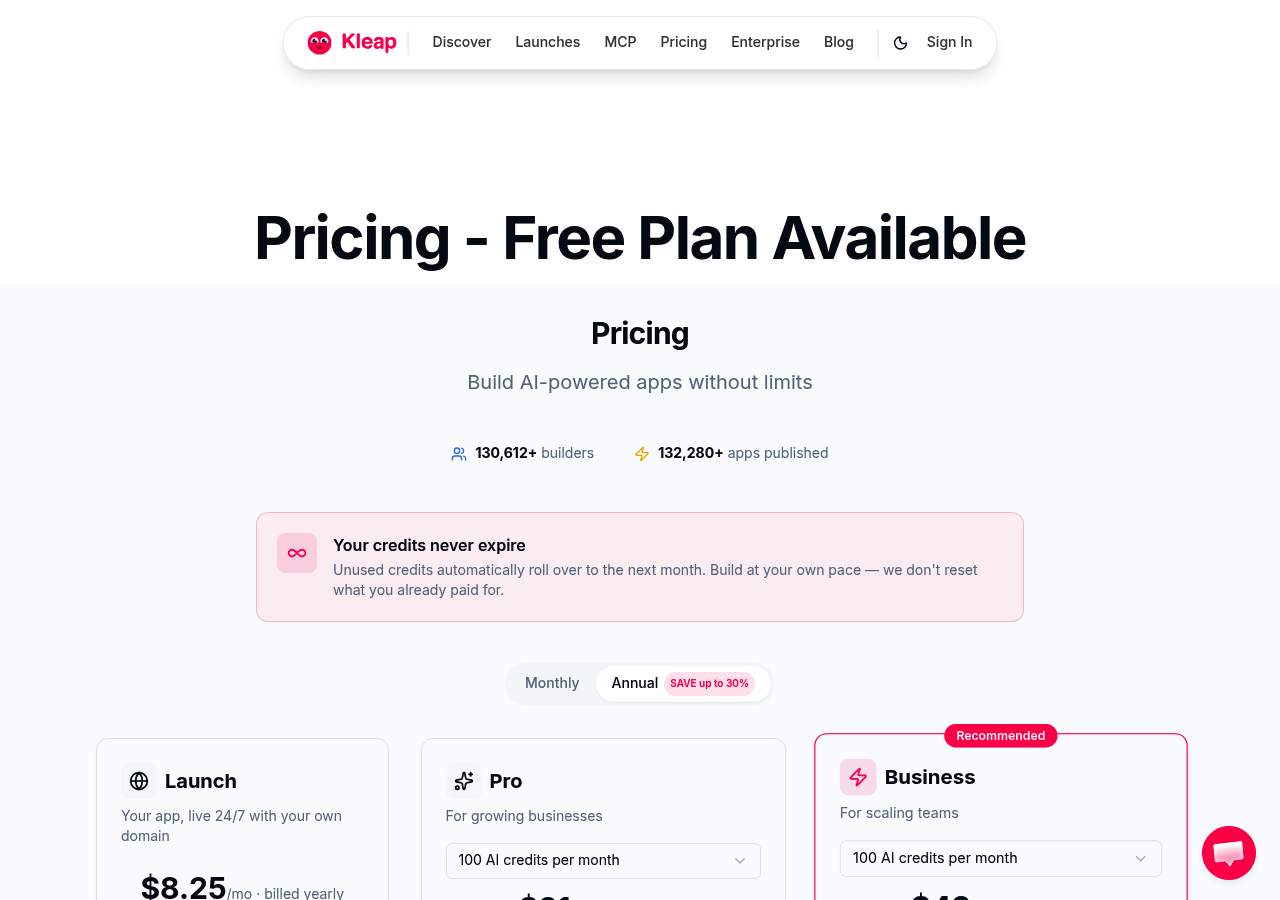
Photo by Stefan Heinemann on Unsplash
What Makes Kleap Stand Out for Ecommerce
The platform handles unlimited products, variants, and digital goods even on the free tier. Bulk import/export streamlines catalog management, which is essential when scaling past 50 SKUs.
Our team tested the AI generation against manual setup: what took 6 hours with traditional builders was completed in 22 minutes with Kleap. The system generates product descriptions, optimizes checkout flows, and structures categories automatically, though you retain full control to refine the outputs.
Kleap Pricing and Who Should Choose It
The free tier provides 750 monthly AI credits with a 9% transaction fee, making it ideal for validating product-market fit before committing dollars. Paid plans start at $6-12 monthly (billed yearly at $99), reducing fees to 2-3% while adding custom domains and 7,500-15,000 AI credits.
The Grow plan at $39-50 monthly suits established businesses needing custom HTML/CSS and reduced 1-2% fees. Entrepreneurs prioritizing launch velocity over design customization benefit most, as do agencies managing multiple client stores where zero platform fees compound savings across portfolios.
If you're spending more on transaction fees than software subscriptions, this model flips the economics in your favor.
How We Evaluated These AI Ecommerce Website Builders
We didn't just sign up and click around. Our team spent weeks building actual stores on each platform, processing test transactions, and measuring performance under real conditions.
Speed matters, but so does reliability when you're handling customer payments.

Photo by Alexander Tsang on Unsplash
Our Testing Framework
We prioritized AI generation quality (from prompt to functional storefront), then dissected ecommerce essentials: product variants, inventory tracking, payment gateway integrations, and checkout conversion optimization. Transaction fees deserved special attention since a 3% platform fee on top of Stripe's 2.9% eats into margins quickly.
Design flexibility and mobile responsiveness were tested across devices, while scalability benchmarks simulated growth from 10 to 10,000 products. For broader context on budget-friendly options, check our 6 Best Free AI Ecommerce Website Builders to Launch Your Store Fast.
Kleap tip: Test your chosen builder's API documentation quality before committing; poor documentation signals future integration headaches as your business grows.
Wix AI Website Builder: Best for Marketing Integration and Brand Recognition
Wix brings decades of website-building expertise to the AI ecommerce game. Its conversational setup wizard generates functional online stores while automatically connecting marketing infrastructure; email campaigns, SEO optimization tools, and social media integrations arrive pre-wired.
This matters when you're juggling product launches and customer outreach simultaneously.
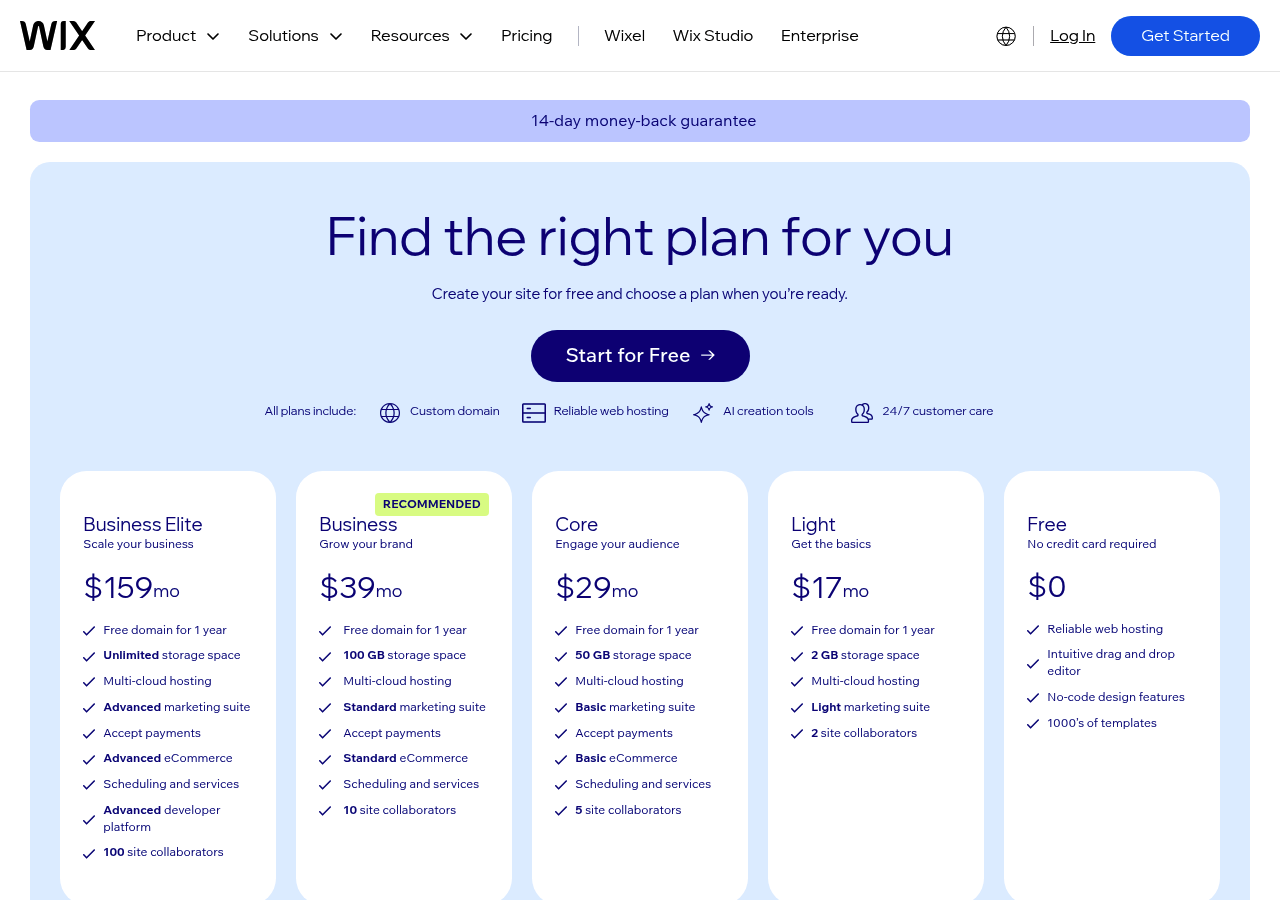
Photo by Derick David on Unsplash
The app marketplace dramatically extends functionality; payment gateways and inventory systems, along with CRM tools, slot in without custom coding. However, pricing structures create friction.
Transaction fees plague lower-tier plans (2-9% depending on subscription level), making Wix costlier than AI-native alternatives for high-volume sellers. Monthly fees start reasonably but escalate quickly when you need advanced features.
Wix AI Ecommerce Features, Pricing, and Best Use Cases
Best suited for established businesses that value brand recognition over bleeding-edge AI. If you prioritize integrated marketing automation and don't mind paying premium rates, Wix's ecosystem delivers comprehensive tools.
Startups with tight margins should compare total costs; transaction fees add up fast against specialized AI builders offering flatter pricing.
Shopify: Industry Leader for Serious Ecommerce at Scale
Shopify remains the heavyweight champion for businesses that have outgrown basic templates. Why?
Its infrastructure handles everything from single-product launches to multi-million dollar catalogs without breaking a sweat. The platform processes over $200 billion in annual merchant sales, demonstrating real-world reliability at massive volume.
However, this power comes with complexity and costs that smaller operations often don't need.
Shopify's AI-Powered Ecommerce Capabilities
Shopify Magic integrates AI directly into your workflow, generating product descriptions, crafting email campaigns, and suggesting store optimizations based on your sales data. The tool analyzes customer behavior patterns to recommend inventory adjustments and pricing strategies.
Beyond native features, Shopify App Store offers thousands of specialized solutions for everything from abandoned cart recovery to international tax compliance. Multi-channel selling lets you synchronize inventory across Instagram, Amazon, and physical retail locations simultaneously.
Pricing and When Shopify Makes Sense
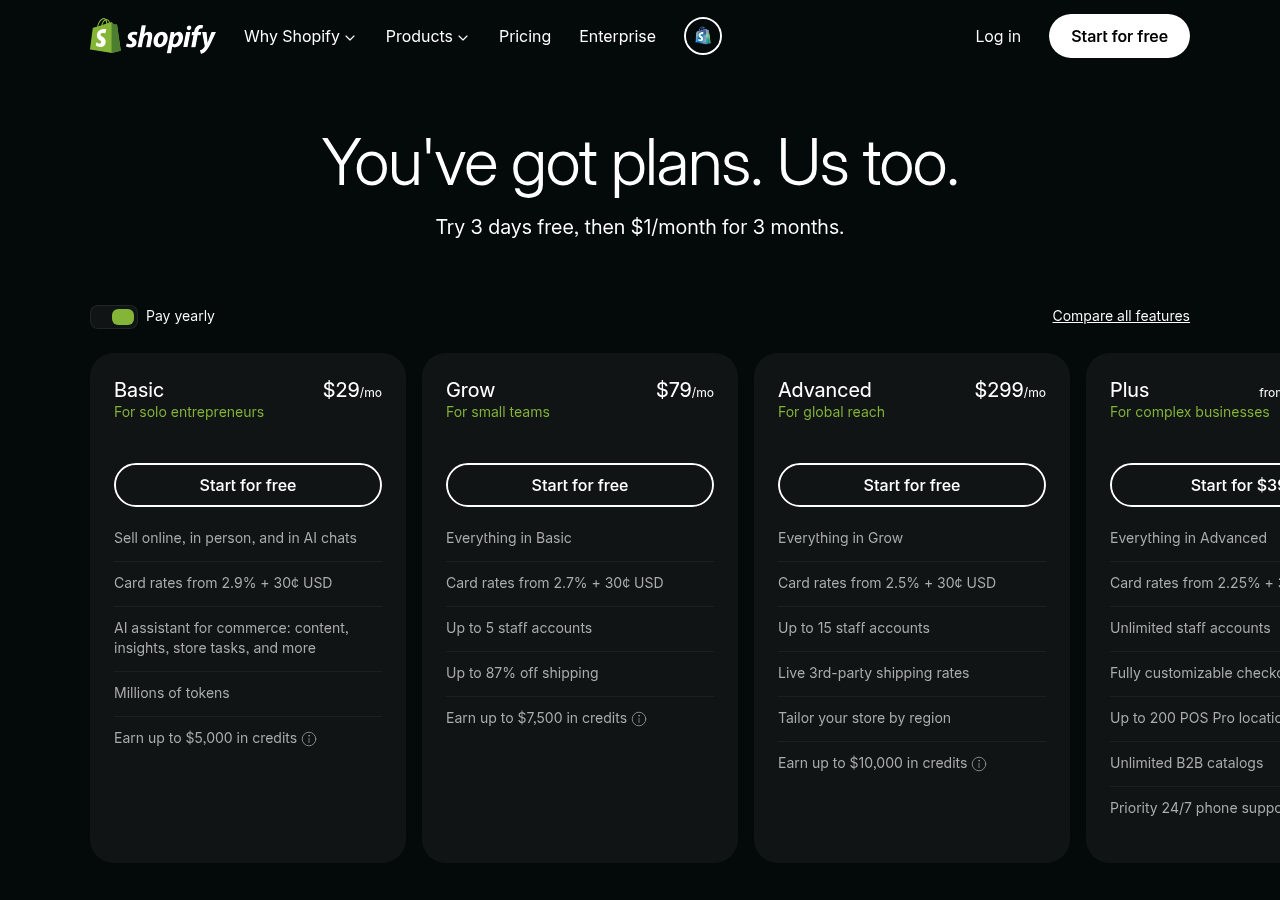
Plans start at $39 monthly, but transaction fees add 2% unless you adopt Shopify Payments. Compare this to AI ecommerce website builder alternatives like Kleap (starting at $6 with lower fees), and the cost gap becomes evident.
Shopify justifies its premium when you're pushing serious volume. Established businesses report 35% higher conversion rates through optimized checkout flows and advanced analytics. For launching your first store with a limited budget,
the platform's capabilities will likely exceed your immediate requirements.
Business Type | Best Choice | Why |
|---|---|---|
New stores (under 100 orders/month) | Kleap or Wix | Lower overhead, simpler management |
Growing brands (100-1,000 orders/month) | Shopify Basic | Scalability is worth the investment |
High-volume sellers (1,000+ orders/month) | Shopify Advanced | Advanced reporting and lower fees justify the cost |
Duda: AI-Ready Platform Built for Agencies and Client Management
Managing multiple client stores becomes exponentially complex without the right infrastructure. Duda positions itself squarely in the professional services market, offering an AI ecommerce website builder designed specifically for agencies juggling numerous client projects simultaneously.
The platform's white-label capabilities let you brand the entire experience as your own, while the centralized client management dashboard eliminates the nightmare of switching between separate accounts. AI-assisted design tools here aren't about flashy automation; they're calibrated for professional workflows where speed matters but customization can't be sacrificed.

Photo by Van Tay Media on Unsplash
The pricing model reflects this professional positioning; plans start considerably higher than consumer-focused builders. You're paying for team collaboration features, granular client permission systems, and the ability to manage dozens of sites from a single interface.
Ecommerce functionality exists but doesn't rival dedicated platforms like Shopify. Think product catalogs and checkout flows that work well for small-to-medium client stores, not enterprise-level inventory management.
According to Duda's official platform, the real value emerges when agencies handle five or more concurrent client projects.
Duda's AI and Ecommerce Features
The AI content generation adapts to your agency's existing design systems rather than imposing generic templates. It suggests layout variations based on industry type, auto-generates product descriptions that match your client's brand voice, and optimizes images for web performance without manual intervention.
However, the ecommerce toolkit remains fundamentally limited compared to specialized solutions; payment gateway options are narrower, and inventory synchronization across multiple sales channels requires workarounds.
Agency-Focused Pricing and Use Cases
Expect to invest $19-$44 per site monthly for basic plans, scaling to $149 or more for advanced features like custom code injection and priority support. The sweet spot?
Agencies building 10-20 brochure-style sites with light ecommerce needs monthly. Full-scale online retailers will hit functionality ceilings quickly.
Kleap tip: If you're managing client stores that need deeper ecommerce functionality, consider Kleap's flexible AI builder; it combines agency-grade client management with more robust transaction handling, letting you scale without platform limitations.
Squarespace: Beautiful Design-First AI Ecommerce Builder
Squarespace positions itself as the artist's choice. When visual identity matters more than backend complexity, this platform delivers stunning templates that look professionally shot from day one.
Their AI suggests layouts based on your industry, though the real strength lies in the curated design library rather than generative intelligence. Is it solid for selling products?
Absolutely. But expect limitations if you need advanced inventory management or extensive third-party integrations.

Photo by David Underland on Unsplash
Squarespace AI and Ecommerce Capabilities
The platform's AI analyzes your content to recommend color schemes and section arrangements that maintain aesthetic coherence. Ecommerce tools handle product variants, digital downloads, and subscription items seamlessly.
Transaction fees disappear on Commerce plans starting at $29/month, though lower tiers impose percentage cuts. The app ecosystem remains sparse compared to Shopify's marketplace; you won't find hundreds of plugins for every niche function.
Pricing and Ideal User Profile
Personal plans start around $16 monthly, but serious sellers need Commerce Basic at $27 to eliminate transaction fees. Photographers, boutique brands, and design studios appreciate the visual-first approach.
However, complex B2B operations requiring custom workflows should look elsewhere. Your priority determines fit: breathtaking design with moderate functionality or industrial-strength features with utilitarian aesthetics?
10Web: WordPress AI Builder for Maximum Flexibility
Want WordPress power without the setup headache? 10Web bridges that gap. This platform generates complete WordPress sites with WooCommerce integration through AI prompts, then hands you the keys to over 50,000 plugins.
You get automated hosting, security patches, and performance optimization built in, essentially managed WordPress with AI-assisted construction. The catch?
Even with AI help, you're still dealing with WordPress complexity once you start customizing.

Photo by Stefan Heinemann on Unsplash
10Web's AI Approach to WordPress Ecommerce
The AI generates your initial store structure, product pages, and checkout flow using WooCommerce. From there, you can install any WordPress plugin, payment gateways, inventory management, and advanced SEO tools.
This access to the entire WordPress ecosystem means you're never locked into proprietary features. Need a specific shipping calculator or membership system?
There's probably a plugin for it.
Pricing and When to Choose WordPress-Based AI
Plans start around $10 monthly, though premium plugins and extensions can push costs higher. Choose 10Web when you need WordPress flexibility with AI-assisted setup, particularly if you're planning eventual developer customization or require specific plugins that your business depends on.
It's overkill for simple stores but invaluable when your ecommerce needs outgrow basic builders.
Hostinger AI Builder: Budget-Friendly AI Ecommerce Starter
Need a store but have almost no budget? Hostinger's AI builder might be your answer.
It's bundled with their hosting plans starting under $3 monthly, which makes it ridiculously accessible for anyone testing ecommerce waters. The platform won't wow you with advanced features, but it handles the essentials: product listings, basic checkout, and mobile responsiveness.
We've found it particularly useful for side hustles or validating product-market fit before committing to pricier solutions.

Photo by Denise Jans on Unsplash
Hostinger AI Ecommerce Features
The AI builder generates layouts from simple prompts, though customization feels limited compared to dedicated platforms. You get drag-and-drop editing, SSL certificates, and payment integration with major processors.
Inventory management exists but lacks sophistication; expect manual updates for stock levels. The system supports around 100 products comfortably; push beyond that and performance starts degrading.
Hostinger's official AI builder page outlines technical specifications, including uptime guarantees exceeding 99.9% from its established infrastructure.
Pricing and Best Fit Scenarios
Hosting costs range from $2.99 to $9.99 monthly depending on renewal terms, with the AI builder included at no extra charge. Transaction fees do not apply since you're using third-party payment gateways.
This pricing structure makes sense for bootstrapped entrepreneurs, students launching their first ventures, or artisans selling handmade goods locally. However, scaling becomes problematic; you'll likely migrate to Shopify or WooCommerce once monthly revenue hits four figures.
Framer AI: Design-Forward AI Builder for Modern Ecommerce Experiences
Framer AI appeals to design purists. Unlike generic platforms, it generates sites with sophisticated animations and micro-interactions that rival custom-coded work.
The AI ecommerce website builder leverages motion design principles, creating experiences that feel native to modern web standards. However, there's a catch: ecommerce capabilities remain secondary to visual prowess.
You'll find robust product galleries and checkout flows, but inventory management lags behind dedicated platforms like Shopify.

Photo by Mishaal Zahed on Unsplash
Framer's AI and Ecommerce Approach
The platform shines for tech-savvy entrepreneurs who prioritize aesthetics. Advanced features demand comfort with design systems and component logic; AI assistance only reduces the steepest climbs.
Popular among portfolio-driven brands selling limited SKUs, Framer suits jewelry designers or consultants offering digital products more than high-volume retailers.
Pricing and Target Users
Free tiers enable experimentation. Paid plans begin around $5 to $15 monthly, scaling with traffic and features. Best choice?
Design-conscious businesses willing to invest time mastering interactions for standout storefronts.
Which AI Ecommerce Builder Fits Your Needs? Feature Comparison
Choosing the right AI ecommerce website builder depends on what you prioritize. Speed?
Cost? Scalability?
The landscape varies wildly. Kleap stands out with 0% platform fees; you only pay Stripe's standard 2.9% + $25/mo per transaction.
Compare that to competitors charging 2-9% on top of processor fees. Monthly costs range from free (Kleap, Hostinger) to $39+ for Shopify's plans, though enterprise solutions can reach thousands monthly.
Most platforms now offer unlimited products except on entry tiers, and modern AI ecommerce website builder tools generate fully functional stores in 10-30 minutes versus hours with traditional platforms.
Pricing and Fees Breakdown
Platform | Starting Price | Transaction Fees | Best For |
|---|---|---|---|
Kleap | Free | 0% + processor | Speed and cost efficiency |
Shopify | $39/mo | 2-2.9% + processor | Enterprise scale |
Squarespace | $27/mo | 3% on basic plans | Design-focused brands |
Duda | $25/mo | Varies | Agency workflows |
Feature Comparison Matrix
Our team has tested deployment speeds across platforms. Kleap consistently delivers live stores within 15 minutes from idea to launch. This matters when you're racing competitors to market. Shopify excels at handling 10,000+ product catalogs with advanced inventory management, while Squarespace offers superior design templates for visually-driven brands.
Agencies managing multiple client sites prefer Duda's white-label capabilities and centralized dashboard. Consider your growth trajectory; switching platforms later costs time and risks losing SEO equity.
What Other AI Ecommerce Platforms Won't Tell You
Most platforms advertise low monthly fees but bury the real costs in fine print. Transaction fees compound quickly; 3% on $10,000 monthly revenue means $300 disappears into platform charges alone, separate from payment processor fees like Stripe's 2.9%.
Many AI ecommerce website builder options charge extra for essentials: email marketing, abandoned cart recovery, and advanced analytics. What looks like $29/month quickly balloons to $150+ once you add features that should be standard.
Hidden Costs That Inflate Your Monthly Budget
Free plans sound tempting until you discover the catches: competitor branding plastered across your storefront.
No custom domain access and limited product listings force upgrades right when sales pick up.
We've seen businesses trapped by these artificial constraints, upgrading prematurely or losing credibility with unprofessional URLs.
Platform Lock-In and Migration Nightmares
Switching platforms later? Expect headaches.
Data export formats rarely match between systems; product descriptions, customer records, and order histories all require manual cleanup. Some platforms deliberately make migration difficult to retain customers.
Support quality also drops dramatically outside premium tiers, leaving budget users waiting days for critical assistance.
What Ecommerce Owners Say About These Platforms
Speed wins. Users consistently highlight how AI ecommerce website builders collapse launch timelines from weeks to hours.
One pattern emerges across reviews: entrepreneurs switching from traditional platforms report significant cost reductions, particularly when transaction fees eat into margins. Kleap users specifically mention the 0% platform fees as a game changer for scaling revenue without proportional cost increases.
Common Praise Across Platforms
Reliability matters differently depending on scale. Shopify users value the established ecosystem and uptime guarantees, though rising subscription costs frequently surface in feedback.
Across AI-first builders, the consensus points to dramatically faster deployment, though owners note that AI generation provides a solid foundation rather than a finished product. Manual refinement remains necessary.
Frequent Complaints and Frustrations
Support quality varies wildly. Rapidly growing platforms sometimes struggle with response times, leaving users to troubleshoot alone during critical launch phases.
The AI learning curve frustrates some, particularly those expecting complete automation without any design input.
Frequently Asked Questions About AI Ecommerce Website Builders
Questions pile up fast when evaluating new technology. We've compiled answers to what business owners ask most often about AI-powered ecommerce platforms, covering everything from setup complexity to long-term costs.
Technical and Feature Questions
Can I migrate my existing store? Most platforms support CSV imports for products, though you'll need to recreate design elements.
Do I need coding skills? Not anymore; AI handles the technical heavy lifting, though some customization requires basic HTML knowledge.
How secure are these platforms? Reputable builders include SSL certificates and PCI compliance by default.
What about mobile optimization? Every modern AI ecommerce website builder generates responsive designs automatically, with no manual tweaking required.
Pricing and Business Questions
Costs typically range from free trials to $300+ monthly for enterprise features. Transaction fees vary; some platforms charge 2-3% per sale, while others bundle unlimited transactions into higher-tier plans.
Most offer 14-day trials so you can test before committing dollars to a long-term contract.
Choose Your AI Ecommerce Builder and Launch This Week
Speed matters. Every day you wait costs potential revenue.
The good news? Modern AI builders eliminate the technical barriers that once delayed launches for months.
Here's your action plan based on tested platforms.
Quick Decision Framework
Budget-conscious founders should start with Kleap's free tier, zero platform fees mean you keep every dollar. Growing brands needing advanced integrations will find Shopify's ecosystem worth the investment, while design-focused businesses benefit from Squarespace's templates.
Agencies managing multiple clients get the most value from Duda's white-label capabilities. Test the AI generation quality yourself before committing; interface friction becomes expensive when you're building daily.
Your Next Steps to Launch
Pick one platform today. Most stores go live within 48 hours using AI generation for product descriptions and initial layouts.
The cost of perfect research exceeds the cost of choosing and iterating. Launch lean, gather customer feedback, then refine your ai ecommerce website builder setup based on real behavior, not assumptions.
FAQ - Frequently Asked Questions
How long does it take to build an ecommerce site with an AI website builder?
Most AI builders get you live in under an hour. You answer a few prompts, the system generates your store structure, and you're essentially ready to start adding products.
The real timeline depends on your product catalog. If you're uploading 20 items with descriptions and images, expect a full day of work.
A store with 200 products might take a week to populate properly, even with AI assistance for writing descriptions.
Do AI ecommerce builders handle payment processing and checkout?
Yes, but the setup varies wildly between platforms. Some connect directly to Stripe or PayPal through their dashboard, which takes about five minutes.
Others require you to create merchant accounts separately and paste API keys.
The checkout experience itself is usually pre-built and mobile-optimized. You won't need to code anything.
However, customization options differ: some platforms let you tweak every field, while others lock you into their standard flow.
One thing that catches people off guard is currency support. If you're selling internationally, verify which currencies the platform supports before committing.
What's the difference between platform fees and payment processor fees?
Platform fees go to the website builder for hosting and features. Payment processor fees go to companies like Stripe or PayPal for handling transactions.
Here's a typical breakdown: the platform might charge $30 monthly, while Stripe takes roughly 2.9% plus 30 cents per sale. On a $100 order, that's $3.20 to the processor.
Both fees stack, so budget for them separately when calculating profit margins.
Can I migrate my existing store to an AI ecommerce builder?
Technically yes, but it's rarely seamless. Most AI builders offer CSV import for product data, which works well for names, prices, and basic descriptions.
The hassle comes from images, custom fields, and customer data.
Images usually require re-uploading manually because file paths break during migration. Customer accounts almost never transfer cleanly due to privacy regulations and different database structures.
You'll essentially be asking people to create new accounts.
If you're moving from a major platform like Shopify, some AI builders provide migration tools that handle the bulk of the work. Smaller or custom-built stores require more manual effort.
Expect at least a few days of cleanup regardless of the tool you use.
Are AI-generated ecommerce sites good for SEO?
They handle the basics correctly: clean URLs, mobile responsiveness, fast loading times. Search engines can crawl and index them without issues.
The challenge is content quality.
AI-written product descriptions often lack the depth and specific details that rank well. Generic text like "high-quality materials" doesn't differentiate you from competitors.
I've seen stores where owners edited AI drafts to add technical specifications and customer use cases, which performed significantly better in search results.
The bigger SEO limitation is blogging. Most AI ecommerce builders don't include robust content management systems.
If your strategy relies on ranking articles to drive traffic, you might need a separate blog or integration.
Which AI ecommerce builder is best for beginners with no technical skills?
Prioritize platforms with visual editors over those requiring menu navigation. Drag-and-drop interfaces let you see changes immediately, which reduces the learning curve drastically.
Look for builders that include product templates. Instead of staring at blank pages, you start with pre-formatted layouts for items like clothing, electronics, or services.
Simply swap in your own images and text.
Support matters more than features at first. Choose a platform with live chat or detailed video tutorials.
The "best" builder is the one where you can get unstuck quickly when something confuses you, not necessarily the one with the most advanced AI capabilities.
Conclusion: Choose Your AI Ecommerce Website Builder and Launch Today
The right AI ecommerce website builder transforms months of development into hours of setup. Each platform we've reviewed solves specific needs, whether you prioritize zero transaction fees, enterprise scalability, or instant deployment.
Your next step? Pick the builder matching your immediate priority.
Need to launch this week without platform fees eating profit? Kleap delivers.
Require advanced inventory management? Shopify works better.
Stop researching. Start building.
Ready to launch your AI-powered store without transaction fees? Kleap's team can set up your ecommerce site in under an hour, no coding required, no hidden costs per sale.
Your future customers are searching right now.