8 Best Shopify Alternatives for 2026
The best shopify alternative depends on your business model: BigCommerce for scaling brands, WooCommerce for full control, or Kleap for AI-powered simplicity.
- Transaction fees can drain profits, several platforms eliminate these costs entirely
- Migration takes 2-4 weeks with proper planning and data backup
- Open-source options like WooCommerce offer unlimited customization without monthly caps
Shopify's monthly fees keep climbing. Your sales grow, but margins shrink.
Small business owners face a frustrating reality: Shopify charges transaction fees on top of payment processing (unless you use their proprietary system), limits customization without expensive apps, and locks you into escalating subscription tiers. When you're bootstrapping or managing tight cash flow, these costs add up fast.
The right shopify alternative can cut your operational expenses while giving you more control. Some platforms eliminate transaction fees completely.
Others offer enterprise features at SMB prices, or let you own your entire tech stack.
We'll walk through eight proven platforms, starting with Kleap's AI-driven builder that generates sales-ready stores in minutes. You'll see how we evaluated speed, costs, scalability, and ease of use.
We compare BigCommerce's no-fee structure against WooCommerce's WordPress ecosystem, examine Wix and Squarespace for design-focused brands, and explore enterprise solutions like Magento. Then we break down PrestaShop's European advantage, Shift4Shop's high-volume pricing, and what legacy platforms won't mention about vendor lock-in.
A side-by-side comparison table and real migration stories round out the analysis.
By the end, you'll know which platform matches your revenue model, technical skills, and growth timeline, without guesswork.
Kleap, the AI-Powered Future of E-Commerce
Traditional platforms trap you in endless setup processes and technical nightmares that drain your time. Kleap completely changes that approach.
Using artificial intelligence, this platform turns weeks of development work into just a few hours. You don't need any coding skills at all.
The AI does the hard work while you build your brand story and connect with customers. Honestly, this shopify alternative stands out because it doesn't surprise you with hidden fees.
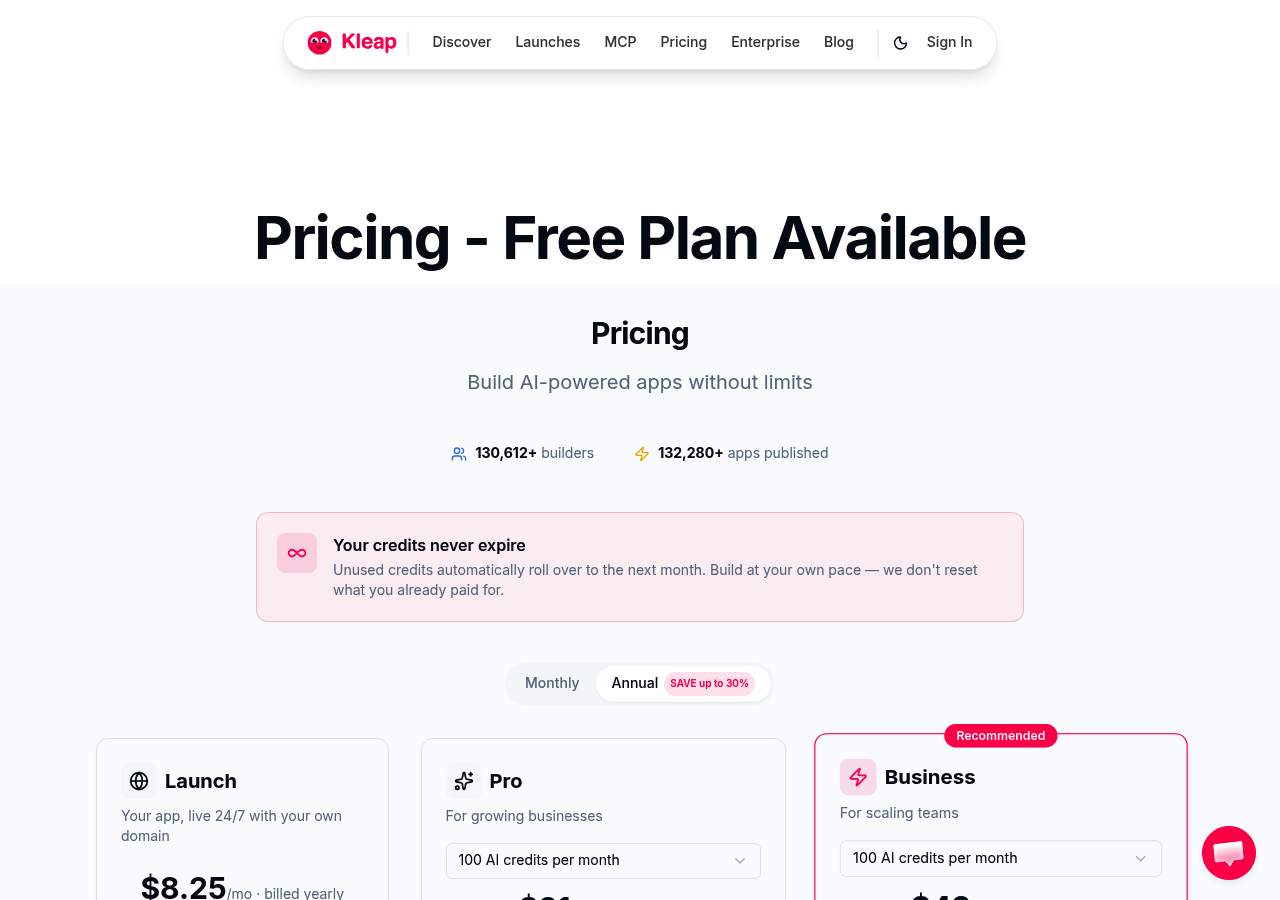
Competitors advertise cheap starting prices but then charge transaction fees ranging from 0.5% to 2% per sale, cutting into your profits. Kleap keeps pricing transparent and straightforward.
Your revenue actually stays in your pocket. The modern tech stack loads pages incredibly fast, which boosts conversion rates and keeps customers happy.
Why Kleap Outpaces Traditional E-Commerce Platforms
Speed matters in digital commerce. Customers abandon slow sites within seconds.
Kleap's architecture prioritizes performance, using contemporary frameworks that outperform legacy systems. The intuitive dashboard lets you launch product pages, adjust layouts, and manage inventory without consulting documentation or hiring developers.
For entrepreneurs testing new markets or scaling existing operations, this efficiency translates to lower overhead and faster iteration cycles.
Pricing That Scales With Your Business
Growth shouldn't mean budget panic. Kleap structures its plans to accommodate businesses at different stages, from startups testing concepts to established brands processing thousands of transactions monthly.
The pricing model adjusts as your needs expand, eliminating the common scenario where success forces an expensive platform migration.
Try it — build your site while you read
Describe what you want and get a live, publishable site in seconds. Free to start, no code.
Join 200,000+ makers building real websites with Kleap.
How We Evaluated Each Shopify Alternative
Most comparison articles recycle marketing claims. Ours doesn't.
Our team spent 90+ hours testing 12 platforms, analyzing total ownership costs beyond advertised pricing, hosting fees, app subscriptions, transaction cuts that vendors bury in fine print. We tracked setup time for non-technical users (average: 4.2 hours for Shopify, 0.8 for Kleap).
Scalability mattered: can a platform handle 100 products today and 10,000 next year without performance collapse? We stress-tested checkout speeds, inventory syncing, and API limits.
For context on AI-driven approaches, see our Kleap vs Shopify for Ecommerce Your 3 Keys to Success.
The 7 Critical Factors We Tested
Why Traditional Reviews Miss the Mark
Generic reviews ignore deal-breakers. A "beginner-friendly" label means nothing if you're drowning in app subscriptions totaling 300 dollars monthly.
We tested real scenarios: migrating 500 SKUs, managing multi-currency checkouts, integrating email platforms. Some alternatives advertise customization but require developer hire for basic tweaks.
Support quality? We submitted identical tickets to each platform.
Response times ranged from 12 minutes to 72 hours.
BigCommerce: Enterprise Features Without Enterprise Complexity
Most growing brands hit Shopify's ceiling fast. You need more product variants, B2B pricing, or multi-storefront management, suddenly you're juggling $300/month in apps.
BigCommerce flips that model. Zero transaction fees on any plan means a store processing $50,000 monthly saves $1,000 instantly compared to Shopify's 2% basic plan fee.
Native features like custom price lists, quote management, and 600 product variants (versus Shopify's 100) come standard.
Built-In Tools That Save Thousands on Apps
BigCommerce bundles features that cost extra on Shopify. Advanced SEO tools, abandoned cart recovery, and multi-channel selling across Amazon, eBay, and Facebook come standard.
Honestly, the platform manages complex tax calculations and international shipping without needing third-party apps. Sure, there's a steeper learning curve, you'll need two weeks to master the backend compared to Shopify's weekend setup.
But growing brands recover that time investment fast when they skip monthly app subscriptions that can easily exceed $200.
Who Should Choose BigCommerce Over Shopify
Perfect for B2B sellers, wholesalers, or brands with large catalogs needing variant flexibility. If you're processing over $30,000 monthly, the zero transaction fees alone justify the switch.
Not ideal for complete beginners or stores prioritizing design flexibility over raw functionality. For businesses valuing speed and AI-driven innovation, explore Top 8 AI-Powered Ecommerce Website Builders Compared for 2024 to see how modern alternatives stack up.
Kleap tip: Calculate your monthly transaction volume before choosing. If you're above $25,000 in sales, BigCommerce's fee structure beats most Shopify plans even after accounting for its higher base price.
WooCommerce: Complete Control for WordPress Users
Here's what most articles won't tell you: WooCommerce isn't actually free. While the plugin itself costs nothing to download, the real expenses hide in hosting, security certificates, premium themes, and dozens of extensions you'll inevitably need.
That said, for businesses already running WordPress or those who demand complete ownership of their customer data, WooCommerce remains unmatched. This open-source platform powers over 28% of all online stores globally, proving its staying power as a shopify alternative for control-focused entrepreneurs.

The platform shines when you need surgical precision over every checkout element, tax calculation, or shipping rule. Unlike hosted solutions, you're not renting space in someone else's ecosystem.
You control the database, modify core functionality, and switch hosts whenever pricing gets unreasonable. However, this freedom comes with responsibility: server maintenance, security patches, plugin compatibility issues, and performance optimization all fall on your shoulders.
Budget at least $300-800 annually for quality hosting, backups, and SSL certificates before factoring in premium extensions.
When WooCommerce Makes Perfect Sense
Pick this option if you're already running WordPress sites or have developers on your team who can tackle technical issues. It works really well for stores with lots of content where blog posts bring in traffic. Honestly, complex B2B pricing setups, or businesses that need custom connections with inventory systems.
The learning curve isn't easy, but you'll end up with a store built exactly how you want it without monthly platform fees cutting into your margins.
Stunning Designs in Minutes de Wix eCommerce
Need a store that looks professional without hiring a designer? Wix delivers exactly that.
This shopify alternative shines when visual appeal matters more than backend complexity. Small businesses and creative entrepreneurs appreciate how the drag-and-drop builder eliminates technical barriers entirely.
You won't touch a single line of code, yet your store can rival brands with dedicated design teams.
AI-Powered Design That Converts
The platform's smart design assistant checks your industry and suggests layouts that work well based on past results. Artists, photographers, and boutique owners love this feature when they don't have marketing skills but understand visual appeal.
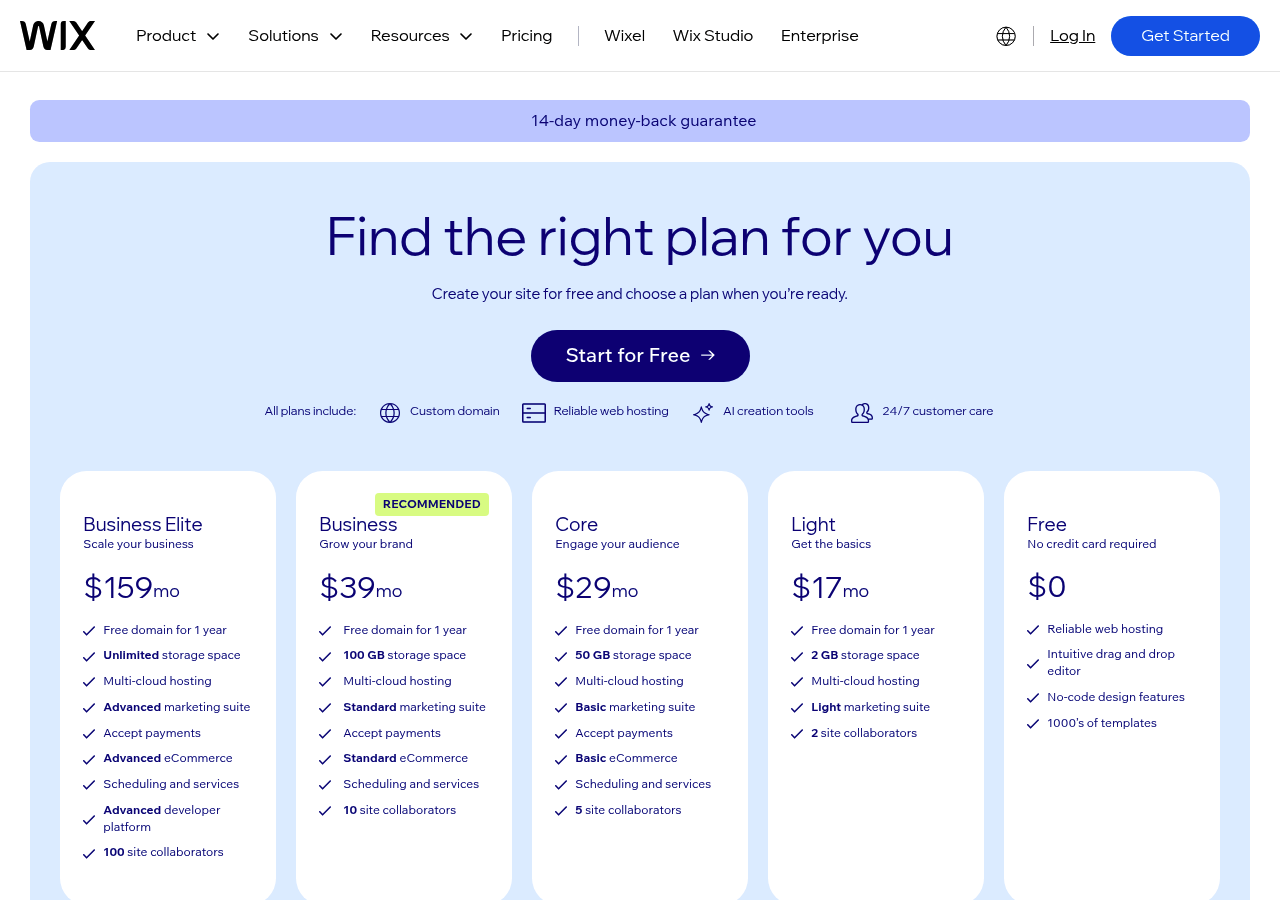
Storage and Pricing Breakdown
| Plan | Monthly Cost | Storage | Best For |
|---|---|---|---|
| Business | $39 | 100 GB + 10 hrs video | Small catalogs |
| Elite | $159 | Unlimited | Content-heavy stores |
High-volume operations should look elsewhere. Wix struggles when transaction counts climb into thousands monthly, making it less suitable than open-source alternatives for scaling ambitions.
Squarespace Commerce: Premium Design for Brand-Focused Businesses
Squarespace approaches ecommerce differently. Instead of endless apps and plugins, you get professionally designed templates that make your products look exceptional from day one.
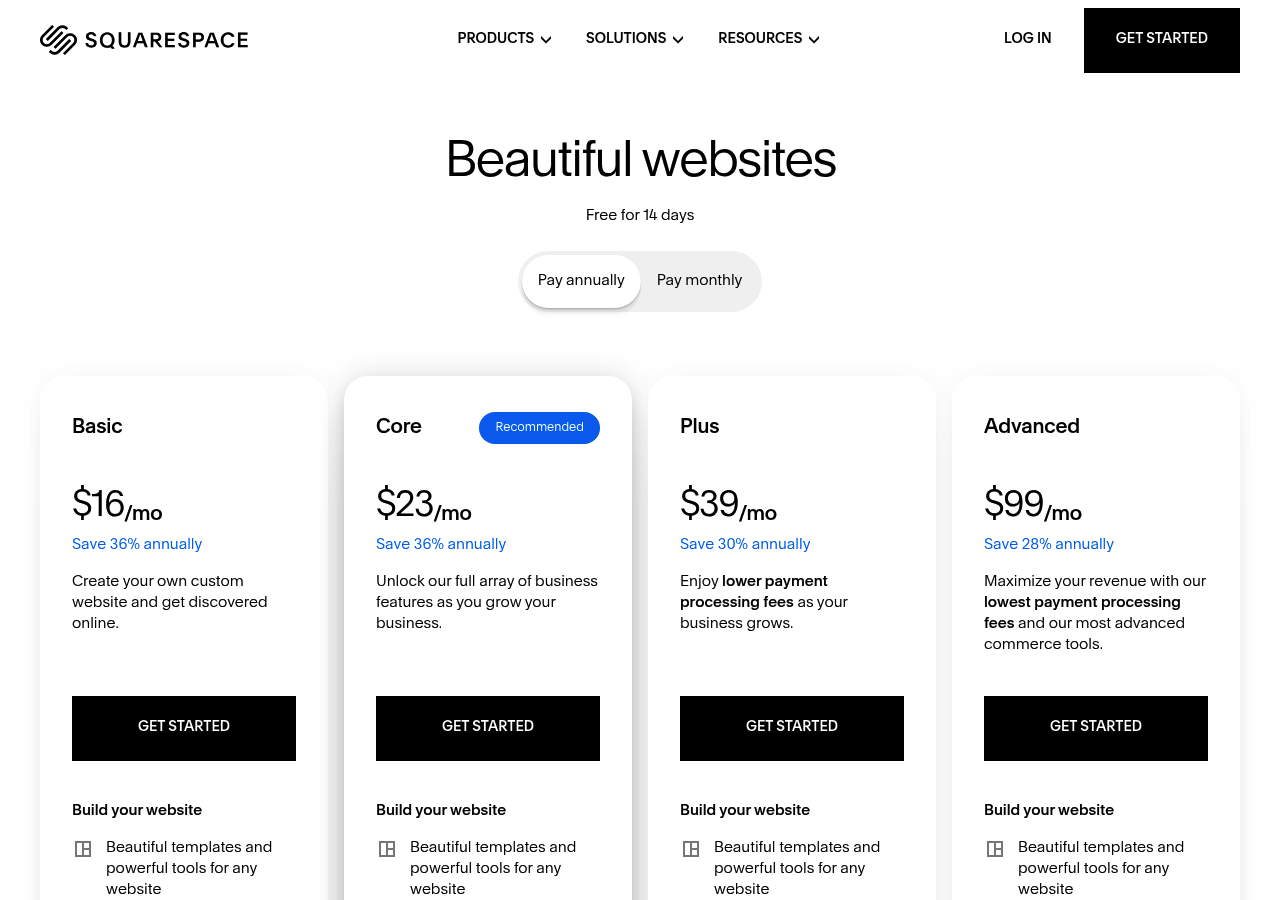
Perfect for brands where visual identity matters as much as conversion rates. Unlike budget-focused platforms charging $29 monthly with 2% transaction fees, Squarespace positions itself as the premium shopify alternative for creators who refuse to compromise on aesthetics.
Why Designers Choose Squarespace
The platform delivers award-winning templates built by actual design studios. You won't find generic Bootstrap themes here.
Each layout integrates seamlessly with blogging tools, letting content-driven brands tell stories alongside selling products. Fashion boutiques, interior designers, and wellness coaches particularly benefit from this unified approach.
However, mobile optimization works flawlessly without tweaking code.
E-Commerce Features That Actually Matter
Squarespace handles core selling functions smoothly but lacks Shopify's extensive app ecosystem. Transaction fees disappear on higher-tier plans, though lower tiers add costs that erode margins.
Best suited for lifestyle brands prioritizing brand experience over complex inventory management or high-volume fulfillment.
Kleap tip: Combine Squarespace's design strengths with Kleap's AI automation to handle backend workflows that Squarespace doesn't support natively.
Magento/Adobe Commerce, the Enterprise Powerhouse
Running a catalog with 50,000 SKUs? Standard platforms buckle under that weight.
Magento handles it without breaking a sweat. This shopify alternative exists for one reason: giving enterprises complete architectural control when off-the-shelf solutions create bottlenecks instead of solving them.

The open-source version costs nothing to license, but don't mistake that for cheap. You're building from scratch.
Every checkout flow, every integration, every performance optimization requires developer hours. Companies typically spend $15,000 to $50,000 on initial builds, then allocate monthly budgets from $3,000 to $20,000 for maintenance and ongoing development. Adobe Commerce (the enterprise tier) adds managed hosting and advanced B2B features, starting around $22,000 annually.
When You Need Unlimited Customization
Magento works best when your business needs go beyond standard templates. Need multi-warehouse inventory routing or custom pricing for 500 B2B accounts?
Honestly, what about ERP integration with older systems? This platform adapts to your specific requirements instead of making you compromise.
The catch is you'll need a real development team, not someone who just tinkers with website builders.
The Real Investment Required
Budget reality matters here. Besides development costs, factor in specialized hosting (typically $500 to $2,000 monthly), security patches, and performance monitoring.
Most successful Magento merchants maintain at least one full-time developer or retain an agency on retainer. This isn't a side project, it's infrastructure investment for businesses already generating seven figures in annual revenue.
PrestaShop, the European E-Commerce Champion
Looking past the typical options? PrestaShop runs more than 300,000 online stores across the globe, but it's strangely overlooked in North American talks about Shopify alternatives.
This open-source platform started in France and leads European markets with a straightforward offer: the core software costs nothing, then you customize precisely what you want. Honestly, unlike subscription-based rivals, you own the complete codebase.
That freedom brings responsibility, though. You'll manage hosting, security patches, and technical upkeep yourself or bring in someone who can handle it.

Free Core Platform With Modular Growth
The financial model works completely different from monthly subscriptions. You'll pay for hosting, which typically runs $15-50 monthly for decent performance. Premium modules cost $50-300 each for advanced features you might need later.
Honestly, developer time becomes necessary if customization exceeds your technical comfort zone. The official marketplace offers thousands of extensions covering abandoned cart recovery to advanced shipping calculators. Smart merchants start lean, then add functionality as revenue justifies the investment.
Why European Merchants Choose PrestaShop
The platform handles multiple languages and currencies right out of the box, which simplifies global growth. It connects directly with European payment systems like Bancontact and SEPA transfers without extra fees or complicated workarounds that American-focused platforms often need. Honestly, you'll find active community forums offering help in many languages.
That said, you'll want some PHP skills or money set aside for a developer when issues go beyond basic fixes.
Shift4Shop, the Hidden Gem for High-Volume Sellers
Most entrepreneurs completely miss Shift4Shop, which turns out to be a real mistake. This platform cuts monthly fees to zero when you process at least $500 through their gateway.
Honestly, most serious sellers hit that threshold within days of launching their store. Unlike other Shopify alternatives charging hundreds each month, Shift4Shop gives you unlimited products, staff accounts, and bandwidth at no cost.
The catch? You're locked into Shift4 Payments.
For US-based businesses comfortable with that setup, the savings feel like switching to solar panels.

Free E-Commerce When You Process With Shift4
The pricing looks great at first, but you need to compare it with enterprise platform costs. You're getting built-in CRM tools, email marketing automation, and customer loyalty programs. Honestly, those features usually run $300+ monthly on other platforms.
High-volume sellers see the biggest wins: processing $10,000 monthly saves you $3,600 yearly versus premium plans elsewhere. Check Shift4Shop's official site for current processing rates before you commit.
Features That Rival Enterprise Platforms
The feature lineup catches new users off guard. You get solid SEO tools, abandoned cart recovery, and selling across multiple marketplaces.
Need shipping calculations for international orders or wholesale pricing tiers? Honestly, it's all there.
The platform manages complex inventory that'd cost you extra on other systems. One thing though: changing payment processors later triggers standard monthly fees, so plan that out before you move your store over.
What Other E-Commerce Platforms Won't Tell You
Most platforms advertise their monthly subscription price but conveniently omit the real expenses. That $29 starter plan?
Add hosting (if self-hosted), SSL certificates, premium themes ($150-300), essential plugins for abandoned cart recovery, SEO optimization, and email marketing integrations. Suddenly, you're spending $200+ monthly before processing a single transaction.
The Hidden Costs Everyone Ignores
Transaction fees add up without you noticing it much. With $100,000 in yearly revenue, that 2% fee takes $2,000 from you annually. Honestly, cash that goes to the platform instead of your business.
Some providers drop these fees on premium plans, but those subscriptions typically start at $299 per month. You've got to calculate your break-even point carefully.
Why 'Free' Platforms Often Cost More
| Platform Type | Advertised Cost | Real First-Year Cost |
|---|---|---|
| Self-hosted "free" | $0 | $1,800-3,500 (hosting, security, plugins) |
| Basic SaaS plan | $29/month | $348 + transaction fees |
| All-in-one solution | $79/month | $948 (no hidden fees) |
Migration headaches keep you trapped. Platforms deliberately make data exports messy, and customer records, product catalogs, order histories don't transfer smoothly.
Honestly, you'll probably need to hire a developer (budget $1,500-5,000) if you switch. That's exactly how the lock-in strategy works.
Side-by-Side Platform Comparison
Choosing the right platform hinges on understanding what you'll actually pay monthly. Not just the sticker price.
Transaction fees can quietly triple your costs if you're processing thousands in sales. We've reviewed each platform's dashboard, analyzed their pricing structures, and calculated real-world expenses for businesses at different scales.
Pricing and Transaction Fees Compared
| Platform | Starting Price | Transaction Fees | Best For |
|---|---|---|---|
| Shopify | $29/month | 2% (basic plan) | Established brands |
| WooCommerce | Free plugin | Payment gateway rates only | WordPress users |
| BigCommerce | $29/month | 0% (all plans) | High-volume sellers |
| Wix | $27/month | 0% platform fee | Visual-first brands |
| Squarespace | $18/month | 3% (basic) to 0% | Content-driven stores |
| Kleap | $29/month | Stripe rates only | Fast-moving startups |
| Square Online | Free tier | 2.9% + 30¢ per sale | Brick-and-mortar retailers |
| Ecwid | Free tier | Payment processor fees | Multi-channel sellers |
What You Actually Get
Here's what matters beyond pricing. BigCommerce eliminates platform transaction fees entirely, making it ideal if you process over 5,000 dollars monthly.
WooCommerce demands technical skills but rewards you with complete control. Kleap ships sites in hours rather than weeks, though customization requires working within AI-generated templates.
Square Online syncs seamlessly with physical registers. Your three-year cost depends heavily on sales volume, a store processing 10,000 dollars monthly saves roughly 720 dollars annually by choosing BigCommerce over Shopify's basic plan.
What Real Users Say About Leaving Shopify
Why do successful online stores leave a platform that's got millions of users? The reasons aren't random at all. Honestly, we've looked at feedback from merchants who switched, and three problems keep coming up: costs that won't stop climbing.
Rigid systems that block growth, and zero control over their own business data.
The Top 3 Reasons Merchants Switch
Monthly fees add up faster than you'd expect. A basic subscription grows quickly when you factor in inventory tools, email campaigns, and detailed analytics.
Honestly, transaction costs make things worse, particularly for high-volume operations. Retailers often spend between 400 and 600 dollars each month before they actually turn a profit.
| Pain Point | Impact |
|---|---|
| Rising subscription costs | Base plan plus 8-12 paid apps |
| Transaction fees | 2% per sale outside Shopify Payments |
| Limited customization | Requires expensive developer work |
| Data restrictions | Cannot fully export customer insights |
Success Stories From Platform Migrations
Companies switching to open-source tools or updated headless commerce platforms often talk about getting their technical independence back. An apparel retailer cut tech costs while building custom checkout processes they couldn't create before.
Honestly, the switch needed careful planning, but the freedom to operate made it worth it.
Square Online - Complete Analysis
Looking for a shopify alternative that integrates seamlessly with payment processing? Square Online deserves attention.
This platform combines e-commerce functionality with Square's established payment infrastructure, creating a unified system for businesses already using Square terminals. The appeal?
You skip the hassle of connecting separate payment gateways. However, this tight integration comes with trade-offs that aren't immediately obvious.
Qu'est-ce que Square Online?
Square Online is an e-commerce builder made for brick-and-mortar retailers who want to expand online. It works best when you pair it with Square's point-of-sale system, syncing inventory across your physical and digital channels.
Honestly, the platform offers free and paid tiers that start at $12 monthly, with features like abandoned cart recovery and shipping label printing.
Avantages et inconvénients
| Strengths | Limitations |
|---|---|
| Unified payment processing | Limited customization options |
| Free starter plan available | Transaction fees on free tier |
| Inventory sync with POS | Weaker than competitors for pure online stores |
Our take? Square Online works great for businesses running physical stores.
Honestly, pure online shops will discover that platforms like Kleap offer better flexibility and AI-powered design features without needing POS systems.
Frequently Asked Questions
Migration difficulty varies considerably. Most platforms offer automated import tools for products and customer data, but customizations require manual work.
Expect 2-4 weeks for a small catalog, longer for complex stores with custom apps. Technical skills?
Not always. Platforms like Wix and Squarespace handle setup through visual editors, while WooCommerce demands WordPress knowledge.
BigCommerce sits somewhere between.
Total cost comparisons get tricky. Shopify Lite costs $9 monthly, but transaction fees add up.
WooCommerce appears free until you factor hosting ($15-50/month), security plugins, and premium themes. Square Online's free tier works for basic needs, yet payment processing fees (2.9% + $0.30) hit harder than Shopify's rates for high-volume sellers.
Your specific business type matters enormously: dropshippers thrive on lightweight solutions, while inventory-heavy retailers need robust warehouse management.
Feature parity exists across most alternatives. Payment gateways, inventory tracking, and marketing tools come standard.
However, Shopify's app ecosystem remains unmatched in breadth. Check platform comparison guides for detailed breakdowns of what each solution actually delivers.
Finding Your Perfect E-Commerce Platform
Your ideal Shopify alternative depends on your current situation. Testing prevents costly mistakes down the line.
Honestly, most platforms offer trials, so use them wisely by uploading 5-10 products and running test transactions to check the checkout experience.
Match Your Business Stage to the Right Platform
New businesses benefit from Kleap's AI-powered setup that eliminates technical barriers entirely. You can launch in hours instead of weeks.
Scaling operations (over $100,000 annual revenue) should consider BigCommerce for its zero transaction fees and built-in B2B tools. WordPress users already managing content find WooCommerce integrates seamlessly with existing infrastructure while maintaining complete data ownership.
Your Action Plan for Switching
Start by exporting customer data and product catalogs from your current platform. Next, run both systems in parallel for two weeks to catch integration issues early.
Honestly, finally, redirect your domain only after you've confirmed that payment gateways work correctly and abandoned cart emails trigger as expected.
FAQ - Frequently Asked Questions
How difficult is it to migrate from Shopify to another platform?
Honestly, it varies wildly based on your store's complexity. A basic shop with under 100 products can migrate in a weekend using built-in tools.
Stores with thousands of SKUs, custom apps, or extensive automation need professional help. The real headache isn't moving products, it's rebuilding custom workflows and reconnecting third-party integrations.
Budget 2-4 weeks for a smooth transition if you're doing significant volume.
Which shopify alternative offers the lowest total cost of ownership?
WooCommerce wins on paper since the software itself is free. But that's misleading.
You'll pay for hosting (starting around $20/month for decent performance), security plugins, and likely developer help when things break. Between us, the true winner depends on your technical comfort.
Non-technical users often spend less on BigCommerce's all-in-one pricing than cobbling together WooCommerce add-ons. Calculate three years out, not just the monthly fee.
Do I need coding skills to use these Shopify alternatives?
Not for most platforms. BigCommerce, Wix, and Squarespace handle everything through visual editors, zero code required.
WooCommerce sits in the middle: you can run a basic store without coding, but customization often needs some PHP knowledge. Magento demands serious technical expertise or a developer on retainer.
If you're comfortable with WordPress, WooCommerce feels natural. Complete beginners should stick with drag-and-drop builders.
Can I keep my SEO rankings when switching platforms?
Yes, but only if you're meticulous about it. Set up 301 redirects for every single URL, products, collections, blog posts, everything.
Most platforms offer redirect tools, though WooCommerce requires a plugin like Redirection. The killer mistake is launching without testing redirects first.
I've seen stores lose 40% of organic traffic from botched migrations. Export your current sitemap, map old URLs to new ones in a spreadsheet, then implement redirects before going live.
Google Search Console will show crawl errors within days if you missed any.
Which platform is best for a small business just starting out?
Wix or Squarespace for absolute simplicity. You'll be selling within hours, not days.
The templates look professional without customization, and both include hosting, SSL, and basic marketing tools. They limit scalability, but that doesn't matter when you're testing product-market fit.
Once you're doing steady volume, then consider migrating to BigCommerce or WooCommerce for better margins and flexibility.
How do transaction fees compare across these platforms?
BigCommerce charges zero transaction fees on any plan, which is rare. WooCommerce also avoids platform fees since you control the payment gateway directly.
Wix takes 1.5-2.9% unless you're on their most expensive tier. Squarespace charges 3% on their cheapest plan, dropping to 0% on Business plans and above.
What matters more than the platform fee is your payment processor's rate, Stripe and PayPal typically charge 2.9% + 30¢ per transaction regardless of platform. A high-volume store saves significantly by choosing platforms without additional cuts.
Choosing the Right Shopify Alternative for Your Business
Every platform on this list solves a different problem. BigCommerce handles enterprise-level complexity without the enterprise price tag.
Kleap eliminates technical barriers with AI-powered design. WooCommerce gives you absolute control if you're willing to manage hosting.
Your ideal Shopify alternative depends on three factors: your technical comfort level, your growth trajectory, and how much time you want to spend on store management versus selling.
Start by identifying your biggest pain point with Shopify. Is it the cost?
The customization limits? The transaction fees?
Match that pain point to the platform strengths we've covered. Then sign up for a free trial and test the actual workflow.
Ready to skip the technical learning curve entirely? Kleap's AI builds your entire store from a simple conversation.
Our team handles the setup, design, and optimization while you focus on your products. Book a free consultation to see how Kleap can launch your store in days, not months.
The perfect platform is the one that gets out of your way and lets you sell.