8 Abandoned Cart Recovery AI Store Platforms That Can Win Back Sales

An "abandoned cart recovery AI store" is a search term rather than a distinct product category: it refers to ecommerce setups that use automated, data-driven messaging to re-engage shoppers who add items to a cart but never complete checkout. Recovery can reach those shoppers through email, SMS, onsite personalization, or conversational assistance.
The best platform depends on the store's sales channel, consent coverage, integrations, and need for predictive optimization.
That reach depends on the data the store already holds. A message can't be sent if no usable contact information or lawful identifier was collected, so consent and data collection, including SMS opt-ins, account records, and browser identifiers, set the ceiling on what any platform can do.
The eight platforms compared below differ mainly in how much of the decision they automate, from fixed follow-up sequences to selecting the channel, timing, and offer based on observed customer and store data.
Abandonment benchmarks also vary by store, so headline rates describe the market rather than your results. Baymard's ongoing research places the global average at around 70%, combining data from countries, categories, devices, and measurement methods.
- Recovery tends to work better when checkout itself is easy to complete; Baymard's research model reduces an ideal checkout to roughly 12 form elements, favoring fewer fields and autofill support.
Try it — build your site while you read
Describe what you want and get a live, publishable site in seconds. Free to start, no code.
Join 200,000+ makers building real websites with Kleap.
Markopolo AI, Predictive Campaigns for Cross-Channel Recovery
Markopolo AI is a candidate for an abandoned-cart recovery AI store that wants one tool to handle email and SMS together. Its channel coverage, integrations, pricing, and recovery performance are not documented in the sources reviewed here, so treat the notes below as a verification checklist.
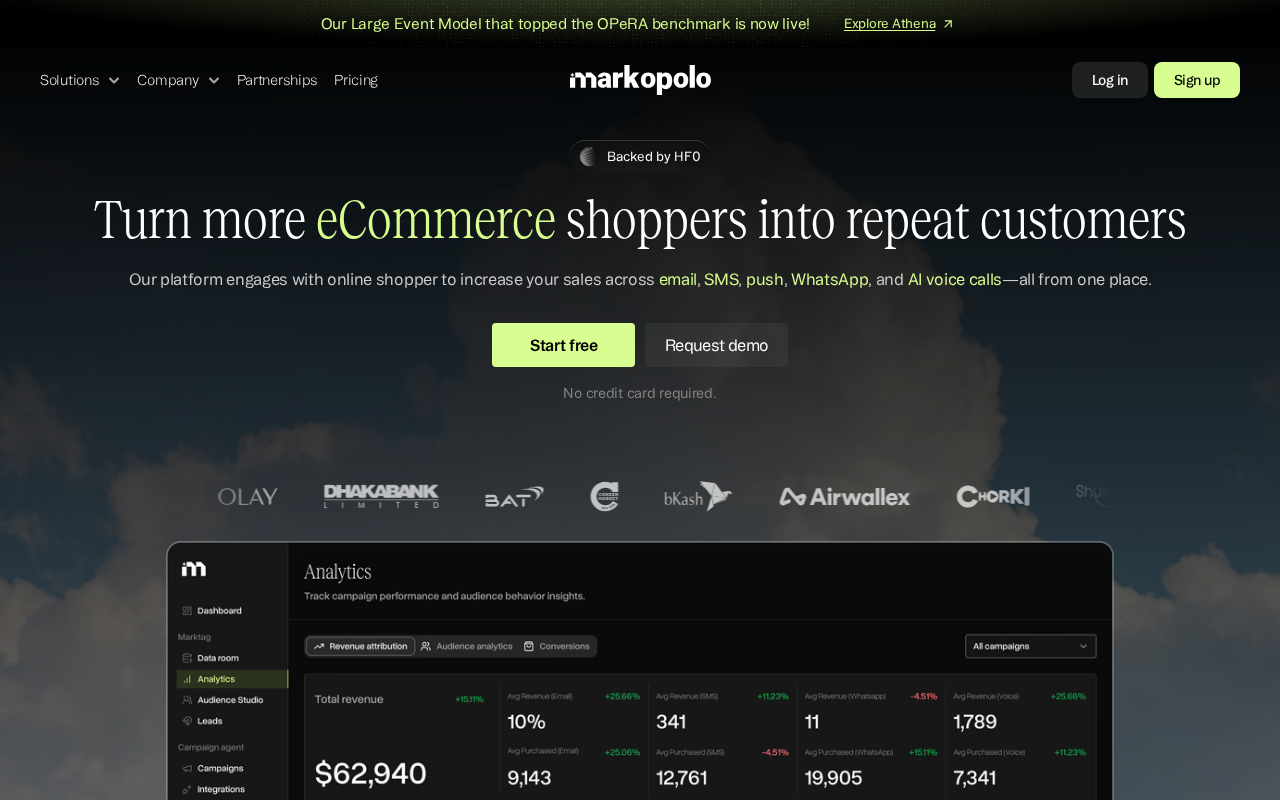
Markopolo AI: a cross-channel candidate whose predictive features need testing
However, recovery software depends on inputs, not branding. Every workflow needs a product catalog, cart or checkout event tracking, an identifiable contact, a consent-covered channel, and a link that returns the shopper to the cart.
Ask the vendor to show where each record surfaces and how a checkout enters an audience.
Predictive timing is worth testing only after your event data is clean, so run a holdout group against your existing sequence instead of trusting a demo. Channel coverage also needs checking, because Shopify's native workflow covers its Online Store and Buy Button channels, according to Shopify's abandoned checkout documentation, but excludes POS and third-party channels.
Klaviyo, Deep Segmentation for Sophisticated Lifecycle Flows
Among abandoned-cart recovery AI store options, Klaviyo earns its place on one criterion: how much customer-data orchestration a store wants to run. Deep segmentation pays off when recovery sits inside a wider lifecycle program rather than a single email.
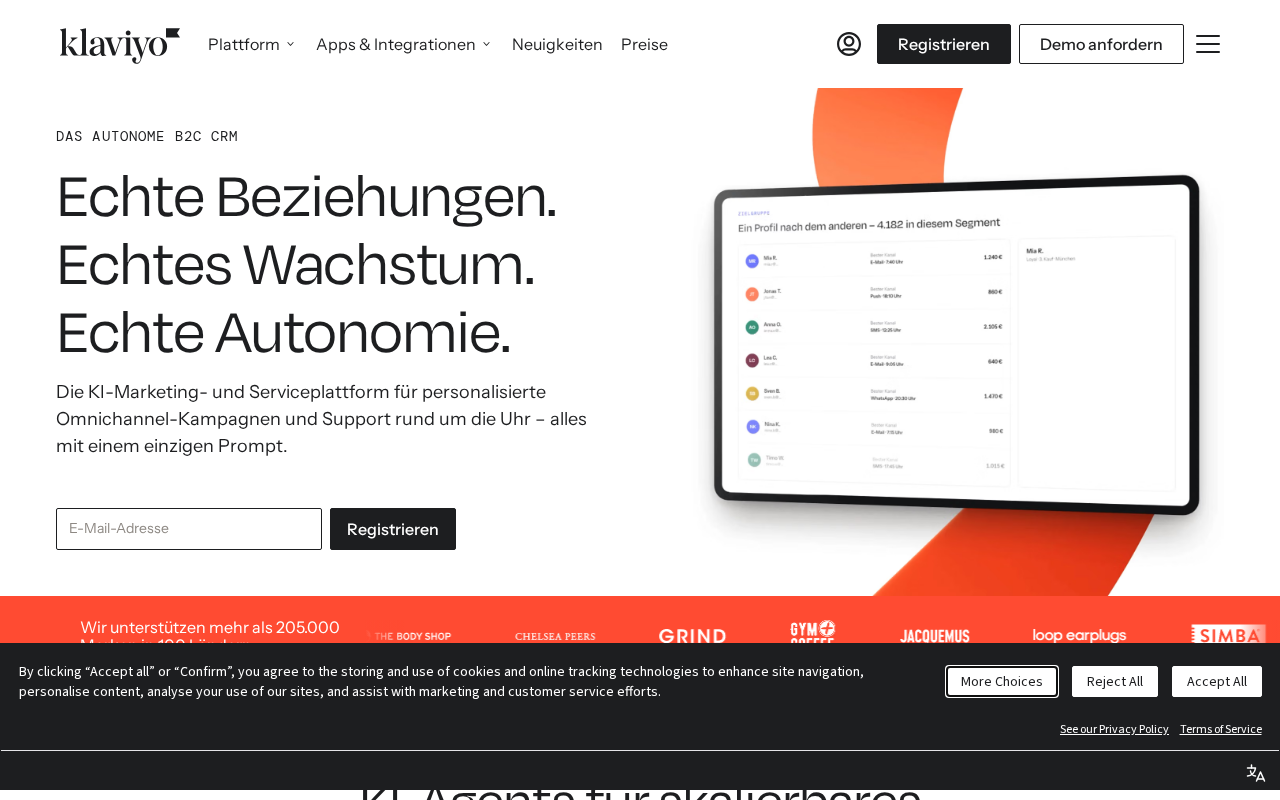
Klaviyo: deepest lifecycle segmentation, heaviest to maintain
So segmentation changes the message itself. A shopper who supplied contact details during checkout can receive a recovery link back to the incomplete purchase, while a visitor who never identified themselves can't be reached that way.
Upkeep is the tradeoff. Complex flows need to be designed, tested, and monitored as assortment and traffic shift.
A Shopify Enterprise article reports Klaviyo benchmarks for automated cart-recovery emails, including roughly 50.5% open, 6.25% click, and 3.33% placed-order rates. Those are benchmarks, not guarantees; results vary by category, list quality, and incentive.
One question settles fit: does the store need broad lifecycle marketing, or only a focused abandoned-checkout sequence? Stores needing the latter can start more simply, then add segmentation once event data is clean.
ReConvert, Post-Purchase Tools With a Recovery Use Case
Here, the candidate is a post-purchase tool rather than a dedicated abandoned cart recovery AI store platform: ReConvert. The sources reviewed here do not document its recovery triggers, integrations, or message channels, so verify them with the vendor first.
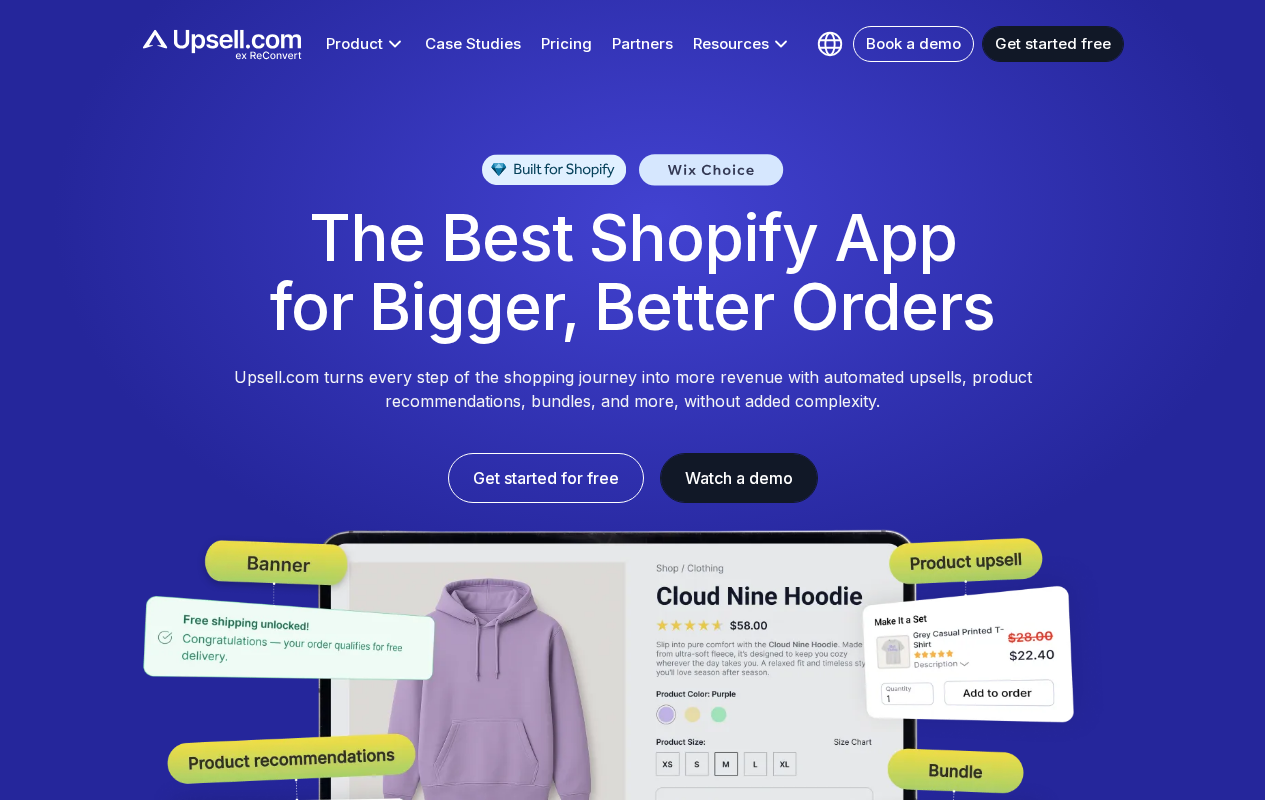
ReConvert: Test It If Upsells and Recovery Share One Workflow
Post-purchase optimization and cart recovery answer different questions. An upsell raises the value of an order already placed.
Recovery brings a shopper back to an incomplete purchase, and on Shopify, that link restores the items, variants, prices, shipping terms, and discounts.
So hold ReConvert to the standards in Shopify's abandoned checkout documentation: a trigger after the shopper submits contact details, coverage limited to the Online Store and Buy Button channels, removal of completed orders, segmentation, analytics, and clarity on whether any discount is configured or chosen automatically.
If the sole need is reminder emails to shoppers who gave contact information, a focused tool covers it, and a broader funnel suite isn't necessary.
Omnisend: Email and SMS Automation for D2C Teams
This section judges one candidate on whether it can run coordinated email and SMS recovery for direct-to-consumer stores. The sources reviewed here name Omnisend as an email and SMS platform but do not document its triggers, segmentation, or reporting, so confirm those with the vendor.
Omnisend: A Plausible Email and SMS Pairing, Unverified
In an abandoned cart recovery AI store, channel pairing only works when a usable contact exists. An abandoned checkout means the shopper supplied contact details but left before payment, which is why a recovery link can return them to the incomplete purchase.
A visitor who never identified themselves can't be reached by email, and SMS requires explicit permission.
So check consent coverage before adding SMS, and exclude payment card details from any third-party AI processing. Because Baymard attributes abandonment largely to unexpected costs, delivery speed, and account creation, a reminder alone may return shoppers to the same obstacle.
Verify whether the platform adjusts the offer, since applying a discount is a configured promotion rather than evidence that the AI chose it (Shopify's recovery email discount settings).
Carti Abandoned Cart Recovery: Focused Shopify Reminders
For Shopify merchants who want a dedicated, uncomplicated tool for abandoned cart recovery AI store workflows, a specialist app can handle the core job without the overhead of a broader marketing platform. The question is whether that narrower scope covers everything your store actually needs.
When a Specialist App Is Enough
A focused Shopify reminder tool works well when your primary need is re-engaging shoppers who reached checkout, submitted contact details, and then left. Shopify's abandoned checkout data preserves cart contents, pricing, customer details, and a recovery link, so a dedicated app built on that data can send timely, relevant reminders without requiring a complex setup.
If your store sells through the Online Store or Buy Button channels, that coverage aligns with how Shopify's native abandoned checkout system works.
The Limits of a Narrower Workflow
However, channel coverage is the first thing to verify. Shopify's abandoned checkout automation does not extend to POS or third-party channels, so a store selling across multiple surfaces should confirm which carts actually enter the recovery workflow.
A specialist app also typically stays focused on reminders rather than segmentation, predictive timing, or cross-channel orchestration. That tradeoff is fine for a straightforward Shopify store.
For merchants who need to layer in SMS, onsite personalization, or deeper audience logic, a narrower tool may need supplementation.
Shopify Inbox, Conversational Help Before the Cart Goes Cold
Shopify Inbox sits at a different point in the shopping journey than the automated recovery tools covered elsewhere in this comparison. Its value is pre-abandonment: answering a product question, clarifying a shipping policy, or confirming compatibility before a shopper loses interest and closes the tab.
That kind of real-time help tackles hesitation while purchase intent is still active, which makes it a complementary layer rather than a competing one in an abandoned cart recovery AI store setup.

The distinction matters because Baymard's research identifies unexpected costs, delivery concerns, and trust gaps as primary drivers of abandonment. A live messaging tool can surface and resolve those concerns on the spot.
Then again, it can't trigger an event-based follow-up sequence once the shopper has left because it has no recovery automation. It also depends on response capacity: a message that goes unanswered for hours offers no real conversion advantage.
Treat Shopify Inbox as a friction reducer, not a recovery engine. Stores that need event-triggered emails, SMS sequences, or onsite personalization after an incomplete checkout still need a dedicated automation tool alongside it.
Wisepops, Onsite Personalization at the Moment of Exit
Wisepops takes a different position in abandoned cart recovery AI store setups by acting before a shopper leaves rather than chasing them afterward. Whereas email and SMS require a captured contact and lawful consent, onsite messages can reach any visitor, including anonymous browsers who never reached checkout.
That timing difference matters: an intervention at the moment of exit can address hesitation while the session is still live.
Wisepops, Onsite Exit-Intent Layer: Worth Verifying for Shopify Stores
Wisepops positions itself as an onsite personalization platform with exit-intent triggers, targeting rules, and frequency controls. The practical question for any Shopify merchant is whether the setup integrates cleanly with the existing checkout flow and whether the targeting logic can distinguish a low-intent browser from someone who stalled on a specific friction point.
Because Baymard's research identifies unexpected costs and checkout complexity as primary abandonment drivers, an onsite nudge that addresses those concerns directly is more useful than a generic discount prompt.
However, onsite tools carry their own tradeoffs. Poorly timed overlays interrupt high-intent shoppers and can damage the experience they were already completing.
Any frequency or targeting controls the platform offers should be verified before deployment, since the evidence base for AI-assisted onsite personalization depends on having sufficient traffic and clean session data to support meaningful testing.
AudienceTap: Audience Intelligence for Re-Engagement Decisions
AudienceTap positions itself around audience data and engagement intelligence rather than direct cart recovery mechanics. That distinction matters before adding it to any abandoned cart recovery stack.
The question is whether its audience segmentation capabilities connect to the identifiable contacts, checkout events, and recovery links that a functional cart re-engagement workflow requires.
As the research makes clear, a working abandoned cart recovery AI store workflow depends on specific inputs: cart or checkout event data, an identifiable contact record, consent-covered messaging channels, and a link that returns the shopper to the incomplete purchase. Audience intelligence tools handle the "who to target" layer, but they do not automatically provide the checkout trigger, recovery link generation, or delivery mechanism.
Before treating AudienceTap as a recovery solution, verify how it receives checkout abandonment events from your platform, whether it identifies contacts specifically at the checkout stage, and which channels it activates.
The same principle the research applies elsewhere holds here: AI can refine timing and segment relevance, but it does not resolve the underlying causes of abandonment, such as unexpected costs, trust gaps, or payment friction. Require current documentation on supported ecommerce integrations and consent handling before relying on predictive or personalization claims.
The Verdict: Which Recovery Stack Fits Your Store?
No single platform wins across every store. The right choice depends on your sales channel, the breadth of your messaging strategy, and how much data and technical overhead you can realistically manage.
That selection logic deserves to be explicit.
Shopify native tools: the low-friction starting point
For merchants running on Shopify's Online Store or Buy Button channels, the built-in abandoned checkout workflow offers automated re-engagement with recovery links, custom messaging, and basic analytics, all without a third-party install. According to Shopify's documentation, the system tracks shoppers who started checkout but did not complete payment.
The tradeoff is scope: Shopify's own documentation excludes POS and third-party channels from this automation, so multi-surface stores should verify which carts enter the workflow before assuming full coverage.
When AI personalization genuinely adds value
AI-driven timing and relevance improvements are worth pursuing only after your store has clean event data and enough traffic to support meaningful testing. According to Baymard's research, the leading abandonment drivers are unexpected costs, trust concerns, and checkout friction.
No recovery tool resolves those issues at the message level. Address the checkout experience first; then layer in predictive optimization as a genuine incremental gain, not a first fix.
The strategy behind any abandoned cart recovery AI store setup is only as sound as its event capture, consent coverage, and the checkout experience it points shoppers back to. Confirm those foundations before evaluating which platform delivers them best.
What Store Owners Should Measure After Launch
Three measures show whether an abandoned cart recovery AI setup works, chosen for what each can prove rather than what it can attribute.
Opt-outs and delivery: watch these before scaling
Track sends, deliveries, and unsubscribe rates. Completed orders must exit the sequence, since Shopify counts a checkout as recovered only once payment finishes after a recovery message.
Duplicate sends across channels inflate volume without adding reach.
Attributed revenue: check the denominator
Report attributed orders, revenue, and what drove them. Vendor rates don't mean much without context.
Ask whether the denominator counts all carts or only identifiable contacts, whether attribution was last-click, and whether a discount was offered. A Bloomreach-published Flaschenpost case study is vendor-reported and shows no incremental-control result.
Incremental lift: the one causal test
Hold back part of the traffic and send nothing, then compare completed orders; otherwise, you measure attribution rather than lift. Confirm recovery links restore items, variants, prices, shipping terms, and discounts.
Frequently Asked Questions About Abandoned Cart Recovery for AI Stores
What is the difference between abandoned cart recovery and abandoned checkout recovery?
These two terms describe different points in the purchase journey, and the distinction matters for how you set up recovery campaigns. An abandoned cart happens when a shopper adds items to their cart but leaves before reaching checkout.
An abandoned checkout, by contrast, occurs when a shopper has already started the checkout process and provided contact information but didn't complete payment. Shopify, for instance, defines an abandoned checkout as one where contact details have been submitted and no purchase follows within ten minutes of that submission.
The practical difference is access. With an abandoned checkout, you have a recoverable contact record and a URL that brings the shopper back to their incomplete purchase, preserving what was in their cart.
With cart abandonment that never reached checkout, you typically have no contact to reach and no direct recovery path unless you capture data through other means, like an onsite tool.
Can a recovery email be sent if the shopper did not provide contact information?
No. Email recovery needs a stored handle. If a shopper browses, adds items to their cart, and leaves without entering contact details, there's no email address to send to.
This is a core constraint of off-site messaging channels, and no tool on this list gets around it for anonymous visitors.
The practical workaround is capturing contact details earlier in the journey. Some merchants use onsite tools like Wisepops to display pop-ups that invite visitors to share an email tackle before checkout.
If a visitor submits their deal with at that stage, a recovery sequence becomes possible. Onsite personalization tools can also show messages to returning visitors without an email address, surfacing relevant products or reminders directly in the browser session rather than through a follow-up message.
Does abandoned cart recovery by SMS require customer consent?
Yes. SMS is a permission-based channel.
Sending a recovery text without documented opt-in consent creates legal exposure under regulations like the Telephone Consumer Protection Act in the United States and similar frameworks elsewhere. Platforms such as Omnisend and Klaviyo include consent management features, but the responsibility to collect and document consent sits with the merchant, not the tool.
Onsite personalization works differently. Tools like Wisepops deliver messages within the browser session to visitors who are already on your site, so they don't rely on a stored phone number or prior messaging consent.
Those channels serve different moments: onsite messaging is real-time and session-bound, while SMS follows the shopper after they leave.
Which platform type works best for a Shopify store?
For a Shopify store, native tools have a practical advantage: they connect directly to Shopify's data model, including its abandoned checkout records, recovery URLs, cart contents, and customer details, without a custom integration layer. Shopify Inbox, Carti Abandoned Cart Recovery, and ReConvert are built for the Shopify ecosystem and can generally be deployed faster with less configuration overhead.
That said, if your operation already relies on email automation, audience segmentation, or cross-channel messaging at scale, a broader platform such as Klaviyo or Omnisend may serve you better. These tools require more integration work to connect with Shopify's checkout data, but they handle sequences, segmentation, and multichannel orchestration that native cart recovery apps do not match.
The right choice depends on whether cart recovery is a standalone need or part of a wider retention stack.
Do AI-powered recovery tools guarantee a higher conversion rate?
No tool guarantees a specific recovery rate, and any claim to the contrary should be read carefully.
Your actual rate will vary by product category, device mix, traffic source, checkout design, and customer intent.
AI-assisted tools, including Markopolo AI and AudienceTap, can improve targeting and timing by using behavioral signals to decide when and how to follow up. However, a meaningful portion of shoppers who abandon their carts simply were not ready to buy, which Baymard's data identifies as the leading reason.
No follow-up sequence converts a shopper who was never serious. AI improves the efficiency of recovery efforts; it does not remove the underlying reasons people leave.
Should every recovery sequence automatically include a discount?
Not necessarily. Sending a discount with every recovery message trains shoppers to abandon carts intentionally so they can wait for an offer.
That pattern erodes margins over time without improving genuine recovery rates.
A more measured approach is to send an initial reminder without an incentive, then introduce a discount only in a later touchpoint for shoppers who have not returned. Some merchants reserve discounts for higher-value carts where the margin supports it.
To understand whether discounts are driving incremental conversions rather than capturing shoppers who would have returned anyway, you can test with a holdout group, a segment that receives no discount, and compare completion rates. Without that comparison, it is difficult to distinguish a recovered sale from one that would have closed on its own.
How can merchants measure whether recovery efforts are producing real results?
The headline recovery rate any tool reports shows attributed conversions, meaning purchases that happened after a recovery message went out. That number doesn't account for shoppers who would have come back without the nudge.
Holdout testing, where a defined segment gets no recovery message, gives you the clearest comparison of incremental lift.
Beyond the top-line rate, useful signals include revenue recovered per session, the specific message in a sequence that drives the most returns, and whether discount-driven recoveries differ from non-discount recoveries in average order value or repeat-purchase behavior. Most platforms in this comparison, including Klaviyo and Omnisend, expose sequence-level analytics that let you examine performance at each step rather than treating the whole flow as a single metric.
Choosing the Right Abandoned Cart Recovery AI Store Tool
Across these eight platforms, the real dividing line isn't features but fit. Shopify-native tools like Carti Abandoned Cart Recovery and Shopify Inbox work from platform-defined checkout events and contact records without extra tracking setup.
Email and SMS platforms like Klaviyo and Omnisend pay off when recovery sits inside a broader lifecycle program. Focused post-purchase tools like ReConvert answer a different question from cart recovery.
The right starting point is knowing which of those contexts describes your store.
Whatever tool you choose, the fundamentals stay constant: a shopper must have submitted contact details before a recovery message can reach them, the recovery link must return them to a preserved cart, and consent must cover the channel you use. Klaviyo's benchmark figures, Baymard's research on checkout friction, and Shopify's own documentation all reinforce that clean event data and a frictionless checkout experience are preconditions, not afterthoughts.
Build on those fundamentals before optimizing timing or copy.