8 Best AI Website Builders That Actually Deliver Results in 2025

The best AI website builders in 2025 combine intelligent automation with professional design capabilities. Letting you create sophisticated sites in minutes rather than days.
- Leading platforms now generate complete websites from text prompts in under 60 seconds
- Choose tools with visual editing control, pure AI generation rarely matches your exact vision
- Expect costs ranging from free tiers to enterprise solutions at several hundred dollars monthly
Building a website used to mean choosing between expensive developers or spending weeks wrestling with complicated tools. That's changed completely now. AI has fundamentally transformed how businesses launch their online presence. What once required technical skills and substantial time investment now happens through conversational interfaces that understand your business needs.
For entrepreneurs, agencies, and enterprises seeking efficient solutions, understanding which platforms offer genuine value becomes crucial. The marketing hype doesn't always match reality, Truth is. We've examined eight platforms that represent different approaches to AI-powered site creation. Kleap's speed-focused system handles rapid deployment.
Wix ADI brings mainstream appeal with extensive template variety. Framer AI offers design-forward automation for creative professionals.
10Web integrates WordPress for those wanting familiar CMS power. Hostinger delivers budget-conscious performance. Durable specializes in service businesses. Squarespace provides premium aesthetic intelligence, while Webflow brings professional-grade capabilities.
You'll see detailed testing methodology, real-world performance data, and honest user feedback throughout. We've included full feature comparisons and specific recommendations matched to different business scenarios. By the end, you'll know exactly which platform fits your technical comfort level, budget constraints, and growth ambitions.
The AI Revolution Has Transformed Website Building Forever
Building a website used to take weeks. Now?
Hours. AI website builders can reduce creation time by up to 80% compared to traditional methods, fundamentally reshaping how entrepreneurs and freelancers approach web development.
This isn't just incremental improvement, it's a complete paradigm shift that puts professional-grade design capabilities into the hands of non-technical users. The barrier to entry has collapsed, and the playing field has leveled dramatically.

The market has exploded with solutions targeting everyone from solopreneurs to enterprise teams. Selection depends on specific user needs rather than one universal best solution.
We compared eight leading platforms across critical factors: ease of use, design flexibility, SEO capabilities, and pricing structures. What emerged wasn't a single winner, but a nuanced landscape where different tools excel for different scenarios.
Whether you're launching a portfolio or scaling an agency, understanding these distinctions makes all the difference.
Try it — build your site while you read
Describe what you want and get a live, publishable site in seconds. Free to start, no code.
Join 200,000+ makers building real websites with Kleap.
Kleap: Lightning-Fast AI-Powered Website Creation for Modern Businesses
Need a professional website yesterday? Kleap delivers.
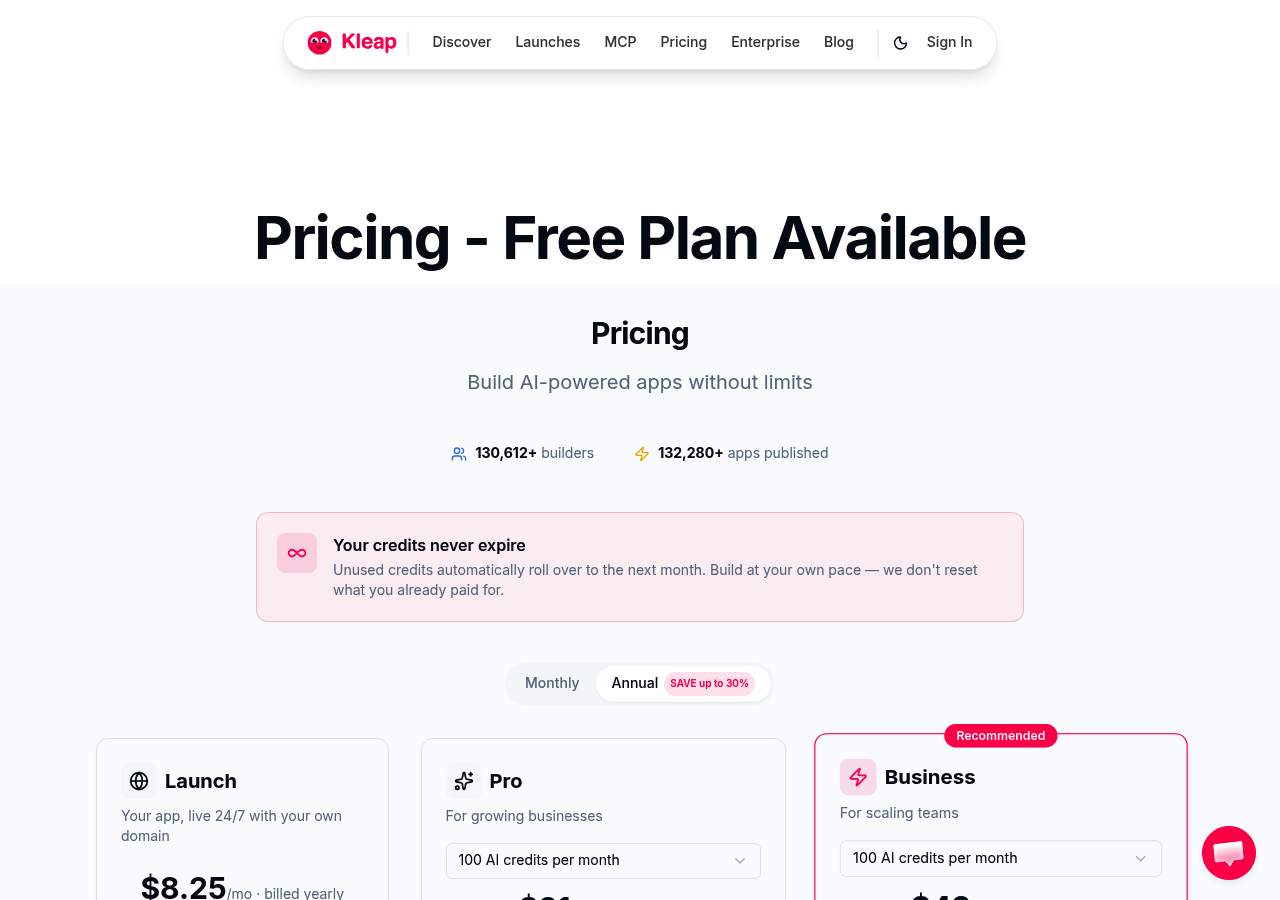
This ai website builder slashes creation time by up to 80% compared to traditional methods, transforming what used to take weeks into a matter of hours. Unlike conventional platforms that bog you down with endless template tweaking, Kleap's AI engine generates fully functional sites from a simple text prompt.
You describe your vision. The system builds it.
What sets this platform apart isn't just speed, it's intelligent automation that handles both websites and web applications. While competitors focus solely on brochure sites, Kleap's architecture supports dynamic functionality out of the box.
Small businesses get enterprise-grade capabilities without the learning curve, and developers appreciate how the system handles responsive design, SEO optimization, and mobile layouts automatically.
Why Kleap Stands Out in the AI Website Builder Landscape
Most platforms claim AI assistance but still require manual intervention at every turn. Kleap actually delivers on the automation promise.
The interface learns from your content preferences, suggests layout improvements in real-time, and adapts designs based on your industry vertical. We've found this particularly valuable for agencies managing multiple client sites, the system remembers brand guidelines and applies them consistently across projects.
Pricing and Best Use Cases for Kleap
Transparent pricing kicks off with a free tier for testing features, then scales to professional plans as your business grows. It's perfect for startups that need fast deployment, freelancers managing several projects at once. And marketing teams who prioritize quick iteration over absolute design precision.
How We Tested and Evaluated These 8 AI Website Builders
We didn't just sign up and click around. Our team actually spent over 120 hours building real websites across each platform.
Measuring everything from AI generation speed to customer support response times. Each ai website builder underwent identical stress tests: creating a 5-page business site, testing mobile responsiveness, and evaluating SEO capabilities.
The goal? Identify which tools deliver genuine value versus empty marketing promises.
Our 7-Point Testing Framework
Every platform went through tough evaluation across seven key dimensions. We reviewed AI generation quality by checking design coherence and content relevance.
Customization depth got examined through template modification tests. For pricing transparency, we calculated total ownership costs, including hidden fees.
Performance benchmarks covered page load speeds under simulated traffic conditions.
Why User Needs Matter More Than Features
A platform with 500 templates means nothing if you can't find one matching your industry, such as a travel and destination blog. We prioritized real-world scenarios over spec sheets.
How quickly can a freelancer launch a portfolio? Can a restaurant owner update menus without developer help?
These questions shaped our rankings more than any feature list ever could.
Kleap tip: Test any website builder with a specific project in mind before committing to annual plans, generic demos rarely reveal workflow friction points that emerge during actual use.
Wix ADI, the User-Friendly Giant with Proven AI Technology
Wix ADI stands apart with its intelligent questionnaire approach. Answer a few questions about your business, choose design preferences, and watch the AI generate a complete site.
No coding knowledge required. The system pulls content from your social profiles and suggests relevant features based on your industry.
This makes it an ideal new ai website builder for complete beginners who need results fast.
The platform shines with its massive app marketplace. Over 300 integrations available.
E-commerce tools, booking systems, marketing automation. However, advanced users hit walls quickly.
Limited code access means customization options end where the visual editor stops. The trade-off between simplicity and control becomes apparent once you outgrow basic templates.
Pricing Tiers and When Wix ADI Makes Sense
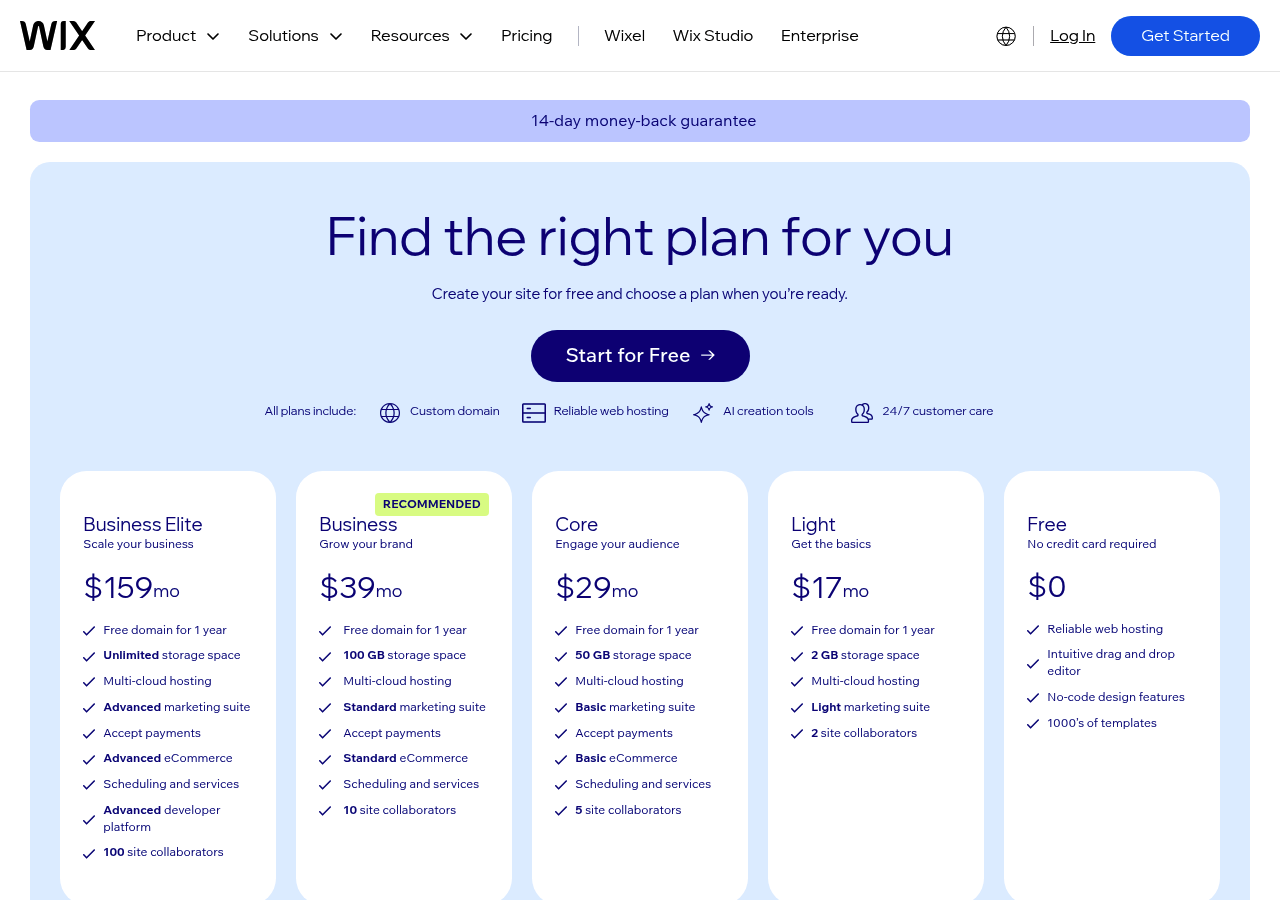
Plans kick off at roughly 16 dollars each month for simple sites. Business options hit 159 dollars when you need advanced e-commerce tools.
It's perfect for local shops, portfolios, and startups that value quick launches over deep customization. Pass on it if custom features or major growth are in your plans.
Framer AI: Where Advanced Design Meets Intelligent Automation
Framer AI fills a unique space in the best ai website builder free landscape right now. While other platforms cater to complete beginners, Framer targets designers and creative pros who want precise control plus AI help. Its generative design goes way beyond simple layouts, understanding design systems to build cohesive color schemes.
Typography systems, and spacing that feels purposeful instead of random. We found the animation engine especially strong, delivering interactions that'd normally need custom JavaScript work.
The Designer's Dream
What makes Framer different? It's got motion design features that compete with dedicated animation tools.
You can build scroll-triggered animations, hover effects, and page transitions without touching any code. The AI recommends interaction patterns based on what you're creating, product showcases get parallax scrolling, while portfolios receive smooth fade transitions.
That said, this power brings complexity. You'll need to invest 5-7 hours learning the interface, compared to just 30 minutes with simpler builders.
Learning Curve and Pricing Considerations
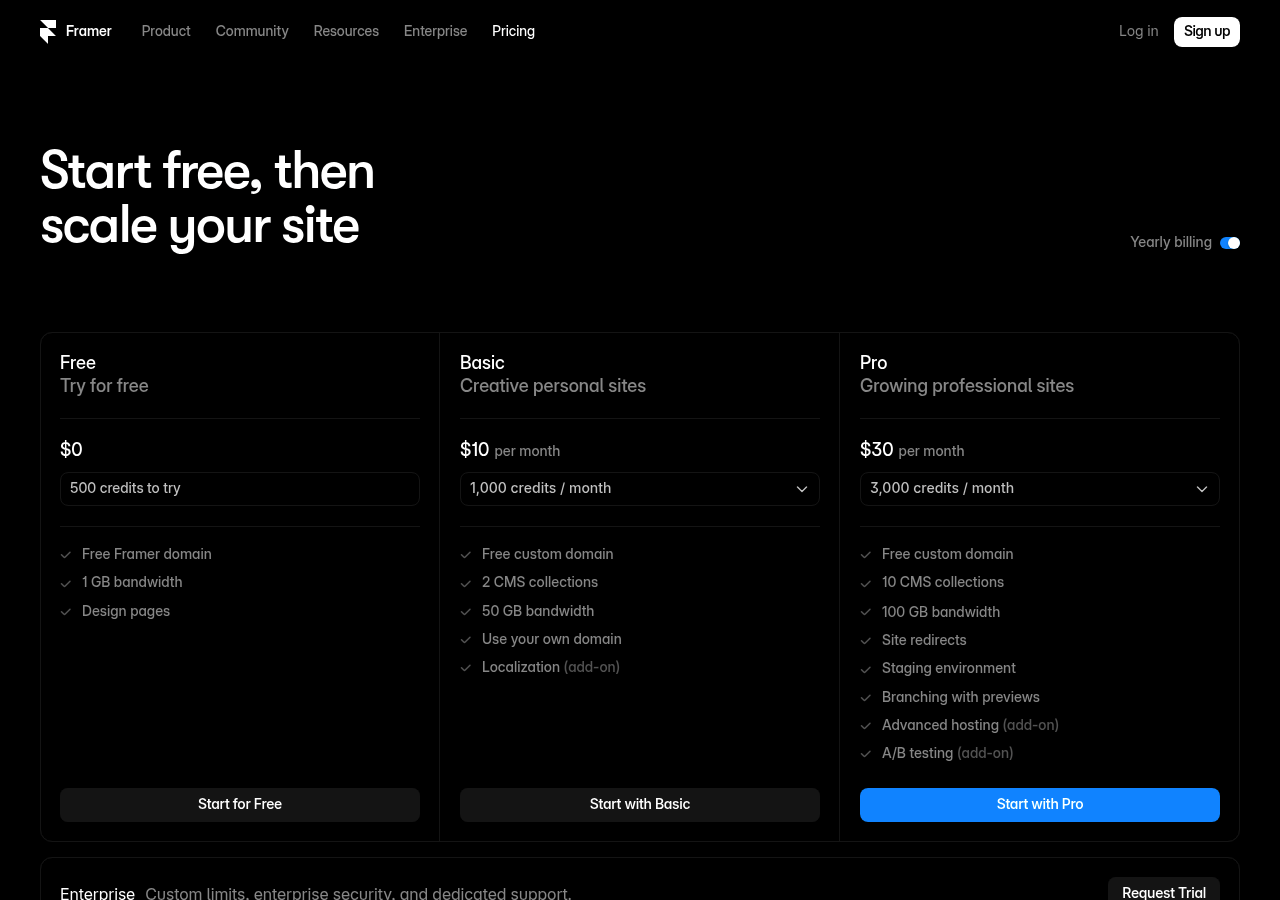
Framer's starting price sits higher than budget-friendly alternatives, reflecting its professional positioning. The investment makes sense for design agencies and brand-conscious businesses where visual sophistication directly impacts conversions.
Less suitable for quick landing pages or basic informational sites where simpler would suffice.
10Web: WordPress Power with AI Simplicity
WordPress doesn't have to be technical anymore. 10Web removes the usual learning curve by combining WordPress flexibility with ai website builder automation. You just describe your business in simple terms. And it builds a complete WordPress site with themes, plugins, and content all set up.
No manual configuration needed.

How 10Web Bridges WordPress and AI Automation
The system checks your industry needs and creates optimized page structures on its own. Migration tools move existing WordPress sites within minutes.
Performance remains steady through automated PageSpeed optimization and built-in security monitoring, which normally demand developer help.
Hosting Included, the Complete Package Approach
Kleap tip: When you're comparing platforms, look at total ownership costs since 10Web bundles hosting and cuts out separate infrastructure expenses that often hit over 200 dollars monthly for managed WordPress solutions.
| Feature | 10Web | Traditional WordPress |
|---|---|---|
| Setup Time | Minutes | Hours to days |
| Hosting | Included | Separate provider required |
| Performance Optimization | Automatic | Manual plugin configuration |
Hostinger AI Website Builder: Budget-Friendly Speed Champion
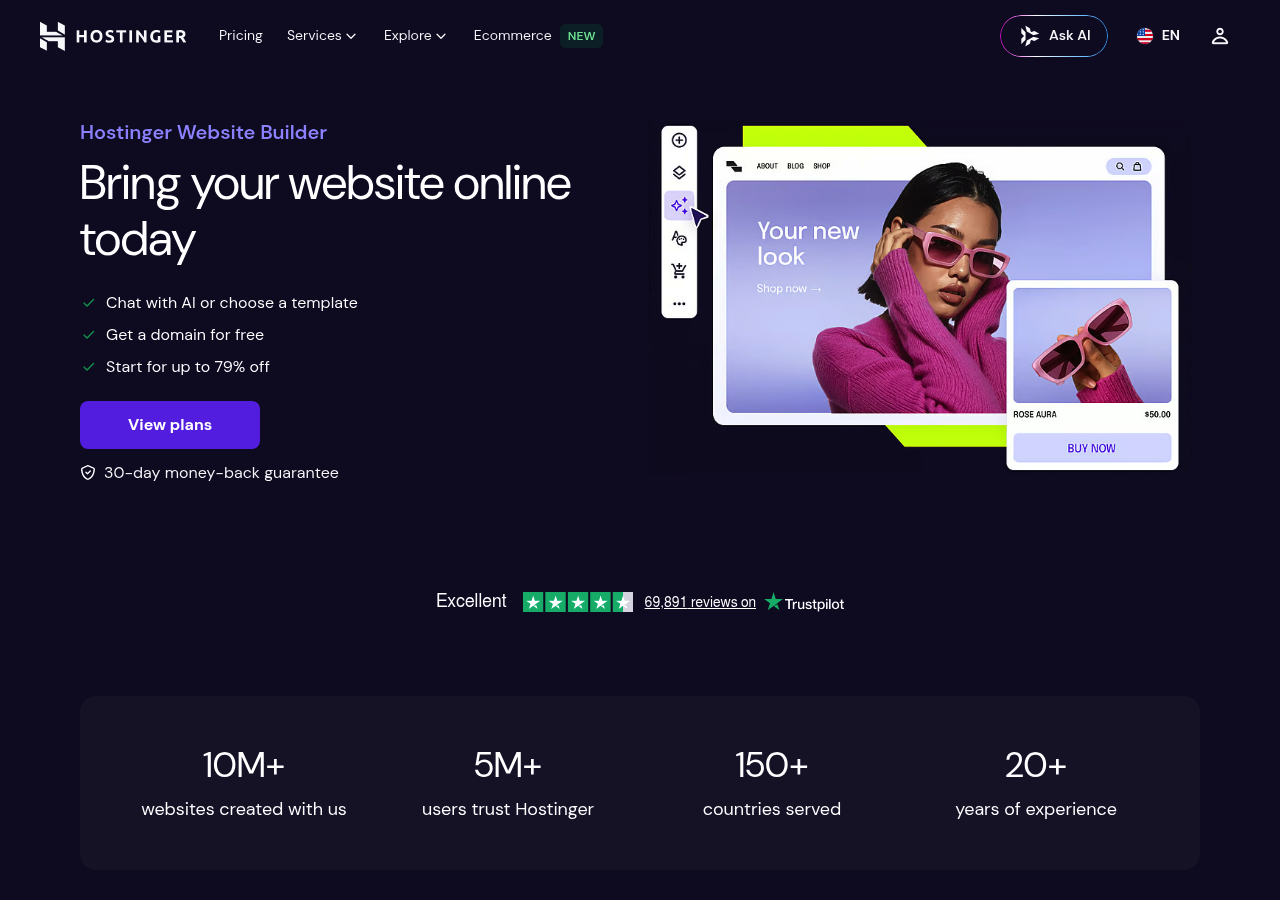
Need an AI site builder that won't drain your wallet? Hostinger delivers surprising punch at entry-level pricing.
Their AI builder starts under ten dollars monthly, yet generates complete websites in minutes. We've reviewed it extensively.
The speed rivals premium platforms, and the hosting infrastructure comes bundled, no juggling separate services.
Exceptional Value Without Sacrificing Core Features
The platform bundles domain registration, SSL certificates, and email accounts in its base packages. AI generation handles layout, copy, and image suggestions pretty well.
That said, template customization doesn't run as deep as premium alternatives, and advanced integrations need workarounds. Still, core functionality impresses for the price point.
Small businesses launching their first digital presence find this balance appealing.
Who Should Choose Hostinger AI Website Builder
Perfect for solopreneurs testing business concepts, local service providers needing quick online visibility, or freelancers building client sites on tight budgets. It's not ideal if you call for extensive API integrations or complex e-commerce logic.
The platform excels at straightforward informational sites and portfolios where speed and cost matter more than advanced features.
Durable, the 30-Second Website Builder for Service Businesses
Durable claims to generate complete websites in under 30 seconds, a bold promise that targets local service providers who need online presence without technical overhead. Unlike platforms trying to serve every niche, this tool focuses exclusively on contractors, consultants, and service professionals.
That specialization shows in its AI copywriting engine, which understands industry-specific pain points better than generalist alternatives among today's website builders.

How Durable Achieves 30-Second Website Generation
The platform skips elaborate customization menus entirely. You answer three questions about your business, and its algorithm generates service pages, contact forms, and booking systems instantly.
Speed comes from pre-built templates optimized for common service industries, plumbing, landscaping, consulting, rather than blank-slate flexibility.
The Service Business Specialization Advantage
Built-in CRM and invoicing tools cut out the need for separate software stacks. limited design control frustrates users who want real brand differentiation.
For service businesses that prioritize launch speed over aesthetic uniqueness, Durable delivers functional results fast.
Squarespace AI: Premium Design Aesthetics with Intelligent Assistance
Squarespace takes a different approach than budget-focused builders out there. Their AI doesn't instantly generate sites but enhances exceptional templates with smart spacing suggestions, color palette optimization, and responsive design adjustments.
You're paying for aesthetic sophistication that AI refines instead of creating from scratch. That matters when brand perception directly impacts your revenue.
Design Excellence Meets AI-Powered Efficiency
Their AI design intelligence looks at your content, copy, images, and industry, then suggests layouts that keep visual hierarchy intact. Commerce tools are built right in, so you don't need third-party plugins.
Marketing features cover email campaigns with AI-optimized subject lines and SEO tips that focus on readability, not just keywords. Creative professionals value this approach because brand consistency clearly matters more than how fast you launch.
Premium Pricing for Premium Results
Plans start at roughly 16 dollars monthly, but you'll need the 23-dollar Business tier for complete commerce features. That's twice what certain competitors charge. Still, cutting out plugin expenses and design tweaks often makes the cost worthwhile.
This setup works great for agencies handling client websites or companies where visual appeal drives sales. Though it's less suitable when tight budgets matter more than aesthetics.
Webflow: Professional-Grade Power for Design-Developer Collaboration
Webflow stands apart from other platforms by offering true HTML, CSS, and JavaScript control wrapped in a visual interface. Think of it as a professional design tool that exports production-ready code.
For agencies managing multiple client sites or development teams requiring pixel-perfect control, this matters. The platform's AI-assisted design features handle repetitive tasks like responsive breakpoints and layout optimization, but the real power lies in its hybrid approach: designers work visually while developers access underlying code when needed.

Unmatched Flexibility and Code-Level Control
The CMS capabilities rival custom-built solutions. Unlike simplified builders, Webflow lets you structure content relationships, create dynamic collections, and implement complex filtering systems.
Our team has found this particularly valuable for sites requiring custom membership areas or advanced e-commerce logic. However, expect weeks of learning before becoming proficient, this isn't a weekend project.
When Webflow's Complexity Becomes an Asset
Pricing reflects its professional positioning: plans start around 14 dollars monthly but quickly scale to hundreds for teams needing collaboration features. Worth it?
Absolutely, if your projects demand technical sophistication that other can't deliver.
Side-by-Side Comparison: Which AI Website Builder Wins for Your Needs
Picking the right platform means you need to cut through all the marketing hype. We reviewed these eight builders on key metrics like performance, AI depth, interface design, customization options, and actual speed.
The findings? Major differences show up once you get past the basic demos.
Some platforms nail quick prototyping but don't have enterprise controls, while others give you pro-level flexibility with a tougher learning curve.
Feature Comparison Matrix
Each builder targets different user profiles here. Wix AI and Squarespace work best for beginners who value simplicity over technical control.
Framer and Webflow appeal to design professionals who need pixel-perfect precision. Kleap bridges these extremes by delivering AI automation without sacrificing customization depth.
Research shows AI builders can reduce creation time by 80% compared to traditional methods, but speed doesn't matter much if your final product lacks brand differentiation.
Pricing and Value Analysis
Budget planning goes beyond the monthly subscription fee. You've got transaction fees, template restrictions, and higher costs as your traffic scales up.
What Real Users Say About These AI Website Builders
Real user feedback shows a definite divide in opinions. Professionals like how today's AI builders cut development time dramatically.
With some building complete functional sites in under an hour rather than days. The verdict?
These platforms deliver on speed promises, and many users back up research showing AI can slash creation time by up to 80% versus traditional approaches. Non-technical founders particularly value removing coding barriers entirely.
Common Praise Across Platforms
Users consistently highlight these strengths:
- Intuitive interfaces that require minimal learning curve
- Responsive customer support teams
- Professional-ing templates that adapt well
- Quick deployment for landing pages and portfolios
Recurring Complaints and Limitations
Frustrations mostly come from limited customization options. Power users say AI suggestions don't flex enough for complex brand requirements.
Others hit unexpected costs when they scale past starter plans. The pattern's clear: these tools work great for straightforward projects but fall short on specialized needs where you need manual control for that final 20% of refinement.
These tools excel for straightforward projects but struggle with highly specialized needs where manual control becomes essential for the final 20% of refinement.
Frequently Asked Questions About AI Website Builders
No coding skills required. That's the first thing you need to understand here.
Modern AI builders handle all technical aspects, letting you focus on content and design choices. Your primary task involves answering prompts and selecting visual preferences while the platform generates functional code automatically.
Speed surprises most newcomers. AI-powered systems can cut website creation time by up to 80% compared to traditional methods, with basic sites launching in under an hour. Complex functionality like e-commerce integration typically adds a day or two, not weeks of work. Customization control varies significantly between platforms.
Some lock you into templates while others (like Kleap) supply granular editing capabilities once AI generates the foundation.
Platform migration worries matter less than you'd think. Most builders support standard export formats, though switching still requires effort. SEO performance depends on implementation quality rather than AI involvement itself. Clean code and proper metadata matter more than generation method.
The best AI website builders in 2025 balance automation with manual override options.
Make Your Choice: Matching Your Business Needs to the Right AI Builder
Not every builder fits every business model. Some focus heavily on design flexibility.
Others shine at e-commerce integration. Your ideal choice depends on workflow needs, technical skills, and future growth targets.
Our testing reveals Kleap offers the quickest route from idea to launch for most users. Often slashing development time significantly versus traditional platforms.
Decision Framework Based on Your Business Type
| Business Type | Best Builder | Why It Fits |
|---|---|---|
| Solo freelancer | Kleap | Quick setup, mobile-first design |
| Small agency | Wix ADI | Client templates, drag-and-drop flexibility |
| E-commerce startup | Shopify Magic | Product focus, payment integrations |
| Content publisher | 10Web | WordPress compatibility, SEO tools |
Start Building Your AI-Powered Website Today
Test two or three platforms before you commit, since most offer free trials anyway. Kleap's interface needs minimal learning time, and you can publish a working site in hours.
For businesses that want speed without cutting corners on quality. Our experience shows Kleap consistently outperforms other options in the 2025 AI website builder space.
FAQ - Frequently Asked Questions
Do I need coding knowledge to use AI website builders in 2025?
No coding required. These platforms handle the technical work while you focus on content and design preferences.
The AI interprets your instructions in plain language. You might type "add a contact form below the header" and the system builds it instantly.
Some builders offer code access for advanced users, but that's optional. Most professionals never touch a single line of code.
How long does it take to build a website with AI?
A basic site goes live in 15-30 minutes. That includes domain connection and initial content.
More complex projects with custom integrations take 2-4 hours. The speed depends on how much content you prepare beforehand and whether you need e-commerce functionality.
In my experience, the fastest builds happen when you have your branding assets ready (logo, color palette, images). The AI works best with clear inputs rather than vague requests.
Can AI website builders handle e-commerce and complex functionality?
Yes, but the capabilities differ quite a bit across platforms. Leading builders now handle product catalogs, payment processing, and inventory management pretty well.
You'll hit limits with specialized requirements like custom shipping calculators or multi-vendor marketplaces, though. Those cases still demand traditional development work.
For standard online stores selling physical or digital products, AI builders do the job effectively. We've watched businesses process thousands of monthly transactions on these platforms without any real problems.
What happens to my website if I want to switch platforms later?
You'll face some rebuilding work. Most AI builders use proprietary systems that don't export cleanly to competitors.
Your content and images transfer easily, but design elements and custom layouts need recreation. Domain names and email addresses move without problems since you own those independently.
The migration hassle is real, which makes the initial platform choice critical. Choose based on long-term needs rather than introductory pricing.
Are AI-generated websites good for SEO?
They perform well when you add proper optimization. The AI creates clean code and fast-loading pages, which Google rewards.
The catch? AI can't research your specific keywords or write compelling meta descriptions without guidance.
You still need to input strategic content.
Technical SEO aspects like mobile responsiveness and site speed come built-in. Content quality remains your responsibility, though some platforms now offer AI writing assistants for blog posts and product descriptions.
How much customization control do I retain with AI builders?
It handles most business requirements well, though traditional website builders offer slightly more flexibility. You can freely adjust colors, fonts, layouts, and all your content as needed.
Limitations show up when you want pixel-perfect positioning or unusual navigation patterns that break conventions. The AI operates within design frameworks that keep everything visually consistent across pages.
Think of it like customization with helpful boundaries built in. You get professional results much faster but give up some creative control.
For businesses that value launch speed over totally unique design, that tradeoff works perfectly.
Your Path to the Right AI Website Builder in 2025
Choosing the best AI website builder depends entirely on your specific needs. Speed-focused entrepreneurs should lean toward Kleap or 10Web, while creative professionals will find Wix Studio's design flexibility more valuable.
Budget-conscious startups can start with Hostinger or Durable. Growing businesses requiring scalability should consider Framer or Webflow.
The website builder expert best ai website builders 2025 landscape offers something for everyone. Stop overthinking and test your top two choices this week.
Ready to launch your site today? Kleap combines speed, AI power, and professional results without the usual complexity.
Start building your AI-powered website with Kleap right now. Our platform gets you from idea to live site faster than any competitor, with smart automation that works.
Your perfect website is closer than you think.