Kleap Multilanguage Support Boosts User Experience

Taking your business global doesn’t always mean opening an office overseas. Sometimes, it’s as simple as speaking your customer’s language right on your website. For small businesses, entrepreneurs, and freelancers, creating a space where international visitors feel understood and welcome is a huge leap forward.
That’s where thoughtfully enhancing user experience with multilanguage support on your Kleap website comes into play. You're doing more than just swapping out words; you're building bridges and really showing your audience, no matter where they are, that you see them and value their business.
Think about it: when someone lands on your site and can immediately click to read in their own language, you've just torn down a huge wall standing between you and a potential customer.
This isn't just some technical box to check.
It’s a serious strategic move that can blow your market wide open and build the kind of brand loyalty that lasts. And here's the kicker: so many businesses completely drop the ball on this, which hands you a golden opportunity to stand out from the crowd.
Just imagine a potential client from overseas finding your services, only to leave because they can't make sense of your site. That's a sale you could have made, and it's totally preventable. When you get this right, your message and your services suddenly open up to the whole world, transforming your local operation into a global player.
And you know what?
With the right tools, this is more doable than you might think.

Platforms like Kleap are actually built for this kind of growth, giving you AI-powered tools that really smooth out the whole process.
The real goal here is to create an experience that feels completely natural and easy for every single visitor. Throughout this guide, we'll walk through the core strategies to make it happen, from picking your battles with language selection to maintaining a seamless experience long-term. This isn't about disguised advertising; it's about establishing your brand as a forward-thinking and inclusive authority in your space.
Enhancing user experience with multilanguage support on your Kleap website is your next step toward sustainable growth and a stronger, more diverse customer base.
What you'll learn
- Building Your Multilingual Strategy
- Enhancing User Experience with Multilanguage Support using the Right Tools
- Key Implementation Steps for a Seamless Experience
- Maintaining a High-Quality Multilingual Site
Building Your Multilingual Strategy
Before you dive into translation plugins and tools, it's smart to pause and think strategically. The first real step is deciding which languages to support. You don't need to support every language under the sun.
Instead, focus on where your current audience comes from or where you have ambitions to grow. Take a look at your website analytics or market research to identify key regions. This focused approach means you get the biggest bang for your buck without stretching yourself too thin right out of the gate.
So, once you know which languages you're targeting, the next question is what to translate first. It's totally fine to start small. Just focus on the pages a new visitor absolutely needs to see.
We're talking about your homepage, your main product or service pages, the 'about us' section, and for sure, your contact page. The web dev pros at Elementor even mention that getting these core pages right gives you a rock-solid foundation. You can always circle back to translate blog posts, case studies, and other content down the road as your brand starts to catch on in these new markets.
Taking it step-by-step like this is a game-changer, especially for small businesses and freelancers.
Trying to translate everything at once is a recipe for burnout and a big bill. But if you launch with just the core experience translated professionally, you'll still make a killer first impression.
It shows international visitors that you are considerate of their needs, which builds immediate trust. This method allows you to test the waters, gather feedback, and scale your multilingual efforts in a way that is both manageable and effective.
Try it — build your site while you read
Describe what you want and get a live, publishable site in seconds. Free to start, no code.
Join 200,000+ makers building real websites with Kleap.
Enhancing User Experience with Multilingual Support using the Right Tools
With your strategy mapped out, the next move is selecting the right technology to bring your multilingual site to life. The tool you pick can either make this whole process a breeze or a total nightmare for both you and your users.
Your website builder is really at the heart of it all. This is where a modern platform like Kleap, known for its AI-powered capabilities, comes in handy.
It’s built to make this process simpler, giving you a straightforward way to create a bilingual site without hiring a whole development team.
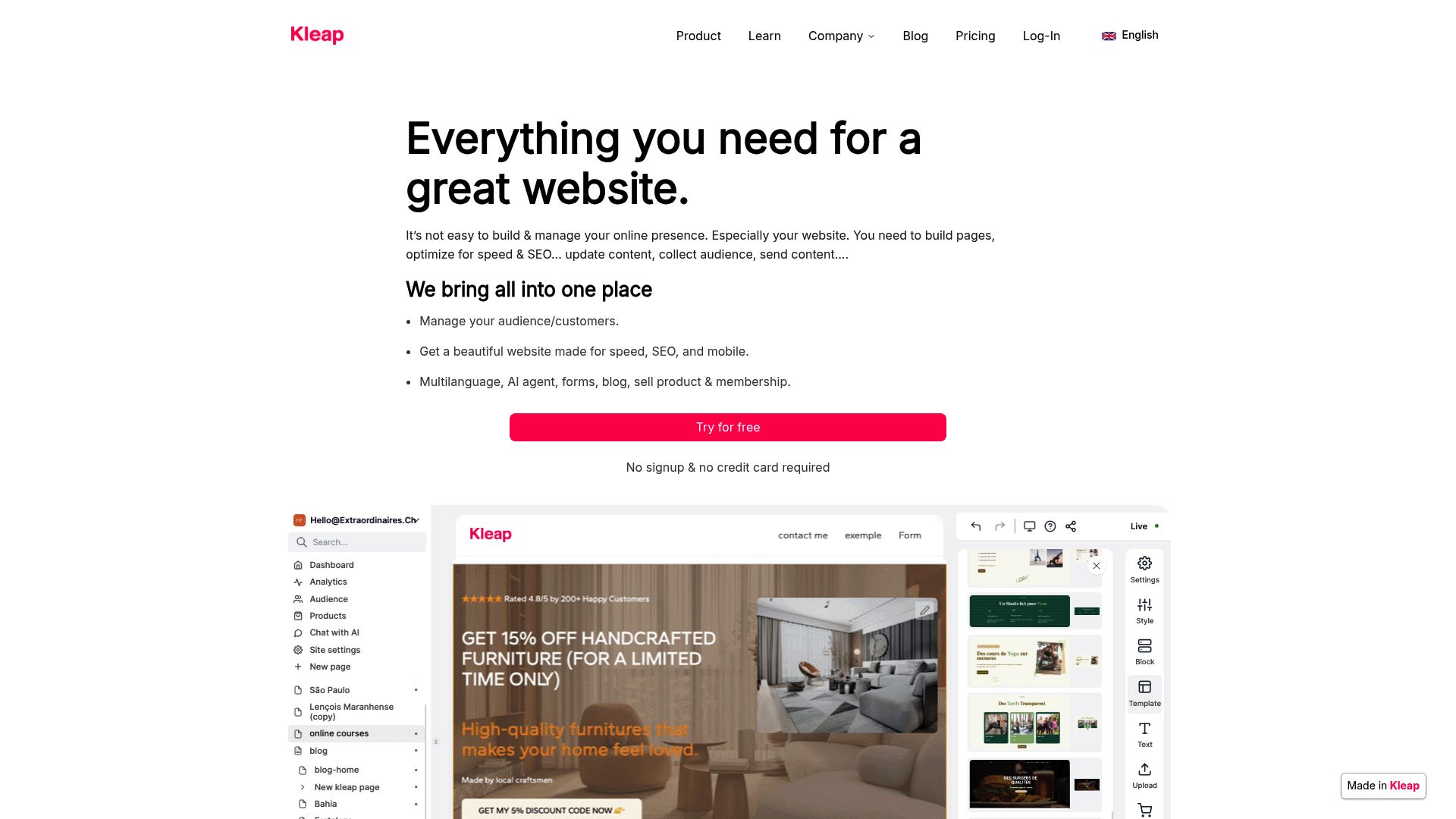
📸 kleap.co
One of the biggest decisions you'll have to make is whether to go with manual or automatic translation.
Automated tools like Google Translate are incredibly fast and can get a basic multilingual site live in no time. However,
language is tricky, and for your most important content, nothing beats a real human touch. A hybrid approach seems to work best for most people. Let automation do the heavy lifting for a first draft, then bring in a native speaker to polish it up.
This ensures the tone feels right and you're not accidentally saying something weird, which you'll see mentioned in all sorts of tutorials on this stuff.
At the end of the day, the best tool is the one that just works with your existing flow. You want a platform that doesn't just allow multiple languages but makes it dead simple to add and tweak your translations. Think about it: if a visitor picks 'Spanish,' does everything—the menu, product details, contact forms—switch over perfectly?
That's an area where a builder like Kleap really shines because it helps you keep everything consistent across the board. If you're curious how Kleap's AI can make your life easier, feel free to check out our AI-powered features for yourself.
Key Implementation Steps for a Seamless Experience
Putting your strategy into action requires attention to detail. Your navigation is one of the first things people will see, so they need an obvious, easy way to switch languages. Usually, this is just a simple dropdown in the header or footer, maybe with little flags or language codes like 'EN' and 'FR'.
The trick is to make that language switcher super obvious the moment someone lands on your site, so there’s zero confusion.
But don't stop at the static pages; you've got to think about your dynamic content too.
I'm talking about things like product listings, blog posts, and any forms people fill out.
For a truly great multilingual experience, all of these little pieces need to be translated. If someone's browsing your products, they should be seeing descriptions and prices in their language and currency. The same thing goes for confirmation emails from a contact form; they should always be in the language the person used to write to you.
It’s this attention to detail that takes your site from just being 'translated' to feeling truly 'local'.

And hey, don't forget about the media on your site either. Things like image alt text, which is huge for SEO and accessibility, should be translated too.
Got videos?
Think about adding subtitles in your target languages.
The same goes for any downloads like PDFs or guides. Every single piece of content is a chance to make someone feel welcome.
All these small, thoughtful touches add up, making your brand look professional and trustworthy to your international audience.
Maintaining a High-Quality Multilingual Site
Getting your multilingual site live is a massive win, but don't pop the champagne just yet; the work isn't over. The long-term upkeep keeps the whole experience feeling polished and professional.
What about your customer support?
At the very least, you should have your FAQs and help documents available in all your supported languages. This lets people help themselves and shows you're actually committed to supporting them long-term.
For businesses looking to go the extra mile, multilingual live chat or email support can be a powerful tool for building strong customer relationships.

Funny thing is, your users can be your best allies in quality control. It's a great idea to build in a simple feedback mechanism where visitors can report translation errors or suggest improvements.
Nobody gets the nuances of a language better than a native speaker, and you'd be surprised how many are happy to help you get it right. Not only does this make your site more accurate, but it also builds a cool sense of community around your brand.
It just proves you're listening and that you actually care about getting it right.
Finally, consistency is everything.
Whenever you add a new product, publish a blog post, or update a policy, make it part of your workflow to get that new content translated. It's also wise to get your legal documents, like your Privacy Policy and Terms of Service, professionally translated to avoid any ambiguity or compliance issues.
Scheduling regular reviews of your site ensures that no page is left behind and that your entire digital presence remains coherent and polished for every single visitor.
Your Global Journey Starts Now
Going multilingual isn't just a tech upgrade; it’s a whole new way of thinking about who your audience is and how you can serve them. By making your Kleap site a welcoming place for different languages, you're not just translating; you're opening doors to new markets and building real connections with customers worldwide. It’s a bold statement that says your business is inclusive, forward-thinking, and ready to grow.
Everything we've talked about, from picking your languages to keeping things updated, gives you a solid game plan.
Just remember to start small, focus on what your users really need, and pick tools that actually make your life easier. A platform like Kleap is built to grow with you, giving you that solid base you need to go global. And you don't need it to be perfect on day one.
The most important step is the first one.
By embracing a global mindset, you position your brand not just to compete but to lead in an increasingly interconnected world. The result is a stronger brand, a happier user base, and a business poised for whatever comes next.
Are you ready to make your website welcoming to everyone, everywhere?
The tools and strategies are within your reach.
Stop letting language be a barrier and start using it as a bridge. Explore how Kleap can help you build a stunning, professional website that speaks to all of your customers. Take the next step on your global journey today and see how our AI-powered builder can simplify the process.
Check out our plans and pricing to get started.
Frequently Asked Questions
What's the first step to making my website multilingual?
The very first step is strategic planning. Before touching any code or tools, analyze your audience and business goals to decide which one or two languages to target first. Focus on markets where you're already getting some love or where you see a big opportunity for growth.
Can I use only automated translation for my business site?
Automated translation is fast, but it can miss cultural details and produce errors that look unprofessional. The best way to do it is to let automation create a first draft, then have a native speaker review it to fix the tone and context, especially for critical content like product pages and your checkout process.
How does Kleap help with creating a multilingual website?
Kleap is an AI-powered website builder that makes creating a professional site much simpler. It provides you with the tools you need for a bilingual site, allowing you to manage and display content in different languages without the headache.
This means you can focus on your business while still providing an awesome experience to all your visitors.