How ذكاء اصطناعي صور Is Reshaping Visual Content Creation for Businesses
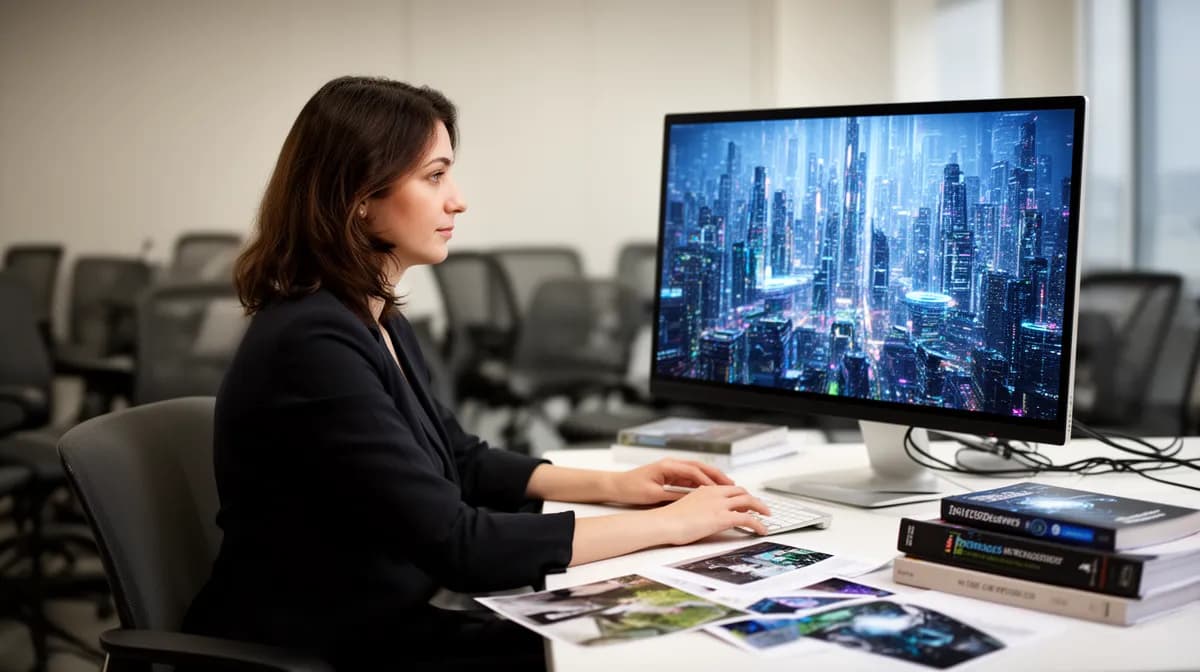
ذكاء اصطناعي صور tools let businesses generate skilled visuals in seconds, cutting creative production time dramatically.
- Modern AI image generators produce publication-ready visuals without design skills or stock photo subscriptions
- Choose tools that match your output format, social, web, or product imagery, before committing to any platform
- Businesses that integrate AI image generation into their workflow gain a measurable speed advantage over competitors still relying on manual design
The creative brief that once took a design team three days now takes three minutes. That shift is not a prediction, it is already happening inside marketing departments, solo ventures, and enterprise content teams worldwide.
ذكاء اصطناعي صور, the Arabic term for AI image generation, has moved from experimental novelty to operational necessity for entrepreneurs, agencies, and developers who need high-quality visuals at the speed of an idea. The tools behind this shift analyze text prompts and produce images that would previously have required a photographer, an illustrator, or both.
What most guides miss, though, is the practical gap between generating an image and generating the right image, one that fits your brand, your platform, and your audience without triggering legal or quality problems down the line.
This article cuts through the noise and gives you a clear framework for using AI image tools strategically, not just experimentally. For further context on how AI-generated content fits into professional workflows, the World Intellectual Property Organization's AI and IP guidance is worth reading before you scale.
What you'll learn
- What ذكاء اصطناعي صور Really Means and Why It Matters Now
- The 5 Most Powerful Use Cases for ذكاء اصطناعي صور in Business
- How to Write Prompts That Actually Produce Great Results
- What Other AI Image Platforms Won't Tell You
- From AI Images to a Live Website with Kleap
What ذكاء اصطناعي صور Really Means and Why It Matters Now
Most entrepreneurs still think AI image generation is a novelty for artists. Wrong.
It's a production infrastructure shift that's quietly eliminating the $500-to-$2,000 per-project photography and design budgets that used to be non-negotiable for small businesses. At its core, ذكاء اصطناعي صور refers to tools that convert natural language prompts into original, publish-ready visuals within seconds, using underlying models trained on vast image datasets to interpret descriptions and produce output no human designer touched.
How AI Image Generation Works
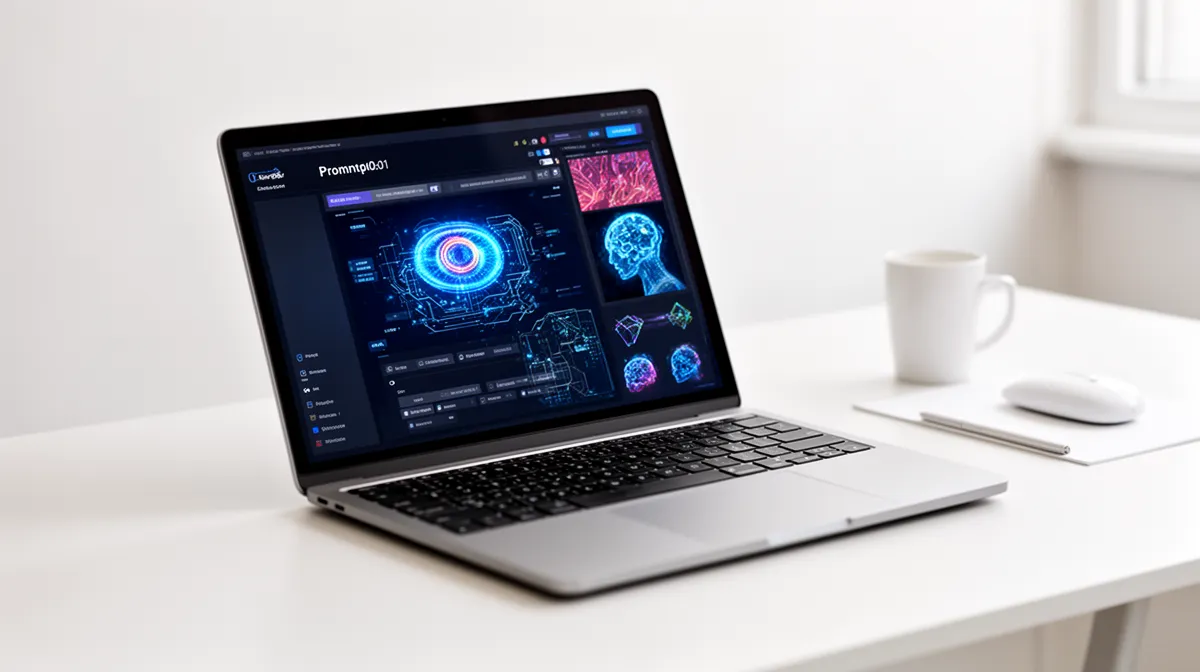
The mechanism is more straightforward than most guides admit. You type a detailed description, specifying composition, style, and aspect ratio.
The model, typically a diffusion-based neural network, iteratively refines noise into a coherent image matching your prompt. Tools like Gemini emphasize that more precise prompts produce measurably better results, and most platforms now support iterative refinement, meaning you can adjust the output conversationally until it fits your exact need.
Why Businesses in 2026 Can No Longer Ignore AI-Generated Images
The practical applications have moved well beyond experimentation. Today's use cases are operational:
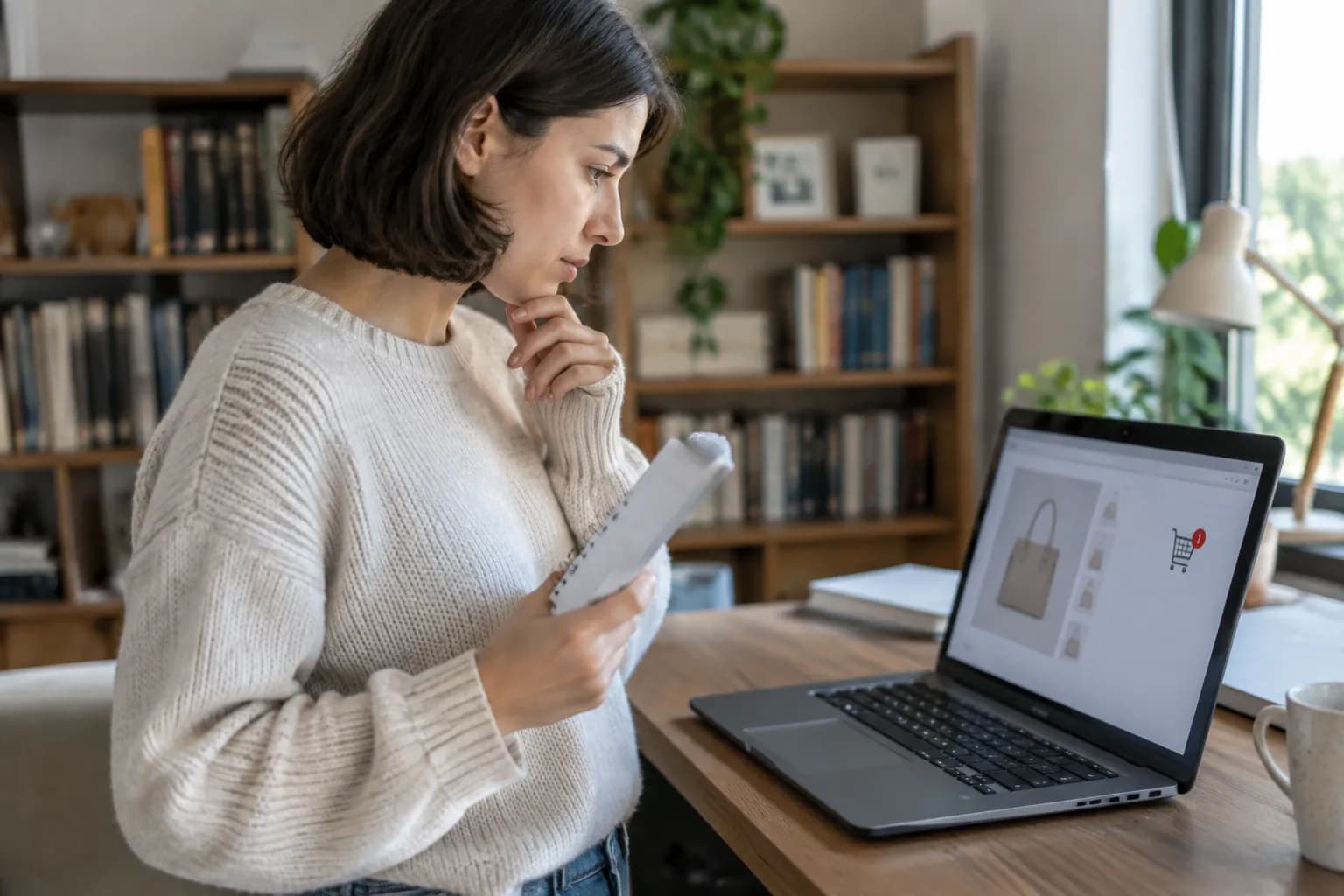
- Product photography for e-commerce listings, generated without a studio
- Social media graphics and marketing banners produced in under a minute
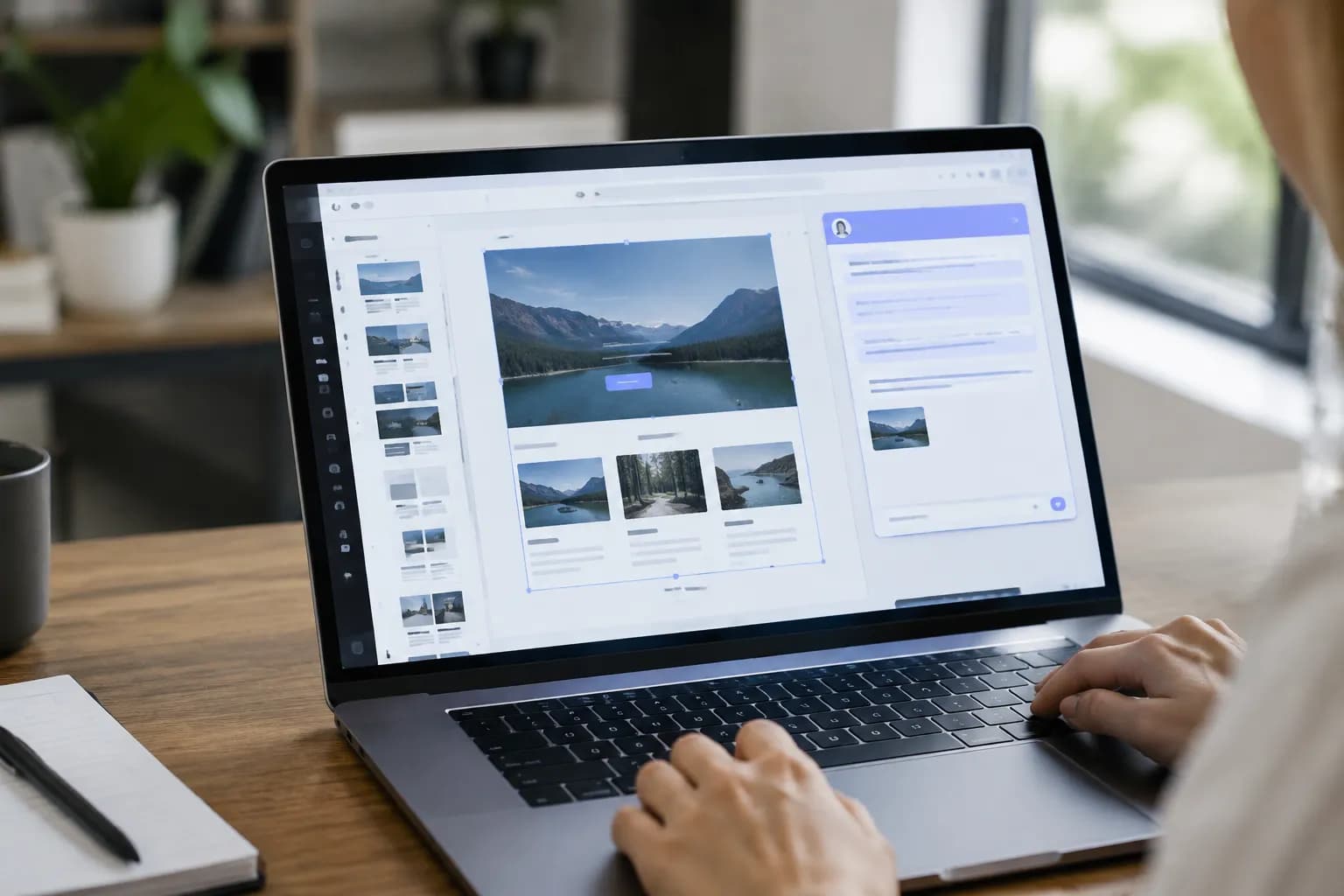
- Landing page hero images matched precisely to brand tone
- Profile visuals and illustrations created without design expertise
For entrepreneurs and SMEs in competitive US markets, the real advantage is speed compounded by cost. What once required coordinating photographers, art directors, and revision cycles now collapses into a single prompt.
That compression changes how fast a business can test, launch, and iterate, which is exactly the operational edge that separates fast-moving teams from everyone still waiting on a designer's availability.
Try it — build your site while you read
Describe what you want and get a live, publishable site in seconds. Free to start, no code.
Join 200,000+ makers building real websites with Kleap.
The 5 Most Powerful Use Cases for ذكاء اصطناعي صور in Business
Most entrepreneurs still think professional visuals require a photographer, a studio, and a budget that doesn't exist yet. Wrong assumption.
AI image tools have quietly dismantled that barrier, and the businesses moving fastest are the ones treating visual production as a repeatable, on-demand workflow rather than a one-time expense.
Marketing Visuals and Social Media Content at Scale
Marketing teams using ذكاء اصطناعي صور tools can generate campaign-ready assets in the time it previously took to brief a designer. Tools like Adobe Firefly and Canva's Magic Media let non-designers produce on-brand visuals directly from text prompts, no advanced skills required.
The real open up? Consistency at volume.
A single campaign can yield dozens of visual variants for A/B testing without touching a design budget.
Startups building landing pages or pitch decks face a similar challenge: brand imagery costs money they haven't made yet. AI image generation removes that bottleneck entirely, letting founders ship polished visual identities from day one.
Pair that with a no-code builder and the gap between idea and live product collapses. For context on how AI is reshaping that full build process, see wix ai site generator features 2026.
Product Photography, Portfolios, and E-Commerce Imagery
E-commerce operators know the pain: consistent product photos across multiple backgrounds, lighting conditions, and seasonal campaigns drain both time and money. AI image tools solve this by generating product visuals in any style or setting instantly, keeping catalog imagery coherent without a repeat studio session.
Freelancers and agencies operate on a different pressure point. Portfolios need to look polished before the first paying client arrives, and agencies need rapid visual prototypes for client approval without committing design hours upfront.
AI-generated illustrations and mockups fill both gaps cleanly. The five core use cases worth prioritizing:
- Campaign visuals and social media assets at scale
- E-commerce product imagery across backgrounds and styles
- Freelancer portfolio illustrations and mockups
- Brand imagery for landing pages and pitch decks
- Agency visual prototypes for fast client sign-off
The businesses winning with ذكاء اصطناعي صور aren't the ones with the biggest creative teams. They're the ones who understood early that visual production is now a systems problem, not a talent problem.
Building that system on a no-code foundation is the logical next step, and crear paginas web con inteligencia artificial shows exactly how that integration plays out in practice.
How to Write Prompts That Actually Produce Great Results
Most beginners treat prompts like search queries. That single mistake is why their ذكاء اصطناعي صور outputs look generic, flat, and forgettable.
A prompt isn't a keyword, it's a creative brief. The more precisely you describe subject, style, lighting, mood, and composition, the less the AI has to guess, and the closer your first result lands to what you actually envisioned.

The Anatomy of a High-Quality Image Prompt
Think of every strong prompt as having five layers. Strip any one out and quality drops noticeably.
According to Google Gemini's own guidance, specifying composition, style, quality, and aspect ratio consistently produces stronger outputs than short, vague requests. Build your prompts with this structure:
- Subject, who or what is in the scene, with precise descriptors
- Style, cinematic, photorealistic, flat design, watercolor, editorial
- Lighting, golden hour, studio softbox, harsh shadows, overcast
- Mood, minimalist, energetic, melancholic, corporate-clean
- Composition, close-up portrait, wide establishing shot, bird's-eye view
Referencing recognized artistic styles is one of the highest-use moves available. "Cinematic" alone shifts color grading, depth of field, and framing in ways that dozens of adjectives couldn't replicate. Gemini's iterative refinement flow also means you don't need a perfect prompt on attempt one, treat each output as feedback, then adjust a single variable at a time.
Common Prompt Mistakes That Ruin Your Output
Vagueness kills results faster than anything else. Beyond that, experienced practitioners consistently flag two underused techniques: negative prompts and specificity stacking.
Negative prompts, telling the AI what to exclude, such as blurry backgrounds, extra limbs, or watermarks, dramatically clean up outputs. Specificity stacking means layering details rather than summarizing them. "A woman" becomes "a mid-30s entrepreneur in a navy blazer, confident expression, shallow depth of field, soft studio lighting."
Kleap tip: When building landing pages or product visuals inside Kleap, treat your image prompt like a design spec. Describe the exact tone your brand needs, then use Kleap's AI builder to match that visual identity across your entire site without touching a single line of code.
Explore how this fits into a broader creer site web avec ia workflow, or see how leading generador de sitios web con ia platforms handle visual consistency at scale.
What Other AI Image Platforms Won't Tell You
The "free" label on most AI image generators is doing a lot of heavy lifting. Scratch the surface and you'll find aggressive output caps, watermarked downloads, and a paywall waiting the moment you need commercial usage rights.
Platforms bury these constraints in terms of service that almost nobody reads, and by the time a business discovers the limitation, they've already built a workflow around the tool.
The Hidden Costs and Limitations Most Tools Bury in Fine Print
Copyright ownership is the issue most platforms actively avoid discussing. With many AI image tools, the platform retains broad commercial usage rights over outputs, meaning images you generate for your brand's landing page or product catalog may not be fully yours.
Style consistency compounds the problem: single-model generators struggle to maintain coherent visual identity across an entire image library, which is a genuine liability for any business trying to build brand recognition.
- Free tiers typically cap exports at low resolutions or limited monthly generations
- Commercial licensing terms vary wildly and often require the highest-paid tier
- No single AI image model guarantees consistent style across multiple outputs
- Most tools offer zero integration with deployment, images live in isolation
Why a Standalone Image Tool Is Not Enough for Business Growth
Generating a polished visual is only the first step. Without a website, landing page, or storefront to deploy it, that image produces zero business value.
Most AI image platforms stop exactly there, they hand you a file and wish you luck. The workflow gap between creation and deployment is where most small business owners lose hours every week.
Platforms that combine AI image capabilities with full website and app building close that gap entirely. For a deeper look at how integrated AI tools compare, the ai website builder features comparison breaks down exactly what separates fragmented toolsets from a true end-to-end solution.
Kleap's approach, from visual creation to live product, is precisely the compounding advantage that standalone ذكاء اصطناعي صور tools simply cannot replicate.
From AI Images to a Live Website with Kleap
Standalone ذكاء اصطناعي صور tools solve one problem. Kleap solves the entire chain.
While other platforms hand you a generated image and leave you to figure out the rest, Kleap takes natural language input and builds a complete, deployable digital product, layouts, hosting, forms, and custom domains included. No patchwork.
No switching between six tools to get something live.
How Kleap Integrates AI-Powered Design Into Your Full Digital Presence
The core difference is architectural. Kleap's AI doesn't just generate visuals, it assembles cohesive full-stack websites and apps where every visual asset fits the overall design system automatically.
That means no mismatched fonts, no orphaned images floating in a template that wasn't built for them. The AI handles design logic end-to-end, so what you get is a unified product, not a collage.
- Natural language input builds entire pages, not just image placeholders
- AI-designed layouts incorporate visuals coherently across every section
- Built-in hosting and custom domains eliminate third-party dependencies
- Forms, e-commerce, portfolios, and blogs all available within one platform
Getting Started with Kleap for Free in Under 10 Minutes
The free tier is live immediately, no credit card required to explore. Entrepreneurs who need custom domains and advanced features move to Pro at $25/month.
Growing teams typically step up to Business at $50/month, while larger organizations work with Kleap on custom Enterprise pricing. The gap between creative idea and published product collapses entirely.
That's the real unlock ذكاء اصطناعي صور alone never delivers.
Frequently Asked Questions
What is AI image generation and how does it work?
AI image generation uses machine learning models trained on massive visual datasets to create original images from text descriptions, called prompts. You type what you want to see, and the model interprets your words into pixels.
The underlying technology, typically diffusion models or generative adversarial networks, iteratively refines random noise into coherent visuals. The better your prompt, the sharper the result.
Which AI image tools are best for small business marketing?
The honest answer depends on your workflow. For social media graphics and product mockups, tools like Midjourney and Adobe Firefly consistently deliver polished, brand-ready results.
For rapid iteration on a tight budget, free tiers from several platforms let you test before committing.
What separates a good marketing asset from a generic one, though, is how you use the image once it exists. A stunning visual embedded in a slow, poorly structured website loses its impact entirely.
That is where the full digital stack matters as much as the image itself.
Can I use AI-generated images commercially without legal risk?
Yes, in most cases, but read the terms of your specific tool carefully. Most major platforms grant commercial usage rights on paid plans, while free tiers sometimes restrict monetized use.
The broader legal landscape around AI-generated content is still evolving, so check for updates from the platform you rely on before building a major campaign around their output.
How long does it take to generate an AI image from a text prompt?
Typically between three and thirty seconds, depending on the platform, image resolution, and server load at that moment. High-resolution outputs or complex scenes take longer.
In practice, the generation itself is instant compared to the time you spend refining prompts to get exactly what you envisioned. Budget time for iteration, not just the first click.
Do I need design skills to use AI image generation tools?
No. That is genuinely the point. You describe what you want in plain language, and the model handles the visual composition.
That said, learning to write precise, descriptive prompts makes a real difference in output quality. Think of it less as a design skill and more as a communication skill: the clearer your brief, the stronger the result.
I have seen complete beginners produce professional-grade visuals within their first hour.
How does Kleap help businesses go beyond just generating images?
Generating an image solves one small piece of a much larger puzzle. Kleap addresses the whole picture: using natural language, you can build a complete website, landing page, e-commerce store, or application without writing a single line of code.
Plans start free, with Pro at $25 per month and Business at $50 per month, making it accessible whether you are a solo freelancer or a growing team. Where most AI image tools stop at the asset, Kleap gets you from idea to live digital product, with hosting, custom domains, and forms built in from the start.
ذكاء اصطناعي صور Has Already Changed the Rules, the Only Question Is Whether You're Playing by Them
Visual content is no longer a production problem. It's a strategy problem, and AI image generation has quietly dissolved the barrier between having an idea and showing it to the world.
Your next step is simple: pick one use case from this article, a product mockup, a landing page hero, a social campaign visual, and build it today, not next quarter.
Kleap brings ذكاء اصطناعي صور capabilities into a platform that goes further than image generation alone. From AI-built websites to full e-commerce stores and landing pages, everything you need to launch a professional digital presence is ready when you are, starting for free, with Pro plans from $25/month when you're ready to scale.
Start building on Kleap for free and turn your next visual idea into a live, fully functional digital product before the end of the day.
The tools exist. The barrier is gone.
What you build next is entirely up to you.