Freelance Website Essentials Every Independent Professional

A freelance website is your digital storefront that showcases services, builds credibility, and converts visitors into clients through portfolio work, testimonials, and clear contact paths.
- Core components include portfolio showcase: service descriptions, client testimonials, and straightforward contact methods
- Qualified presence differentiates you in a market where 1.57 billion freelancers compete globally
- Strategic design converts passive browsers into active clients through trust signals and clear calls-to-action
You're one of 1.57 billion freelancers worldwide. Your skills are sharp, your rates competitive, your work solid.
Yet clients still choose someone else, someone with a polished freelance website that answers their doubts before the first email exchange.
However, The freelance economy exploded past pre-pandemic levels, but the selection process got ruthlessly efficient. Buyers no longer accept LinkedIn profiles or portfolio PDFs.
They expect a dedicated site that proves you're serious, established, and worth the premium over Fiverr alternatives.
The gap between "freelancer with a website" and "freelancer without one" determines who captures the $1.5 trillion global freelance market and who scrambles for scraps on race-to-bottom platforms.
Building an working freelance website isn't about flashy design or technical wizardry, it's about strategic positioning that converts skeptical visitors into committed clients through calculated trust signals and friction-free conversion paths.
Key takeaways
- Most freelancers think they need one website.
- Meanwhile, The freelance platform infrastructure market hit $5 billion in 2025 and is projected to g
- Here's what Upwork and Fiverr won't mention in their marketing: every dollar you earn on their platf
- Most freelancers treat their website as a digital business card.
- The freelancers who thrive in 2026 aren't the ones with the most polished portfolios, they're the on
What Exactly Is a Freelance Website and Why Does It Matter?
Most freelancers think they need one website. Therefore, Wrong.
You need two completely different digital presences, and confusing them costs you clients. A freelance website refers to two distinct tools: marketplace profiles on platforms like Upwork or Fiverr, and your own standalone portfolio site.
The $5 billion freelance website management platforms market is growing at 15% annually through 2033 according to DataInsightsMarket, yet 8 out of 10 freelancers still rely solely on marketplace profiles, leaving money on the table.

The Two Types of Freelance Websites Explained
Because Marketplace profiles give you instant access to the 1.57 billion global freelancers competing for the same jobs.
Your own portfolio website flips that dynamic.
The catch? Most freelancers waste weeks hiring developers or wrestling with drag-and-drop builders that break on mobile.
Marketplace Profiles vs. Your Own Portfolio Website
While Your portfolio site needs three elements: proof of competence, transparent pricing, and one clear action. Skip the "About Me" poetry.
Lead with case studies, show results in dollars or percentages, and make the contact form impossible to miss.
Try it — build your site while you read
Describe what you want and get a live, publishable site in seconds. Free to start, no code.
Join 200,000+ makers building real websites with Kleap.
Why Every Freelancer Needs Their Own Branded Website in 2026
With 1.57 billion freelancers worldwide, nearly 46.6% of the global workforce according to Salt Recruitment, you're competing in the most crowded talent market in history.
It's the one who looks most credible in the 8 seconds a client spends deciding whether to click away. A marketplace profile puts you in a grid with 10,000 identical headshots.
Your own site? That's a stage where you control the lighting.
Standing Out Among 1.57 Billion Global Freelancers
Clients research you independently before they ever message you on Upwork.
They type your name into Google. Thus, they look for proof that you are not just another profile chasing gigs.
A professional website is that proof. It signals you're committed enough to invest in your own brand, reliable enough to maintain an online presence, and expert enough to articulate what you do without a platform's template forcing your hand.
The Client Psychology Behind Professional Websites
Finally, Matt Olpinski notes that Google Trends data shows clients search for specific service terms like "web designer" and "marketing consultant", not "find freelancer." When someone types "web designer Chicago," they want a professional, not a marketplace. Your site captures that search traffic.
You own the narrative: your pricing, your process, your case studies, your terms.
No algorithm deciding whether you appear in results.
Build that destination with tools like the best blogging platform or an AI website builder for wordpress. You stop competing; you start converting.
How the Modern Freelance Website Works Behind the Scenes
Meanwhile, The freelance platform infrastructure market hit $5 billion in 2025 and is projected to grow at a 15% CAGR through 2033, according to DataInsightsMarket. That explosive growth stems from a fundamental shift. What once required a developer, a hosting account, a domain registrar, and weeks of configuration now happens in minutes through integrated platforms.
The modern freelance website isn't a collection of separate tools duct-taped together, it's a unified system where AI handles the technical stack while you focus on landing clients.
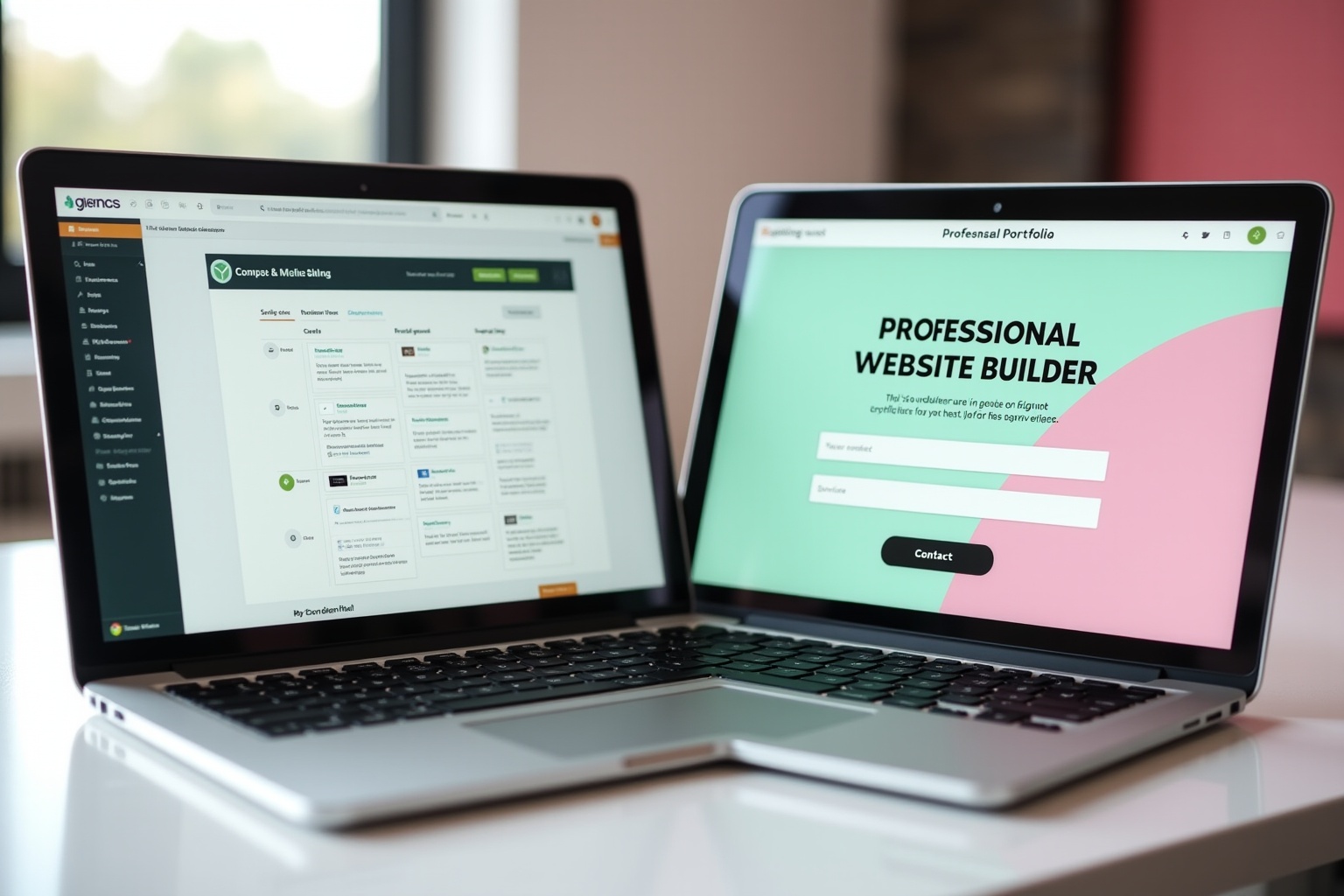
Traditional freelance sites required three separate purchases: domain registration ($12-15 annually), hosting ($5-50 monthly depending on traffic), and either a developer ($2,000-8,000 for a custom build) or a template subscription ($15-30 monthly). As a result, The catch?
You still needed technical knowledge to connect them. Most freelancers discovered this the hard way. They bought a domain, realized it doesn't include hosting, and then found out their chosen template doesn't support the contact form they need.
The Core Elements Every Portfolio Site Needs
Your site needs four technical foundations that work together: a custom domain that builds brand recall, professional hosting that handles traffic spikes when a client shares your link, SSL certificates that prevent browser security warnings, and forms that capture leads without requiring visitors to email you directly.
Miss any one of these and you're losing inquiries before the conversation starts.
The portfolio showcase itself must solve a specific problem: proving competence in under 10 seconds. For example, visitors are not looking for "beautiful design"; they want fast proof of fit, reliability, and transparent pricing.
That's why the best AI landing page builder 2026 tools emphasize service-first layouts over generic branding pages. Your homepage should answer three questions immediately: what you do, who you've done it for, and how to start working with you.
AI-Driven Platforms Changing the Game
DataInsightsMarket specifically flags AI-driven matching and project management as the major innovation trend reshaping freelance platforms in 2025. Above all, the practical shift is this. Instead of dragging boxes around a template, you describe your service in plain language. The system generates the structure, writes the code, and publishes a live URL.
Platforms like zipwp AI website builder and others now handle deployment automatically, which means the 3-day setup window collapses to 20 minutes.
Kleap tip: Start with your free plan to test AI-generated layouts, then upgrade to Pro ($25/month) only when you need a custom domain and advanced forms, most freelancers don't need premium features until they land their third client.
What Other Freelance Platforms Won't Tell You About Building Your Brand
Nonetheless, for a freelancer billing $60,000 annually, that is $6,000-$12,000 vanishing into platform fees; money that could fund your own marketing, tools, or savings.
Worse, you're building equity in someone else's system while your profile, reviews, and client relationships remain locked behind their walls.
The Hidden Cost of Platform Dependency
The real expense isn't the commission, it's the control you surrender. Platforms own your client list, prohibit direct contact, and can change terms without warning.
Freelancers who spent years climbing to "Top Rated" status report sudden traffic collapses after policy updates they never saw coming.
You're renting credibility, not owning it.
Why Marketplace Algorithms Work Against You
Counterintuitive reality: the more successful freelancers join a platform, the harder it becomes to stand out. However, With 1.57 billion freelancers worldwide, nearly 46.6% of the global workforce according to Salt Recruitment, marketplace search results are a zero-sum game.
Your ranking depends on factors you can't control: platform favoritism toward new sellers, bid prices that erode margins, response-time requirements that demand 24/7 availability.
The alternative? Your own site creates permanent SEO value.
A fastest website builder for businesses like Kleap lets you launch a branded presence in minutes, no commissions, no algorithm anxiety, complete client ownership. You control the terms.
Platforms are useful for initial client acquisition, but building long-term business equity requires infrastructure you own outright, not rent month-to-month from a marketplace that views you as inventory.
Real-World Applications for Your Freelance Website Strategy
Most freelancers treat their website as a digital business card. Therefore, Wrong approach entirely.
Your site should function as a client acquisition engine that operates while you sleep. The difference?
Because A graphic designer charging $50 per logo on Fiverr versus landing $2,000 branding packages through targeted case studies and service tiers hosted on their own domain. That gap isn't talent, it's infrastructure.

Converting Profile Visitors Into Direct Clients
Link your website from every marketplace profile, social bio, and email signature. Although when prospects click through, they encounter what Upwork's 300-character limit can't deliver: detailed project breakdowns with before-and-after visuals, client testimonials with measurable outcomes, and tiered package options that bypass hourly bidding wars. Email capture forms turn one-time visitors into repeat buyers, a strategy that 60% of marketers identify as their highest-quality lead source, per HubSpot data.
Building Long-Term Client Relationships Beyond Gigs
Create blog content targeting the exact phrases your ideal clients search: "startup branding cost Chicago" or "SaaS website conversion audit." Each post becomes a 24/7 sales agent. Add digital products, templates, guides, recorded consultations, that generate passive revenue between client projects.
The freelancers who scale past six figures treat their website as the hub, not an afterthought.
FAQ - Frequently Asked Questions
Do I need a freelance website if I already have profiles on Upwork or Fiverr?
While Yes, and here's the part most freelancers miss: marketplace profiles vanish the second the algorithm changes or your account gets suspended. Your own site is the only asset you actually own.
Platform profiles work for discovery. Since A personal website converts browsers into buyers who pay your real rate, not the race-to-the-bottom marketplace price.
The freelancers earning six figures? They all have their own site driving the high-value inquiries.
How much does it cost to build a professional freelance website?
With Kleap, you start free and upgrade to Pro at $25/month when you need custom domains and advanced features. Business tier runs $50/month for teams.
Traditional routes? Hiring a developer costs anywhere from $2,000 to $8,000 for a basic portfolio site, plus monthly hosting fees.
Whereas DIY builders like WordPress require plugins, themes, and hosting, budget $15-40/month minimum, plus hours learning the interface. The hidden cost everyone forgets: maintenance.
Kleap handles updates, security, and hosting automatically, which saves you the $500-1,200 annual maintenance bill most custom sites require.
What should I include on my freelance portfolio website?
Three non-negotiables: work samples that show before-and-after results, client outcomes with specific numbers, and a contact method that doesn't require seven clicks.
Skip the "About Me" novel. Thus, Lead with your specialty in one sentence, showcase 5-8 best projects with measurable results, and include one clear call-to-action above the fold.
The mistake? Listing every service you've ever offered.
Pick your top three money-makers and build the entire site around those. Testimonials work when they mention specific results, not generic praise.
Can I build a freelance website without coding skills?
Finally, Absolutely. Kleap's AI builds the entire site from a text description, no code, no design skills, no technical knowledge required.
You describe what you need in plain language, the AI generates a professional layout with your content organized, and you're live in minutes. Additionally, Full control over design tweaks if you want them, but the AI handles structure, mobile optimization, and performance automatically.
The old "you need to learn HTML/CSS" barrier? Gone.
How long does it take to create a freelance website?
With AI? Under an hour from idea to live site.
Traditional timeline: 2-4 weeks if you hire someone, 1-2 weeks if you DIY with a template builder, assuming you already have your content written and images ready. Most freelancers underestimate content creation time, writing gripping copy and gathering portfolio samples typically takes longer than the actual build.
Meanwhile, Kleap's AI generates layout and structure instantly, so your only time investment is refining your positioning and uploading work samples. Launch same day, tweak as you grow.
Will having my own website actually help me get more clients?
Yes, but only if you drive traffic to it. As a result, A website sitting idle does nothing.
The mechanism: when prospects Google your name after seeing your LinkedIn or portfolio platform profile, a professional site confirms credibility and closes the deal. When you include your URL in cold outreach, response rates jump because decision-makers can vet you instantly without platform friction.
The freelancers who see real ROI? They link their site in every proposal, email signature, and social bio.
On the other hand, The site itself doesn't generate leads, your positioning and distribution strategy does. But once traffic arrives, a strong site converts at 3-5x the rate of a bare marketplace profile.
Your Freelance Website Launches the Moment You Decide It Should
The freelancers who thrive in 2026 aren't the ones with the most polished portfolios, they're the ones who shipped a live site while everyone else was still debating color schemes.
Stop treating your website like a distant project that requires a developer, a designer, and three months of planning. For example, Modern AI tools collapsed that timeline to minutes.
Kleap's AI builder generates a complete freelance website from a single prompt, including portfolio pages, contact forms, a custom domain, and mobile optimization. All of this is live before you finish your coffee. Free to start, $25/month for Pro features when you're ready to scale.
Above all, The clients searching for your skills right now aren't waiting for you to perfect your brand identity. They're hiring the freelancer whose site loads first in search results.
Launch yours today at kleap.co and claim your corner of the internet before someone else does.