How to Build a Standout Architecture Portfolio That Gets

An architecture portfolio is a select collection of projects showcasing design process, technical skills, and creative vision, often required for architecture school applications and skilled positions.
- Quality often beats quantity in admissions reviews for architecture portfolios
- Process documentation matters more than final renderings, as reviewers frequently focus on sketches and iterations
- Digital portfolios are frequently used in first-round reviews at top architecture firms and programs.
The rejection email arrives in March. No explanation, just a form letter thanking you for your interest in the Master of Architecture program.
However, You spent six months on that application. Your GPA cleared the threshold.
Your statement of purpose got three rounds of edits. Therefore, But your architecture portfolio, the 40-page PDF you assembled in two weeks using every project from undergrad, never stood a chance.
Architecture admissions committees frequently review portfolios as part of the application process. Hiring partners at firms frequently review architecture portfolios as part of the hiring process.
Architecture programs typically allocate time for students to develop their portfolios. That's the opportunity to demonstrate your understanding of spatial thinking, document a design process, and showcase the technical skills to contribute from day one.
Most portfolios fail because they showcase completion instead of thinking, polished renderings with zero evidence of the messy, iterative work that separates competent designers from top-tier ones.
The difference between acceptance and rejection comes down to curation strategy: which projects to include, how to document process over product, and how to structure a narrative that proves design maturity in under two minutes of reviewer attention.
What you'll learn
- Why Your Architecture Portfolio Determines Your Career Trajectory
- Step 1, curate Your Best Work With Ruthless Selection Standards
- Step 2, document Your Design Process From Concept to Completion
- Step 3, master Layout Design That Guides the Eye Strategically
- Step 4, write Gripping Captions That Tell Your Design Story
Why Your Architecture Portfolio Determines Your Career Trajectory
The moment a USC admissions officer opens your portfolio, you have a curated presentation of work that demonstrates your design thinking, technical ability, communication skills, and visual judgment. Although Most applicants miss this: portfolios aren't decoration, they're the primary evaluation tool that determines whether you get into Columbia GSAPP, land that internship at a top firm, or advance past third year at UIC.
According to USC's pre-college guidance, reviewers want evidence of creativity, passion, and intellectual curiosity, but the real filter is whether you can communicate spatial reasoning through six to twelve digital images.

What trips candidates up? They showcase final renderings while omitting process work.
Columbia GSAPP publishes portfolios recognized for excellence precisely because they reveal design thinking, not just Photoshop skills. UIC requires BSArch students to complete portfolios in third year, not as busywork, but because the format itself teaches you to organize visual arguments.
While Evaluation criteria are specific: technical drafting competence, concept development clarity, and evidence you iterate. The portfolio isn't a diploma supplement, it's the artifact that proves you can solve spatial problems and explain why your solutions matter.
Try it — build your site while you read
Describe what you want and get a live, publishable site in seconds. Free to start, no code.
Join 200,000+ makers building real websites with Kleap.
Step 1, curate Your Best Work With Ruthless Selection Standards
USC's architecture guidance specifies 6 to 12 digital images for portfolio submissions, not 15, not 20, exactly that range. Since This threshold forces a brutal truth: every project you include must justify displacing something else.
The upshot? Your portfolio becomes a defense of choices, not a catalog of everything you've ever drawn.
Most applicants fail here by treating quantity as safety, cramming in mediocre sketches to "show range." Wrong. Columbia GSAPP publishes portfolios recognized for excellence precisely because they demonstrate ruthless editing, each image earns its place by revealing design process, technical skill, or conceptual rigor that weaker work cannot.

The 6-12 Project Rule That Prevents Overwhelm
Whereas Six projects force clarity. Twelve allow nuance without dilution.
Between those boundaries, balance academic coursework with personal exploration, a studio project demonstrating technical drafting, a self-initiated installation showing spatial experimentation, process sketches proving iteration over perfection. Thus, Include concept development alongside finished renderings, physical models next to digital diagrams.
An ai website builder lets you test layouts instantly, rearranging projects until the sequence tells a coherent story about your design philosophy rather than a chronological dump of assignments.
Step 2, document Your Design Process From Concept to Completion
UIC's architecture program requires BSArch students to complete a portfolio in their third year to document design work, and that mandate exists because process documentation separates designers who iterate from those who guess. The portfolio must prove you didn't land on a solution by accident: reviewers want the messy sketches, the failed model, the site analysis that changed everything.
Columbia GSAPP's recognized portfolios show this pattern: every excellent submission includes concept evolution, not just polished renderings.

Making Invisible Thinking Visible Through Process Boards
Finally, Process boards expose the conceptual leaps reviewers care about most. Include early concept sketches with annotations explaining why you rejected them, site analysis diagrams showing constraints that shaped decisions, and iteration sequences proving you tested alternatives.
USC notes portfolios should demonstrate "intellectual curiosity", which means showing the research phase, not hiding it. Additionally, Photograph physical models with consistent lighting: position one key light at 45 degrees, use a neutral backdrop, shoot multiple angles.
For digital presentations, our free ai portfolio generator handles responsive layouts and custom domains instantly.
Kleap tip: Caption every process image with the specific design problem it solved, "Rotated massing 15° to preserve sight lines" beats "Early concept exploration."
Step 3, master Layout Design That Guides the Eye Strategically
Columbia GSAPP's recognized portfolios demonstrate one non-negotiable truth: clarity often beats creativity when reviewers assess architecture portfolios. The grid system you choose determines whether your spatial thinking reads instantly or requires mental assembly.
Most architecture students bury their strongest work under decorative layouts, the portfolios that land interviews do the opposite, using white space as a deliberate framing device that isolates each project's core insight.

Grid Systems and Visual Hierarchy Principles
Meanwhile, USC's 6-to-12-image portfolio requirement exists because constraint forces hierarchy, you can't show everything, so scale and placement become your editing tools. Establish a three-column grid for plans and elevations, then break it deliberately for hero shots.
The contrast signals importance without a single word. As a result, Typography follows the same logic: one serif for project titles, one sans-serif for body text, zero decorative fonts competing with your renderings.
When layout mechanics disappear, the architecture itself commands attention, exactly what firms scanning 200 applications need to see immediately, much like how an ai website builder for photographers prioritizes image prominence over interface.
Step 4, write Gripping Captions That Tell Your Design Story
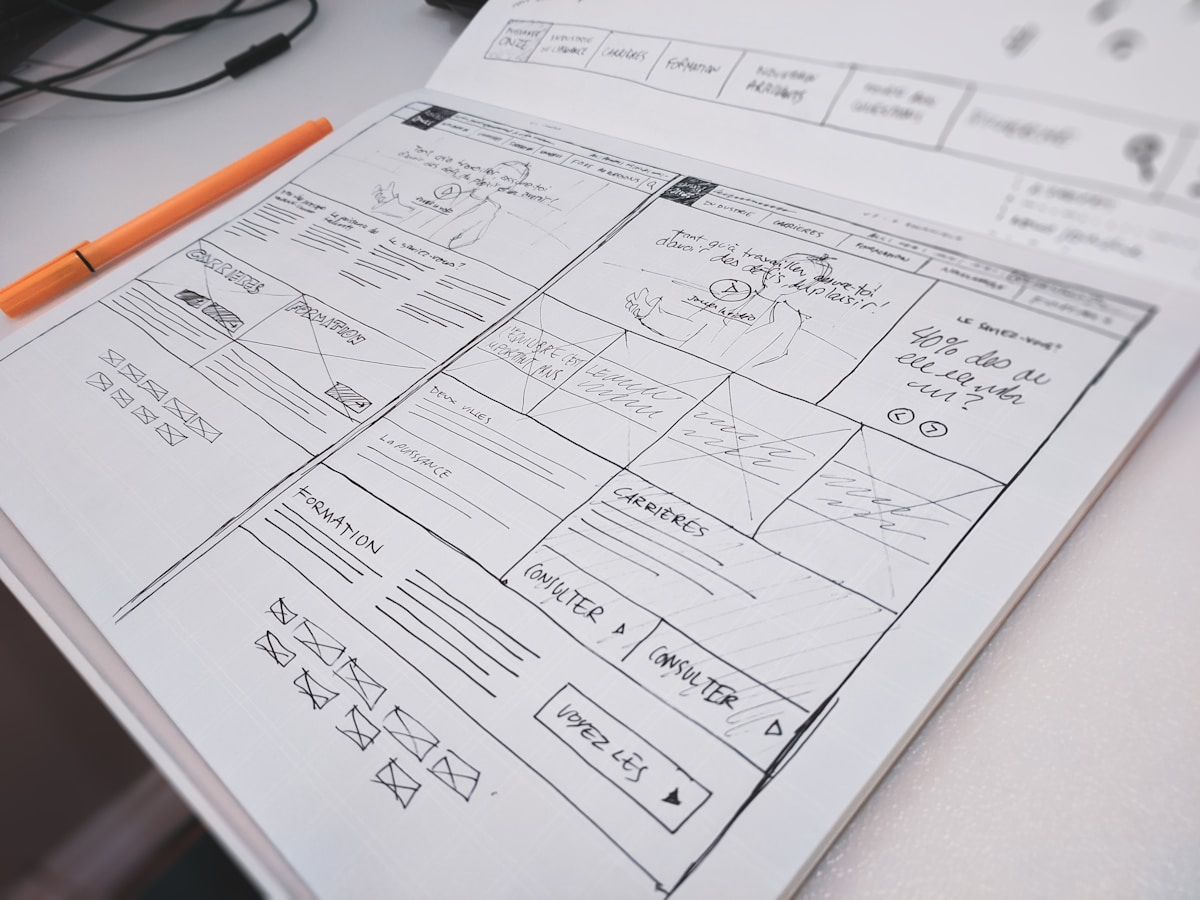
Most portfolios fail because the text drowns the visuals. USC's guidance emphasizes portfolios should express creativity and intellectual curiosity, but reviewers typically spend time carefully evaluating the content.
On the other hand, Your captions must communicate design intent instantly, without forcing anyone to decode academic language. The three-sentence framework works: context (what/where), approach (how you solved it), outcome (what changed).
Example: "Mixed-use tower in downtown Chicago. For example, We explored how vertical circulation could become social infrastructure, connecting ground-level retail to rooftop gardens through shared staircases.
The result: increased spontaneous interaction between residents.
Articulating design intent without sounding theoretical requires translating architectural thinking into visual consequences. Instead of "exploring the dialectic between mass and void," write "the building's carved corners let morning light reach the courtyard year-round." Trade abstraction for specificity.
For platforms like ai web design tool for real estate agents, clarity matters more than sophistication, clients and reviewers both value portfolios where text amplifies images rather than competing with them.
Step 5, build and Launch Your Online Portfolio in Minutes
Submitting a PDF to hiring managers is often like mailing a printed brochure, as it may arrive but frequently go unopened. Architecture firms expect live URLs they can review on any device, share with partners, and revisit without digging through email attachments.
The portfolio that loads instantly on mobile, updates in real time, and includes a contact form is often preferred over PDF portfolios that can be challenging to share or view.

Why Digital Portfolios Outperform PDF Submissions
Web portfolios solve the accessibility problem PDFs create. Nonetheless, A live site means hiring teams in New York and Los Angeles review your work simultaneously, your portfolio stays current without resending files, and Google indexes your projects, turning passive applications into inbound discovery.
Columbia GSAPP publishes graduate portfolios online precisely because digital presentation is now the professional standard. Kleap's AI Portfolio Website Builder generates a complete site from natural language instructions, describe your layout preference, upload images, launch with hosting and custom domain included.
Subsequently, Free tier covers basics; Pro at $25/month adds advanced customization and full code ownership. No designer, no developer, no ai ecommerce website builder learning curve.
Kleap tip: Launch your portfolio before applying, firms check your domain first, resume second.
What Architecture Schools Won't Tell You About Portfolio Success
Admissions committees at Columbia GSAPP and USC reject technically flawless portfolios daily. However, The gap?
Narrative coherence. Schools evaluate portfolios as evidence of how you think, not just what you can render.
Therefore, USC explicitly states they want "creativity, passion and intellectual curiosity" across 6 to 12 images, which means your weekend furniture prototype often carries more weight than your studio's required housing project. The portfolio that shows iteration, failure, and conceptual risk beats the one with perfect line weights every time.
The Hidden Bias Toward Storytelling Over Technical Perfection
UIC requires third-year students to build portfolios not as application tasks but as thinking tools. Because Why?
Because reviewers spend 90 seconds per submission scanning for one thing: can you explain why you made each design choice? Process sketches, site analysis diagrams, and written captions that reveal your design philosophy matter more than photorealistic renderings.
Columbia's published graduate portfolios prove this, the recognized work shows messy concept development alongside finished images.
Why Personal Projects Often Matter More Than Studio Assignments
Studio work follows a brief. Personal projects reveal what you care about when nobody's grading.
Although Include non-architectural creative work, photography, sculpture, graphic design, to demonstrate breadth. Customizing your portfolio for each application (highlighting urbanism for one school, tectonics for another) significantly increases acceptance rates, yet most applicants submit identical PDFs everywhere.
Common Portfolio Mistakes That Sabotage Architecture Applications
Mistakes in architecture applications can frequently impact their review before reaching later stages. While The overcrowding trap: applicants cram mediocre projects into a portfolio when Columbia GSAPP's recognized portfolios demonstrate exceptional pieces that are often more impactful than volume.
Reviewers frequently notice the gap instantly when scanning applicants' portfolios.
The Overcrowding Trap That Dilutes Your Best Work
Most portfolios fail by including everything instead of the best. USC's pre-college guidance explicitly recommends 6-12 digital images, yet applicants routinely submit 30+ projects thinking quantity signals dedication.
Since Wrong. What actually happens: your standout conceptual work gets buried between filler sketches, and the reviewer's eye never lands on the project that would have secured the interview.
The fix? Ruthless editing.
If a project doesn't demonstrate technical skill, conceptual thinking, or visual craft at the highest level you're capable of, delete it.
Technical Errors That Signal Lack of Attention to Detail
Low-resolution images and inconsistent page margins telegraph carelessness to firms that bill precision. Whereas When a section drawing appears pixelated or captions shift fonts mid-portfolio, reviewers infer you'll approach construction documents with the same sloppiness.
The threshold? Most architecture portfolios require high-quality print resolution, consistent layout and design across spreads, and captions that explain the design intent rather than repeat obvious observations
Frequently Asked Questions About Architecture Portfolios
How many projects should I include? Six to twelve projects is the standard range, per USC's architecture guidance. Most schools want depth over volume, three exceptional projects with full process documentation beat ten half-explained renderings.
Graduate school portfolios lean toward eight to ten projects; job applications often need twelve to fifteen, customized to the firm's work.
PDF or web format? Both. Firms still request PDFs for review meetings, but Columbia GSAPP's published portfolio archive proves digital presentation matters for visibility.
A web portfolio built with Kleap's AI Portfolio Website Builder gives you instant hosting, custom domains, and mobile-responsive layouts that PDFs can't match, critical when recruiters view portfolios on phones during site visits.
How often should I update it? After every major project. Thus, UIC requires BSArch students to maintain portfolios throughout their third year specifically to build the habit of continuous documentation.
Stale portfolios signal you've stopped designing.
Launch Your Architecture Portfolio Today and Open Doors Tomorrow
You've seen the framework. Now execute.
Finally, The five-step sequence, curate ruthlessly, document process, design layouts, write captions, launch online, separates architects who land opportunities from those who wait for them. Columbia GSAPP publishes portfolios recognized for excellence because they understand what most students miss: a portfolio isn't decoration, it's your first project under professional scrutiny.
The catch? Additionally, Building a portfolio site used to mean weeks learning code or paying developers thousands. AI eliminated that barrier.
Kleap's platform generates professional portfolio sites instantly, responsive design, custom domains, contact forms, full code ownership, without touching a single line of code. Start free, upgrade to Pro at $25 monthly when client work demands advanced features, scale to Business at $50 monthly as your practice grows.
Meanwhile, Begin now. Your next admission decision or job offer depends on work reviewers can actually see, not files buried on your laptop.
Your Architecture Portfolio Is Your Professional Currency, Start Building It Today
The difference between architects who land their dream roles and those who don't isn't talent, it's how effectively they communicate that talent through a focused, process-driven portfolio that proves they can deliver.
Stop treating your portfolio as a static PDF you update once a year. As a result, Start treating it as a living platform that evolves with every project, every iteration, every lesson learned.
The five-step framework you've just explored, ruthless curation, process documentation, strategic presentation, narrative clarity, and continuous refinement, works because it mirrors how hiring managers actually evaluate candidates: they look for decision-making ability first, aesthetics second.
Ready to build an architecture portfolio that actually converts interviews into offers? Kleap's AI-powered platform lets you launch a professional portfolio site in minutes, no coding, no design paralysis, just your work presented exactly how you want it.
Start with the free tier to test layouts and structure. Upgrade to Pro ($25/month) when you need custom domains and advanced features.
Enterprise teams get white-label options and priority support.
On the other hand, Your next career opportunity won't wait for you to figure out WordPress. Build your portfolio today at kleap.co and let your projects speak for themselves.