Hostinger Website Builder for Upscale Casual Restaurants
Hostinger website builder software for upscale casual restaurants offers an affordable, fast-launch solution with AI tools, but it has real limitations for premium dining brands.
- Setup takes under a day, with AI-generated layouts available from the first login.
- Evaluate on five criteria: design flexibility, menu display, reservation integration, mobile performance, and brand credibility.
- The right builder directly affects whether first-time visitors book a table or bounce to a competitor.
Most restaurant owners pick a website builder based on price. That single decision quietly costs them covers every week.
However, the upscale casual segment sits in an uncomfortable middle ground: guests expect the visual polish of a fine dining site, the browsing ease of a fast-casual app, and a reservation flow that doesn't feel like it was built in 2014. When evaluating Hostinger website builder software for upscale casual restaurants, that tension is exactly where most platforms fail quietly, not catastrophically.
Hostinger has built genuine momentum as a speed-first, budget-friendly builder, and its AI tools deserve a fair look. However, "affordable and fast" is not the same as "right for your brand positioning."
This article gives restaurant owners a concrete verdict: where Hostinger genuinely delivers for this niche and where the gaps could undermine the premium experience your guests expect before they even walk through the door.
What Upscale Casual Restaurants Actually Need From a Website Builder
Most restaurant owners discover the hard way that a generic website builder leaves their brand looking like every other food site on the block. For upscale casual concepts, that's a revenue problem, not just an aesthetic one.
Before evaluating any Hostinger website builder software for upscale casual restaurants, you need a clear framework: five non-negotiable criteria that separate a site that converts diners from one that simply exists.
The five non-negotiable features for upscale dining websites
- Premium design flexibility: templates must allow a genuinely distinct brand look, not a recycled food-site aesthetic that signals "budget build" to discerning diners.
- Brand storytelling tools: visual narratives around chef background, sourcing, and ambiance directly justify higher price points.
- Reservation and online ordering integration: revenue-critical, not optional. A broken or missing booking flow costs real covers every night.
- Mobile-first performance: most diners check menus and hours on their phones minutes before deciding where to eat.
- Local SEO infrastructure: structured data, fast load times, and Google Business alignment drive foot traffic from nearby searches.
Why Generic Website Builders Often Miss the Mark
According to independent research by Expert Market, Squarespace ranks first specifically for concept or upscale restaurants, while Hostinger is positioned as better suited for pop-ups and smaller food vendors. That gap exists because upscale casual dining demands design depth and brand storytelling that generic builders deprioritize.
Speed and affordability matter, but not at the cost of the visual credibility that premium price points require.
Try it — build your site while you read
Describe what you want and get a live, publishable site in seconds. Free to start, no code.
Join 200,000+ makers building real websites with Kleap.
Hostinger website builder software for upscale casual restaurants: an honest feature breakdown.
Eight restaurant-specific templates out of 300 total. That single ratio tells you almost everything you need to know about how Hostinger website builder software for upscale casual restaurants fits into your launch strategy.
Hostinger's AI can generate a working site with content and visuals in under one minute, which is genuinely impressive for speed, but speed and polish are not the same thing. Here's a structured breakdown of the features that actually matter for upscale dining operators.

Where Hostinger Genuinely Shines for Restaurant Sites
Starting at $2.99/month on annual Premium plans, Hostinger costs less than a single cocktail at the bar you're trying to market, making it the lowest barrier-to-entry option in the space. The Business plan at $3.99/month taps into the full AI tool suite for personalizing online menus, meal descriptions, and call-to-action placements.
Built-in SEO tools, mobile optimization, and custom QR code generation round out a practical toolkit for operators focused on in-store marketing and local discoverability. For a site that needs to communicate hours, location, a menu, and reservation contact, Hostinger delivers quickly.
- AI site generation in under 1 minute with relevant content and visuals
- 300 customizable templates, including 8 restaurant-specific layouts
- Built-in SEO tools and mobile optimization for local search visibility
- Custom QR codes for in-store menu access and event promotions
- Free domain name and built-in marketing tools on all plans
The Real Limitations Hostinger Won't Advertise
Independent research firm Expert Market ranks Squarespace first for concept or upscale restaurants, placing Hostinger third overall and explicitly characterizing it as 'best for pop-ups and smaller food vendors.' The mechanism behind this gap is straightforward: Hostinger's design system prioritizes operational simplicity over luxury brand storytelling, which means the visual depth that upscale-casual concepts depend on requires workarounds. Advanced features like reservation systems and online ordering require third-party integrations rather than native tools, adding friction and cost.
For a deeper comparison across the competitive field, explore our guide to best restaurant website builders 2026 or review what are the top choices of website builders for restaurants? to see how Hostinger stacks up against Squarespace, Wix, and other platforms purpose-built for food concepts that demand premium presentation.
How Hostinger Stacks Up Against Top Restaurant Website Builders
Three platforms dominate the conversation for restaurant websites in 2026, and where each lands depends almost entirely on what your dining concept demands. According to restaurant website builder comparison data, the field breaks down cleanly by budget and brand ambition, making the right choice less about features and more about honest self-assessment.
Squarespace vs Hostinger: the Upscale Design Gap
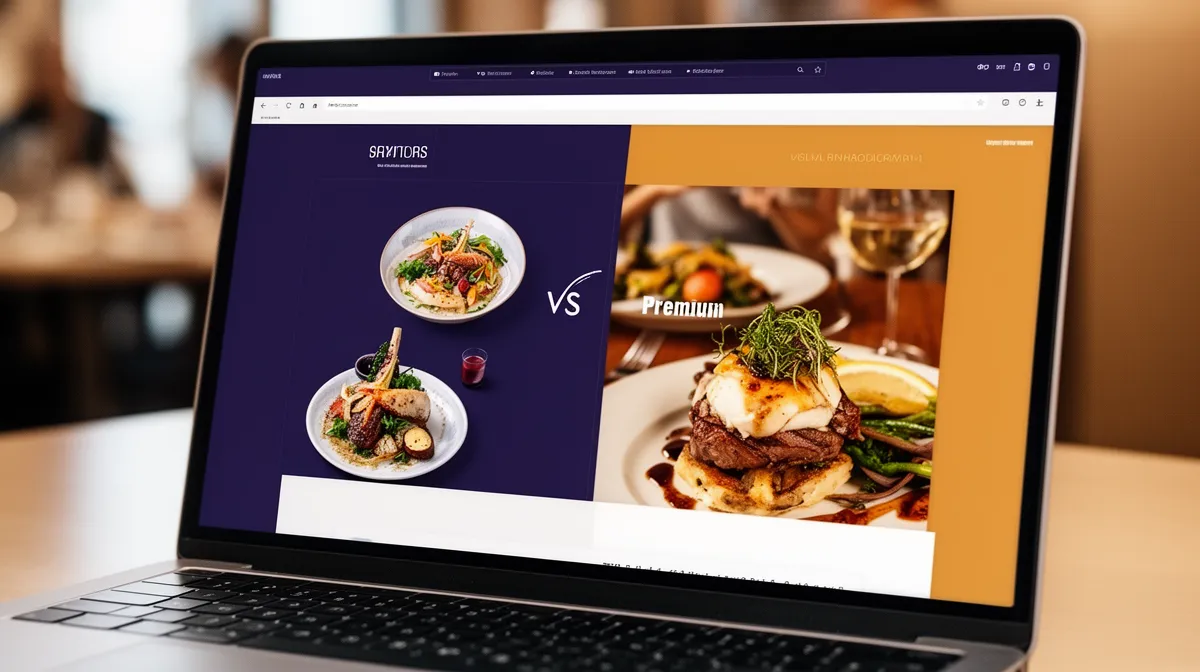
Expert Market independently ranks Squarespace as the best builder for concept and upscale restaurants, placing Hostinger third. The mechanism behind that gap matters: Squarespace was built around editorial-grade typography and immersive layouts, the exact visual language that signals prestige to a guest browsing on their phone before a reservation.
Hostinger counters with a $2.99/month entry price and AI site generation in under one minute, which means a functional, attractive site is delivered quickly. For a restaurant in New York or Miami where brand perception is a competitive asset, that design ceiling becomes a real constraint.
Wix and Other Mid-Tier Alternatives Worth Knowing
Wix sits between the two, offering deeper restaurant app integrations including third-party reservation and ordering tools, but at a higher monthly cost than Hostinger's $3.99/month Business plan. The tradeoff is flexibility versus simplicity.
Hostinger's 8 restaurant-specific templates cover the essentials: menu, hours, location, and reservations, while Wix's ecosystem lets owners add more sophisticated functionality as the business scales.
- Hostinger: Best for speed, affordability, and straightforward restaurant sites
- Squarespace: Best for design-forward, upscale concepts needing brand elevation
- Wix: Best middle ground for restaurants wanting app integrations without full custom development
For anyone evaluating what are the top choices of website builders for restaurants?, the honest answer is that Hostinger wins on launch economics, not luxury positioning. A $3.99/month Business plan, the equivalent of a single cocktail at the bar you're trying to fill, allows you to go live quickly.
Whether that's enough depends on how much your brand story needs to sell before a guest ever walks through the door.
Kleap tip: Before committing to any builder, map your top three brand priorities—design sophistication, speed to launch, or feature depth—and let those criteria drive the platform decision rather than price alone.
What Restaurant Website Platforms Won't Tell You About Their Builders
Additionally, the $2.99/month headline price is the oldest trick in the builder playbook. That rate locks you into a multi-year contract; when renewal arrives, rates climb sharply.
Worse, features advertised as 'included,' such as custom domains, advanced SEO tools, and e-commerce capabilities, frequently sit behind higher-tier paywalls. Meanwhile, the true cost of ownership rarely resembles the landing page.
The Hidden Costs Behind Low Monthly Prices
Hostinger's Business plan starts at $3.99/month and unlocks the full AI tool suite for menus and call-to-action customization. This is reasonable on paper.
As a result, however, restaurants that need reservation integrations, event pages, or online ordering often discover that these require third-party plugins, each carrying its own subscription. What looks like a $50/year decision quietly becomes a multi-platform stack.
For any owner evaluating Hostinger website builder software for upscale casual restaurants, mapping the full add-on cost before signing is non-negotiable.
Why AI-Built Sites Are Not All Equal
Generating a working site in under a minute is genuinely impressive. On the other hand, 'working' and 'on-brand' are different standards entirely.
Hostinger offers 8 restaurant-specific templates across a library of 300, a thin selection when upscale concepts demand differentiation, not shared layouts. An AI draft is a starting point; the manual customization required to communicate a distinct dining identity adds hours that the marketing never mentions.
For example, there is also the lock-in risk most platforms obscure: proprietary editors mean your design lives on their infrastructure, not yours. Kleap takes a different position; its AI agent builds from natural language input and delivers full code ownership, so your restaurant's digital platform scales with your brand, not the vendor's roadmap.
For operators also building for local reach, our ai website builder for local businesses guide covers why code ownership changes the long-term equation.
- Introductory pricing: locks you into multi-year terms; renewal rates rise significantly
- Template depth: 8 restaurant templates across 300 total, limited for upscale differentiation
- Add-on creep: reservations, SEO, and e-commerce often cost extra
- Vendor lock-in: proprietary editors restrict portability and long-term scalability
Should Your Upscale Casual Restaurant Use Hostinger or Look Beyond It?
The verdict depends entirely on where your restaurant sits right now, not where you want it to be in three years. Above all, three distinct restaurant profiles emerge from the evidence, and each points to a different answer.
The Verdict
Hostinger is genuinely competitive on two fronts: price (starting at $2.99/month on annual plans) and raw launch speed. For restaurants that need a live web presence this week, those advantages are real.
However, Expert Market independently ranks Squarespace first for concept and upscale restaurants, placing Hostinger third, a gap that matters when brand perception drives covers.
Who Hostinger Is Actually Right For
- Pop-ups and food trucks needing a fast, affordable site with basic menu and contact info.
- Early-stage casual concepts in Houston or Chicago validating their market before investing in premium design.
- Budget-limited startups where the $3.99/month Business plan's AI menu tools justify the trade-off on design depth.
When a Smarter AI Builder Like Kleap Makes More Sense
Nonetheless, established upscale casual restaurants in Los Angeles or Miami investing in long-term brand equity will hit Hostinger's ceiling fast. Only eight restaurant-specific templates exist across the entire platform, a hard constraint for owners who need layouts that reflect a distinct culinary identity.
Kleap starts free and scales to $25/month Pro, offering AI-driven site creation with full code ownership and no template ceiling. For ambitious brands, that difference between a template and a truly owned digital presence compounds over time.
FAQ - Frequently Asked Questions
Is Hostinger website builder good for restaurants?
It works for basic restaurant sites, but whether it is 'good' depends on what you actually need. Hostinger covers the essentials: menus, contact pages, hours, and location.
However, where it falls short is depth. If you want online reservations, integrated ordering, or a site that genuinely reflects an upscale atmosphere, you'll likely hit its limits faster than expected.
How many restaurant templates does Hostinger offer?
Hostinger provides a handful of food and restaurant-specific templates, though the exact count shifts as they update their library. The designs lean toward clean and functional rather than distinctive.
For a casual diner, that's fine. For an upscale casual concept where ambiance and brand identity matter, the templates can feel generic, and heavy customization often requires working around the builder rather than with it.
Can I add online ordering to a Hostinger restaurant website?
Not natively. Hostinger doesn't include a built-in ordering system, so you'd need to embed a third-party tool like Square or a reservation widget.
That means managing two separate platforms, two sets of fees, and integration headaches that can break unexpectedly. For restaurants where online ordering drives real revenue, that fragmentation adds up quickly.
What is the best website builder for upscale casual restaurants?
The short answer: it depends on whether you're tweaking for speed or control. Squarespace and Wix dominate recommendations for visual polish, but they require manual setup and ongoing maintenance.
While Kleap takes a different approach entirely. Its AI builds the full site from a natural language description, meaning you get a custom layout, working forms, and hosting without touching a single line of code.
For restaurant owners who need to launch fast and look credible from day one, that gap in time to live is real.
How does Kleap compare to Hostinger for restaurant websites?
Hostinger is a traditional drag-and-drop builder with templates. Since Kleap is an AI agent that generates your entire site from a description, it then lets you refine it.
The practical difference is that Hostinger requires you to build, while Kleap builds for you.
For an upscale casual restaurant that needs a polished online presence without a developer on staff, Kleap's full-stack AI approach, which includes design, hosting, forms, and custom domains in one place, removes most of the friction that makes website launches slow and expensive.
How much does the Hostinger website builder cost per month?
Whereas Hostinger's website builder plans typically start at a low promotional rate, renewal pricing is higher. You're generally looking at entry-level plans under $10 per month for basic features.
For context, Kleap's Pro plan starts at $25 per month and includes AI-generated design, hosting, forms, and custom domains out of the box. Thus, if you factor in the time saved on setup and the cost of third-party tools Hostinger requires for ordering or advanced features, the price comparison shifts considerably.
The Verdict on Hostinger Website Builder Software for Upscale Casual Restaurants
Budget-friendly and fast to launch, Hostinger earns its place, just not at the table where brand identity does the heavy lifting.
If your restaurant sits in that competitive middle ground where atmosphere, menu storytelling, and visual credibility convert browsers into reservations, the template ceiling will cost you more than you saved on hosting.
The concrete next step is to audit your current or planned site against one question: does it feel like your restaurant, or does it feel like a website? That gap is exactly where builders like Kleap close the distance, using AI to generate layouts trained on brand context, not generic blocks.
Ready to see what an AI-built restaurant site actually looks like? Start building with Kleap for free, no credit card, no developer, and no compromise on the brand experience your guests expect before they ever walk through the door.
Your restaurant deserves a digital presence as considered as the dining experience you've built.