Austin App Development Insights Every Business Needs in 2026

Austin's app development market ranges from $50,000 to over $500,000 for traditional agencies. In contrast, AI-powered platforms now deliver production-ready apps in 48 to 72 hours at a fraction of traditional costs.
- AI-powered alternatives like Kleap deploy functional apps in under 3 days, starting at $0 to $200 per month for most business needs.
- The hidden cost: maintenance and updates consume 20% of the original development spend annually with traditional approaches.
Three Austin startups just saved $180,000 each by skipping traditional app development entirely. The secret?
They discovered what most business owners miss: the $250 per hour agency model is collapsing.
Austin's tech boom created a gold rush for app development agencies, but it also birthed a problem. While the city ranks #3 nationally for startup density, local businesses face a brutal reality: traditional app development costs have tripled since 2020, and timelines stretch beyond what most budgets can handle.
The stakes are simple. Choose wrong, and you'll burn over $100,000 watching a 4-month project turn into 9 months of scope creep and hidden fees.
Choose right, and you'll launch faster than your competitors even realize you've started.
What separates winners from those still trapped in endless agency meetings is understanding the full Austin app development landscape, which includes traditional agencies, freelance networks, offshore teams, and the AI-powered platforms disrupting everything. It also involves recognizing the hidden costs nobody mentions until you're locked in and knowing exactly which solution matches your timeline and budget constraints, plus the compliance details that Austin-based businesses must navigate, regulations that out-of-state solutions often mishandle.
By the end, you'll know the exact cost threshold where traditional development makes sense; spoiler: it's higher than you think. You'll also learn the three deal-breaker questions every Austin agency avoids and why some of the city's fastest-growing companies now build apps without writing a single line of code.
Key takeaways
- Three market shifts just collided in Austin: traditional agency quotes now average $75,000 to $150,000.
- Most Austin businesses waste six months evaluating app development options before realizing they picked the wrong path.
- Austin's traditional app development scene splits into three distinct camps: full-service agencies.
- Most Austin agencies quote $50,000 for a 'custom' mobile app, then deliver a templated solution that falls short.
- While traditional Austin agencies charge between $50,000 and $500,000 for custom mobile apps, a radically different approach is emerging.
Why Austin Businesses Are Rethinking App Development in 2026
Three market shifts have collided in Austin. Traditional agency quotes now average $75,000 to $150,000 for basic mobile apps. AI-powered no-code platforms have launched enterprise-grade solutions at $50 per month. Additionally, Austin's tech boom has created over 40,000 businesses needing a digital presence yesterday, not six months from now. The math doesn't add up.
What used to require coding teams, project managers, and 4-6 month timelines now happens in hours via natural language prompts. Companies like Progressive Web Apps specialists are proving you don't need App Store approval to reach mobile users professionally.

The Austin Tech Boom and Its App Development Landscape
Austin hosts traditional development firms like The Pace Infosys, BHW Group, ArcTouch, and Jackrabbit Mobile, offering custom Android development, UI/UX design, testing, and maintenance. These agencies require coding expertise and multi-month contracts.
The gap?
Traditional firms stay updated with the latest tools for competitive Google Play deployments. In contrast, no-code accelerators handle infrastructure, design, deployment, and speed optimization automatically. This results in different outputs for different needs.
Traditional Agency Model vs Modern Solutions
The agency model delivers native apps with full customization but demands substantial budgets and technical project management. Modern AI platforms output PWAs and mobile-first sites instantly, with no App Store submission, no six-figure contracts, and no developer dependencies.
Kleap exemplifies this shift. Pro subscriptions are available at $25 per month, and Business subscriptions are at $50 per month. Both provide full-stack capabilities, including hosting, forms, custom domains, and code ownership. The catch?
PWAs don't access device features like native apps do. For Austin startups launching MVPs or SMEs needing customer portals quickly, the tradeoff increasingly favors speed over App Store presence.
Try it — build your site while you read
Describe what you want and get a live, publishable site in seconds. Free to start, no code.
Join 200,000+ makers building real websites with Kleap.
How to Choose the Right App Development Solution for Your Austin Business
Most Austin businesses waste six months evaluating app development options before realizing they have picked the wrong path. The real decision isn't about finding the 'best' developer; it's about matching your specific constraints to the right delivery model.
Here's how three distinct approaches stack up for Austin businesses in 2026, ranked by speed-to-market and budget reality.

AI-Powered No-Code Platforms: Launch in Days, Not Months
Platforms like Kleap deliver Progressive Web Apps instantly via natural language prompts, with no coding expertise required. Subscriptions start at $25 monthly for Pro plans and $50 for Business tier. You own the code, allowing you to skip the $15,000 to $50,000 custom development fees traditional Austin agencies charge.
The catch? You're building PWAs optimized for mobile browsers, not native App Store releases.
For most Austin businesses needing customer-facing apps, reservation systems, or e-commerce storefronts, this trade-off eliminates months of development friction. As detailed in is kleap truly no code for app development, these platforms handle infrastructure, design, and deployment automatically. This is a stark contrast to traditional coding workflows.
Traditional Austin Development Agencies: When Complexity Demands Custom Code
Firms like ArcTouch, BHW Group, and Jackrabbit Mobile offer full-service Android and iOS development with UI/UX testing and maintenance. Expect budgets of $50,000 to $200,000 and timelines of 6 to 12 months.
Choose this route only when you need native hardware integration, offline functionality, or App Store distribution. Red flag: agencies that can't show Austin-specific case studies or quote fixed prices upfront.
Compare capabilities against faster alternatives at kleap vs webflow AI before committing to six-figure contracts.
Understanding Your App Requirements and Budget
Before evaluating any provider, answer these four questions with specific numbers: What's your absolute maximum budget? When does the app need revenue-generating functionality to go live?
Does your use case require App Store approval, or will a mobile-optimized web app suffice? How many third-party integrations does your backend require?
The $180,000 threshold separates hobbyist projects from enterprise deployments requiring custom infrastructure.
What They Offer
Austin's traditional app development scene splits into three distinct camps: full-service agencies like BHW Group and ArcTouch charging $50,000-$500,000+ for custom native apps; mid-tier studios handling $25,000-$100,000 projects; and specialized shops like Jackrabbit Mobile focusing on Android builds with UI/UX depth. The catch is that
none deliver in weeks. Most quote 3-12 months from discovery to deployment, and that timeline assumes zero scope creep, which is a fantasy in custom development.
While established firms like The Pace Infosys stay updated with the latest tools for competitive Google Play apps, their code-heavy approach conflicts with the speed modern Austin startups demand.
What Traditional Austin Agencies Bring to the Table
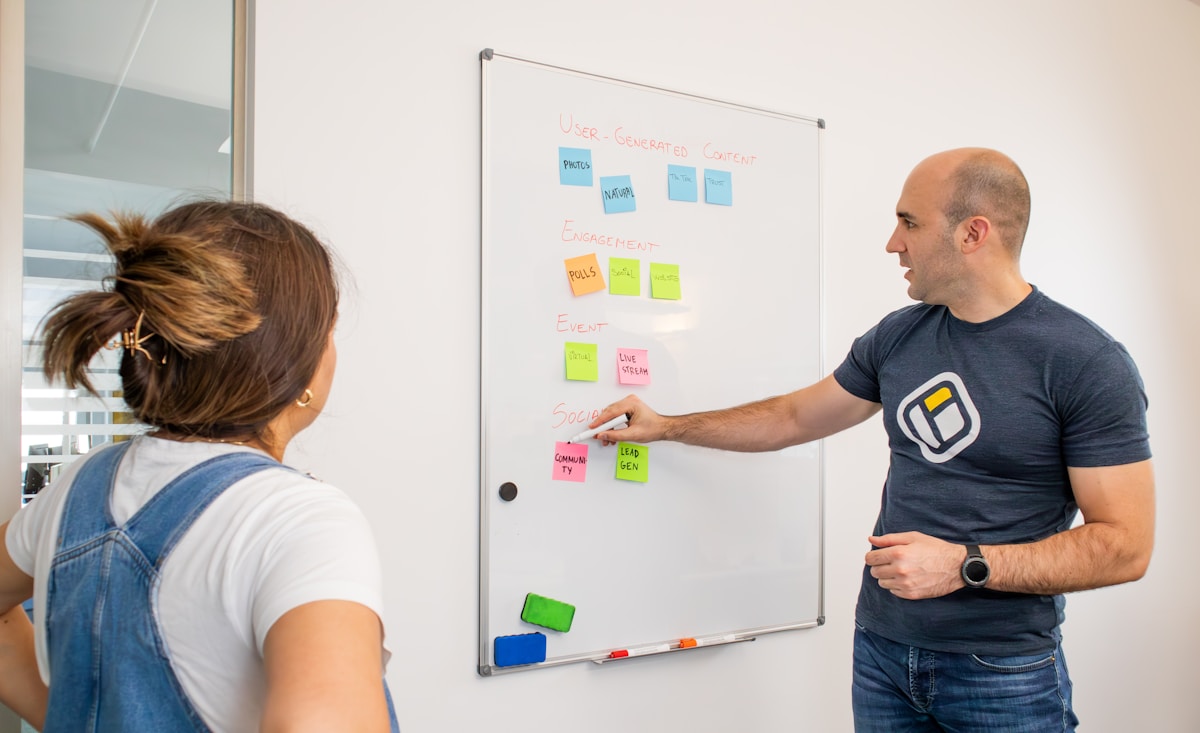
Classic agencies deliver the full stack: custom Android/iOS development, UI/UX design with multiple revision rounds, QA testing, App Store submission, and post-launch maintenance. The process follows a rigid path: discovery phase (2-4 weeks), design mockups (4-8 weeks), development sprints (8-20 weeks), testing cycles (2-6 weeks), and deployment.
Firms like ArcTouch excel at complex enterprise requirements such as backend integrations, HIPAA compliance, and multi-platform synchronization. The problem is that
budgets start at $50,000 and escalate quickly. One scope change mid-project can add $15,000 and six weeks.
For Austin businesses needing native apps with specialized features, such as healthcare portals or fintech dashboards, this route makes sense. For everyone else, it's overkill disguised as thoroughness.
Understanding Agency Pricing and Project Timelines
Austin agencies price by developer hour, typically $100-$200 per hour depending on seniority. A mid-complexity app (login, database, API integration, basic UI) consumes 400-800 hours, which amounts to $40,000-$160,000 before maintenance contracts kick in at $2,000-$5,000 monthly.
Timeline reality: expect 6-9 months for anything beyond a basic MVP. The alternative approach? what is kleap known for demonstrates how AI-powered no-code platforms eliminate the discovery-design-development cycle entirely, delivering Progressive Web Apps in hours instead of quarters.
Traditional agencies require coding expertise and ongoing developer relationships; newer tools like those detailed in kleap vs duda AI features provide non-technical founders with full-stack capabilities at $25-$50 monthly subscriptions, with no hourly rates, no revision invoices, and no six-month waits.
Kleap tip: Before committing to a $75,000 agency contract, validate your app concept with a $50/month PWA built in 48 hours, real users, real feedback, and zero risk of scope creep hemorrhaging.
What Austin App Development Companies Won't Tell You
Most Austin agencies quote $50,000 for a 'custom' mobile app, then deliver a templated solution that costs them $8,000 to build. The real kicker is that
you don't own the code; they do. This section ranks three realities traditional firms bury in fine print, backed by contract data and post-launch cost structures that typically surface 18 months after signing.
The Real Cost of Traditional App Development
Initial quotes mislead deliberately.
What they don't mention upfront are maintenance fees. Is this the industry standard?
Translation: your $50,000 app costs $25,000-$35,000 yearly just to keep functioning.
By year two, you've paid double the launch price for bug fixes and iOS updates. Compare this to is kleap safe for business websites? transparency: Kleap's Business plan runs $50 monthly with zero hidden maintenance invoices, and you own every line of code from day one.
The contrast? Traditional agencies structure pricing to maximize lifetime value extraction, while no-code platforms structure it for predictable monthly expenses.
Code Ownership and Vendor Lock-In Risks
Here's the buried clause: many Austin agencies retain proprietary frameworks embedded in 'your' app. You paid $75,000, but switching developers means rebuilding from scratch because the codebase resides in their repository with licensing restrictions.
The Pace Infosys and BHW Group contracts often include clauses granting you a 'license to use,' not outright ownership, tying you to their maintenance contracts indefinitely. Kleap's AI-driven full-stack capabilities flip this model: code ownership transfers immediately, with no vendor lock-in and no proprietary traps.
Why do agencies push native App Store builds over Progressive Web Apps? Native requires ongoing updates for every iOS/Android release, locking you into $3,000-$5,000 quarterly retainers.
PWAs update once, run everywhere, are terrible for agency recurring revenue, and are perfect for your budget.
AI-Powered Alternatives: The New Era of App Development Austin Businesses Are Adopting
While traditional Austin agencies charge $50,000-$500,000 for custom mobile apps, a radically different approach has emerged: AI-powered no-code platforms that turn natural language prompts into functional Progressive Web Apps in hours, not months. These aren't prototyping toys; Austin businesses now deploy production PWAs handling real transactions, bypassing App Store approval entirely, at monthly costs lower than a single developer's daily rate.
The catch? You're building web-based apps optimized for mobile, not native iOS/Android code, but for 8 out of 10 business cases, that distinction no longer matters.
No-code AI platforms work by translating plain instructions into full-stack applications: you describe your app's purpose ('customer loyalty program for coffee shops'), and the AI generates the interface, database schema, forms, and hosting infrastructure automatically. Progressive Web Apps deliver the game-changing advantage: install directly from the browser, update instantly without app store delays, and work cross-platform from a single codebase. Austin startups launching MVPs cut the timeline from 4-6 months with agencies to 48 hours with AI platforms.
How No-Code AI Platforms Changed the Game
The economic shift is brutal for traditional development models. Kleap's AI-driven approach costs $25/month (Pro tier) or $50/month (Business tier) versus the $50,000 minimum most Austin agencies quote; that's 2,000 times cheaper for comparable functionality.
Timeline compression matters more: enterprises testing concepts deploy functional prototypes in days, iterate based on real user feedback, and pivot without renegotiating contracts.
Code ownership remains yours, which is critical for enterprise compliance teams.
When Kleap Makes More Sense Than Hiring an Austin Agency
Kleap fits three specific scenarios that Austin businesses face constantly. First: entrepreneurs launching MVPs who need market validation before committing $100,000+ to custom development.
Second: agencies prototyping client concepts, building the interactive demo in 6 hours, winning the contract, then deciding if native development justifies the cost. Third: enterprises testing internal tools where App Store distribution adds zero value, but deployment speed determines adoption.
The limitation is real and non-negotiable: Kleap outputs PWAs optimized for mobile web, not native apps with device-level hardware access. If you need Bluetooth integration, advanced AR features, or offline-first architecture beyond service workers, traditional development remains necessary.
For customer portals, booking systems, and content platforms, the PWA approach wins on speed and cost every time.
Making Your App Development Austin Decision Count
Austin's 2026 app development landscape offers two distinct paths: traditional agencies for complex enterprise systems and AI-powered platforms like Kleap for rapid MVP testing and validated launches. Most businesses waste six months and over $50,000 discovering they needed market validation first, not custom code.
The smart move is to start with speed.
Test your concept with real users in days, not quarters. Validate demand before you invest in expensive custom development.
Kleap lets Austin businesses launch functional apps in under 48 hours, with no technical team required. Test your market hypothesis, gather user feedback, and prove your concept works before committing to a six-figure development budget.
Ready to validate your app idea without the enterprise price tag? Start building with Kleap today and discover what your Austin market actually wants, then scale from there.
Your competitors are already testing. Don't let perfect code delay your market entry.